Animal Genomics and Improvement Laboratory, Agricultural Research Service, USDA, BARC-East, Beltsville, MD, 20705, USA.
College of Animal Science and Technology, China Agricultural University, Beijing, 100193, China.
BMC Biol. 2020 Jul 3;18(1):80. doi: 10.1186/s12915-020-00792-6.
Lack of comprehensive functional annotations across a wide range of tissues and cell types severely hinders the biological interpretations of phenotypic variation, adaptive evolution, and domestication in livestock. Here we used a combination of comparative epigenomics, genome-wide association study (GWAS), and selection signature analysis, to shed light on potential adaptive evolution in cattle.
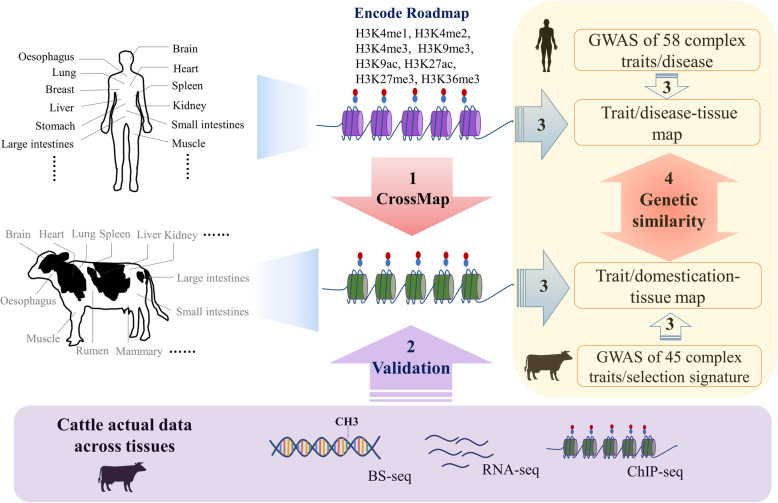
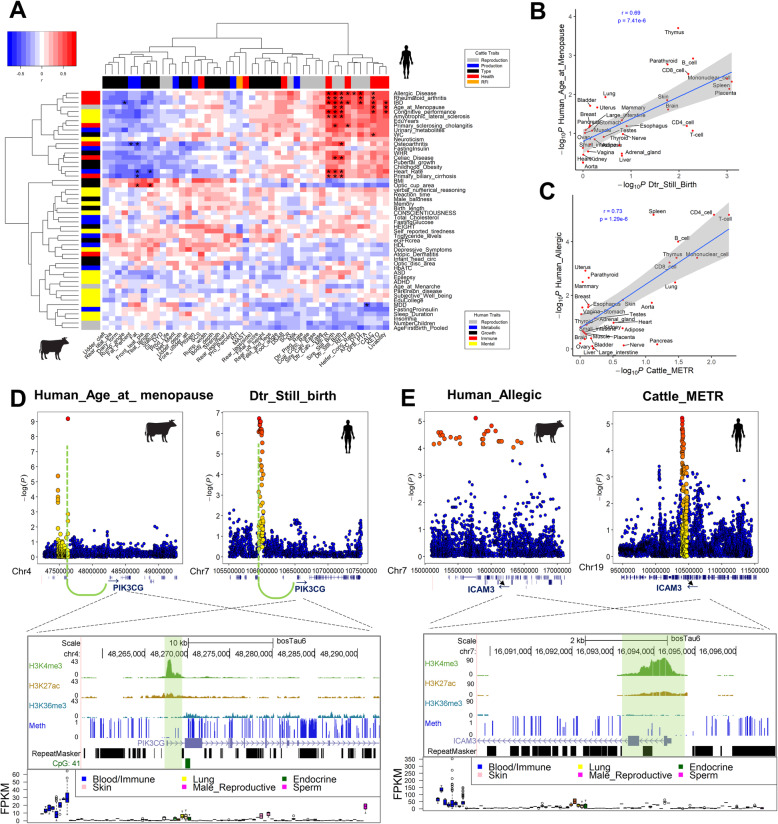
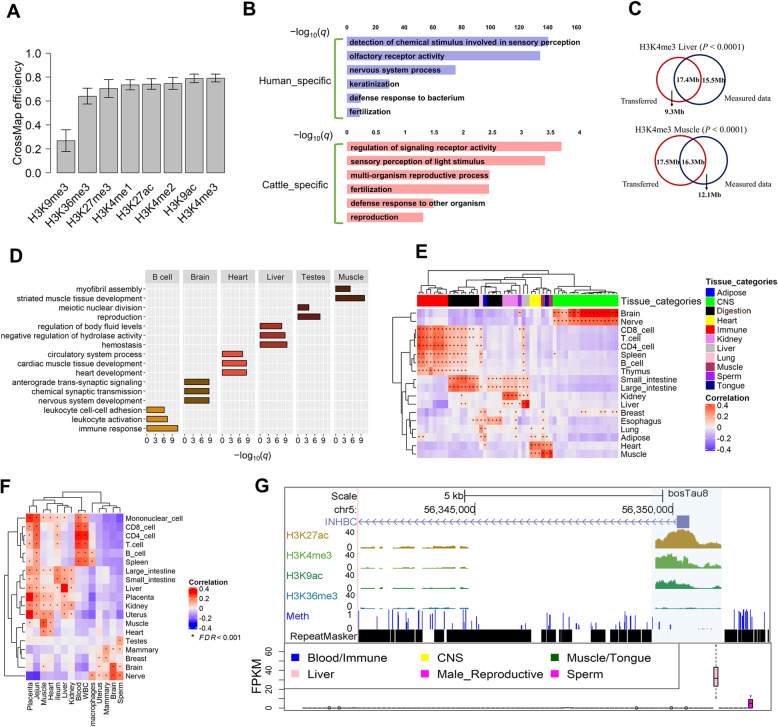
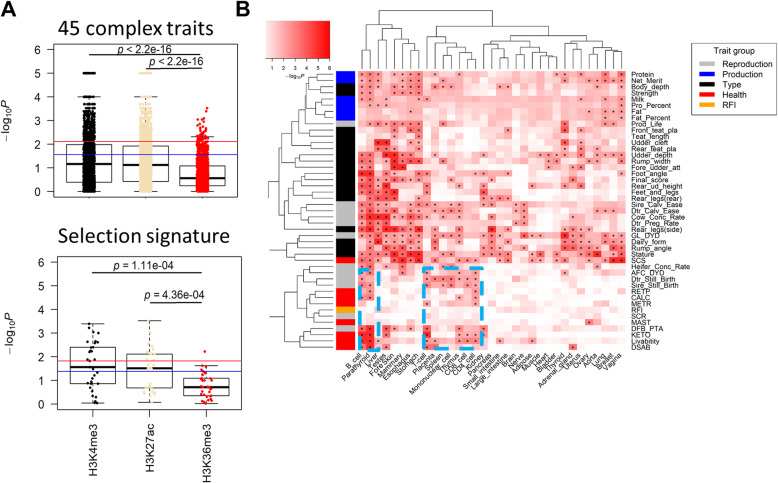
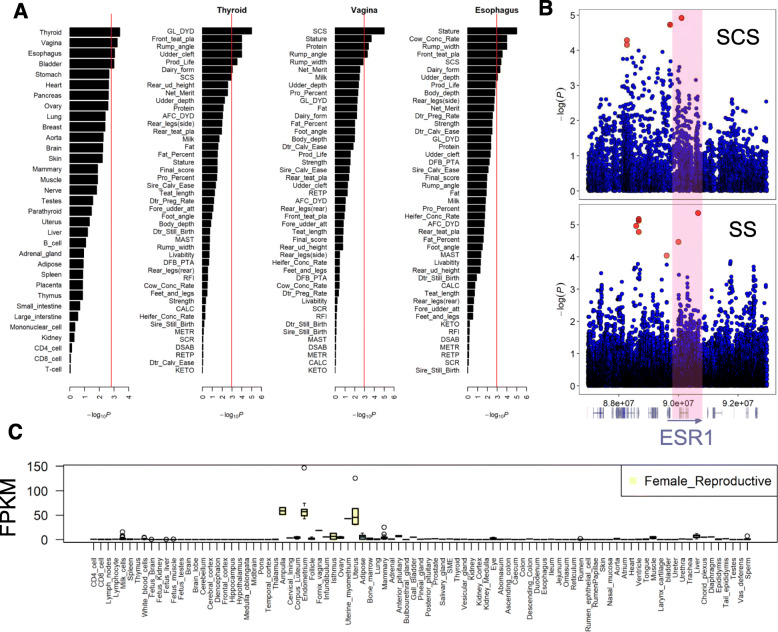
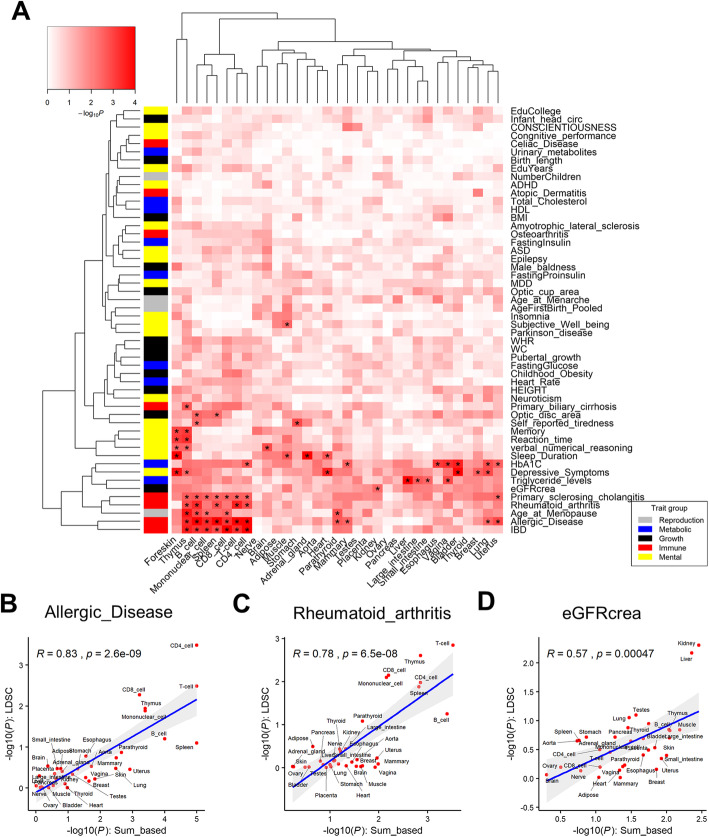
We cross-mapped 8 histone marks of 1300 samples from human to cattle, covering 178 unique tissues/cell types. By uniformly analyzing 723 RNA-seq and 40 whole genome bisulfite sequencing (WGBS) datasets in cattle, we validated that cross-mapped histone marks captured tissue-specific expression and methylation, reflecting tissue-relevant biology. Through integrating cross-mapped tissue-specific histone marks with large-scale GWAS and selection signature results, we for the first time detected relevant tissues and cell types for 45 economically important traits and artificial selection in cattle. For instance, immune tissues are significantly associated with health and reproduction traits, multiple tissues for milk production and body conformation traits (reflecting their highly polygenic architecture), and thyroid for the different selection between beef and dairy cattle. Similarly, we detected relevant tissues for 58 complex traits and diseases in humans and observed that immune and fertility traits in humans significantly correlated with those in cattle in terms of relevant tissues, which facilitated the identification of causal genes for such traits. For instance, PIK3CG, a gene highly specifically expressed in mononuclear cells, was significantly associated with both age-at-menopause in human and daughter-still-birth in cattle. ICAM, a T cell-specific gene, was significantly associated with both allergic diseases in human and metritis in cattle.
Collectively, our results highlighted that comparative epigenomics in conjunction with GWAS and selection signature analyses could provide biological insights into the phenotypic variation and adaptive evolution. Cattle may serve as a model for human complex traits, by providing additional information beyond laboratory model organisms, particularly when more novel phenotypes become available in the near future.
缺乏对广泛组织和细胞类型的综合功能注释严重阻碍了对家畜表型变异、适应性进化和驯化的生物学解释。在这里,我们使用比较表观基因组学、全基因组关联研究(GWAS)和选择信号分析的组合,揭示了牛的潜在适应性进化。
我们将来自人类的 1300 个样本的 8 种组蛋白标记跨映射到牛中,涵盖了 178 个独特的组织/细胞类型。通过在牛中统一分析 723 个 RNA-seq 和 40 个全基因组亚硫酸氢盐测序(WGBS)数据集,我们验证了跨映射的组蛋白标记捕获了组织特异性表达和甲基化,反映了与组织相关的生物学。通过将跨映射的组织特异性组蛋白标记与大规模 GWAS 和选择信号结果相结合,我们首次检测到与牛的 45 个重要经济性状和人工选择相关的组织和细胞类型。例如,免疫组织与健康和繁殖性状显著相关,多个组织与产奶和体型性状相关(反映了它们高度多基因的结构),甲状腺与牛肉和奶牛之间的不同选择相关。同样,我们检测到与人类 58 个复杂性状和疾病相关的组织,观察到人类的免疫和生育性状与牛在相关组织方面显著相关,这有助于确定这些性状的因果基因。例如,在单核细胞中高度特异性表达的 PIK3CG 基因,与人类的绝经年龄和牛的女儿仍存活显著相关。T 细胞特异性基因 ICAM 与人类的过敏疾病和牛的子宫内膜炎显著相关。
总的来说,我们的结果强调了比较表观基因组学结合 GWAS 和选择信号分析可以为表型变异和适应性进化提供生物学见解。牛可以作为人类复杂性状的模型,提供实验室模型生物之外的更多信息,特别是在不久的将来出现更多新的表型时。