a Animal Genomics and Improvement Laboratory, BARC , Agricultural Research Service, USDA , Beltsville , MD , USA.
b Department of Animal and Avian Sciences , University of Maryland , College Park , MD , USA.
Epigenetics. 2019 Mar;14(3):260-276. doi: 10.1080/15592294.2019.1582217. Epub 2019 Mar 24.
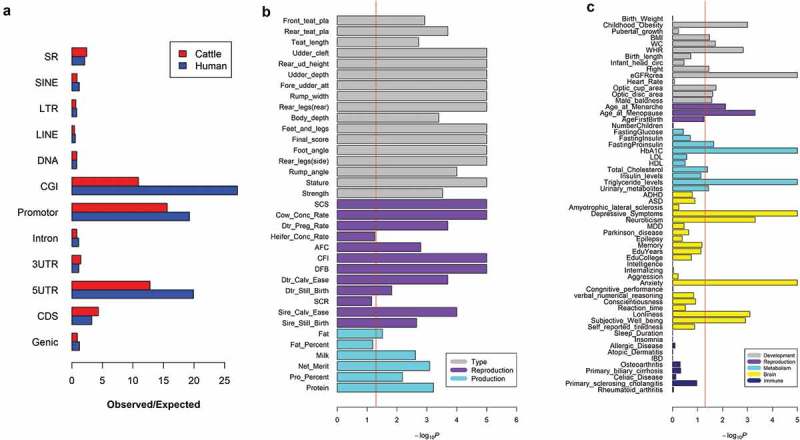
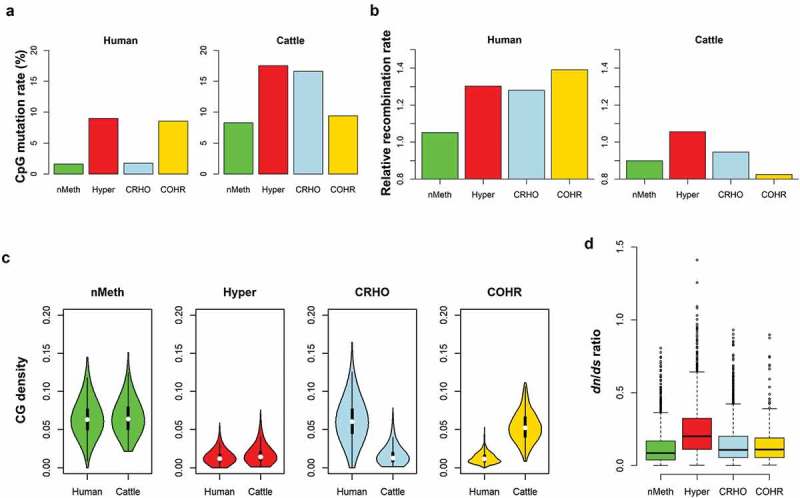
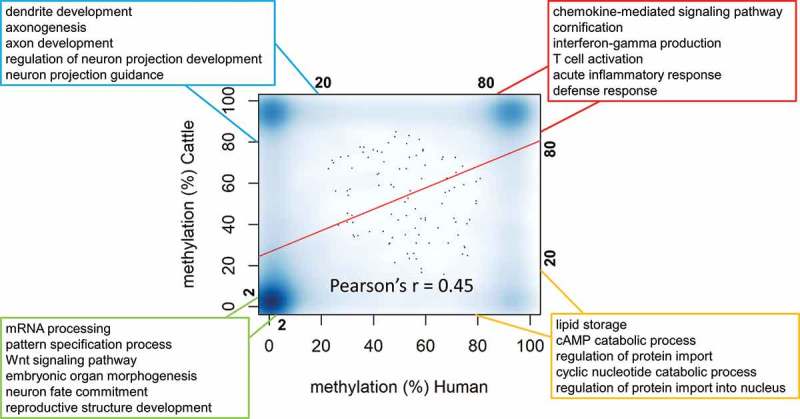
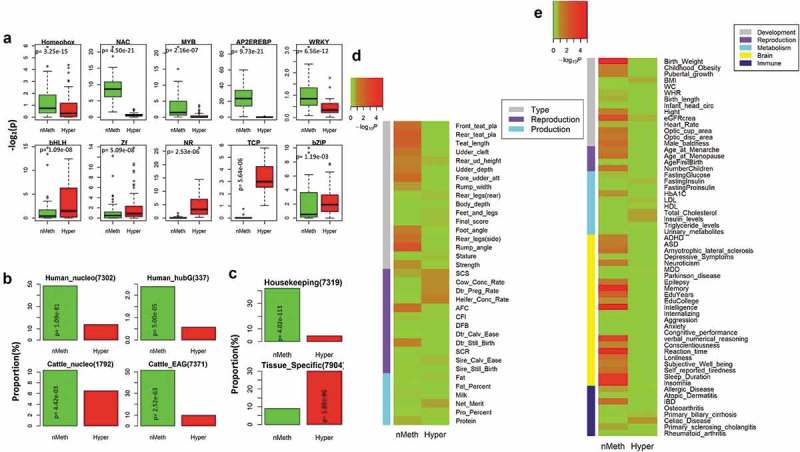
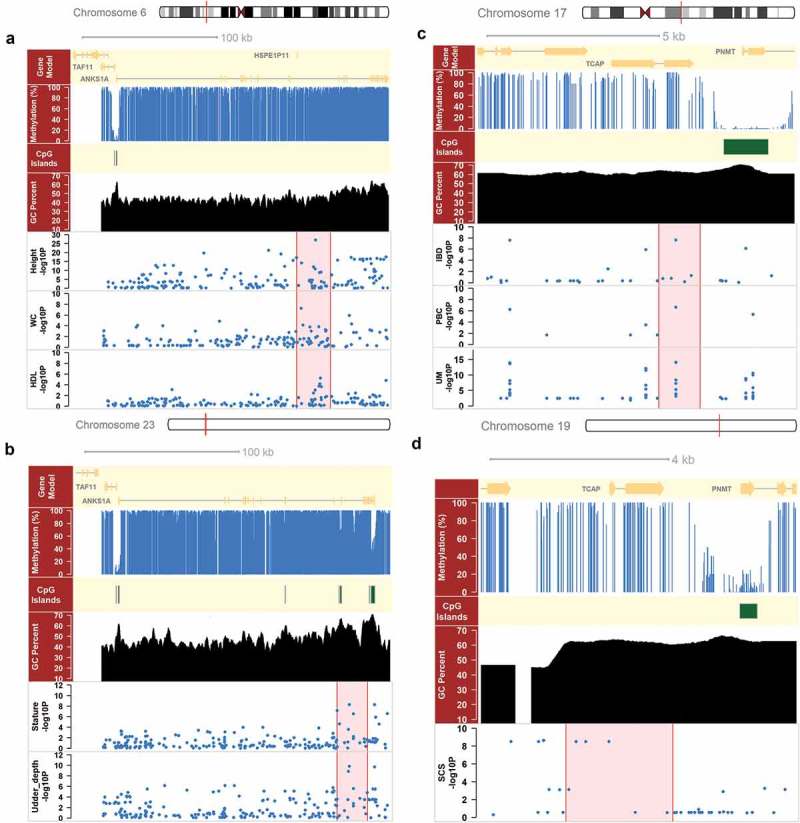
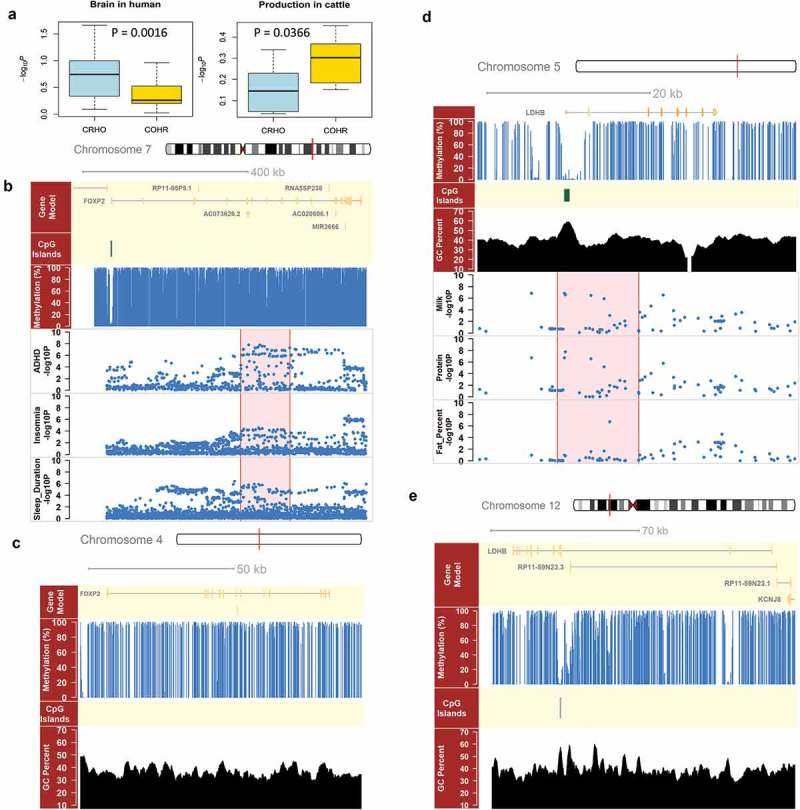
Sperm DNA methylation is crucial for fertility and viability of offspring but epigenome evolution in mammals is largely understudied. By comparing sperm DNA methylomes and large-scale genome-wide association study (GWAS) signals between human and cattle, we aimed to examine the DNA methylome evolution and its associations with complex phenotypes in mammals. Our analysis revealed that genes with conserved non-methylated promoters (e.g., ANKS1A and WNT7A) among human and cattle were involved in common system and embryo development, and enriched for GWAS signals of body conformation traits in both species, while genes with conserved hypermethylated promoters (e.g., TCAP and CD80) were engaged in immune responses and highlighted by immune-related traits. On the other hand, genes with human-specific hypomethylated promoters (e.g., FOXP2 and HYDIN) were engaged in neuron system development and enriched for GWAS signals of brain-related traits, while genes with cattle-specific hypomethylated promoters (e.g., LDHB and DGAT2) mainly participated in lipid storage and metabolism. We validated our findings using sperm-retained nucleosome, preimplantation transcriptome, and adult tissue transcriptome data, as well as sequence evolutionary features, including motif binding sites, mutation rates, recombination rates and evolution signatures. In conclusion, our results demonstrate important roles of epigenome evolution in shaping the genetic architecture underlying complex phenotypes, hence enhance signal prioritization in GWAS and provide valuable information for human neurological disorders and livestock genetic improvement.
精子 DNA 甲基化对于生育能力和后代的存活率至关重要,但哺乳动物的表观基因组进化在很大程度上仍未得到充分研究。通过比较人类和牛的精子 DNA 甲基组和大规模全基因组关联研究 (GWAS) 信号,我们旨在研究哺乳动物中 DNA 甲基组的进化及其与复杂表型的关联。我们的分析表明,在人类和牛中具有保守非甲基化启动子的基因(例如 ANKS1A 和 WNT7A)参与了共同的系统和胚胎发育,并且在两个物种的身体形态特征的 GWAS 信号中富集,而具有保守高甲基化启动子的基因(例如 TCAP 和 CD80)则参与了免疫反应,并强调了与免疫相关的特征。另一方面,在人类中具有特异性低甲基化启动子的基因(例如 FOXP2 和 HYDIN)参与了神经元系统的发育,并在与大脑相关的特征的 GWAS 信号中富集,而在牛中具有特异性低甲基化启动子的基因(例如 LDHB 和 DGAT2)主要参与脂质储存和代谢。我们使用精子保留核小体、着床前转录组和成年组织转录组数据以及序列进化特征(包括基序结合位点、突变率、重组率和进化特征)验证了我们的发现。总之,我们的结果表明,表观基因组进化在塑造复杂表型的遗传结构方面发挥了重要作用,从而增强了 GWAS 中的信号优先级,并为人类神经疾病和家畜遗传改良提供了有价值的信息。