Amsterdam UMC, location AMC, University of Amsterdam, Heart Center, Department of Clinical and Experimental Cardiology, Amsterdam Cardiovascular Sciences, Amsterdam, The Netherlands.
Amsterdam UMC, location AMC, University of Amsterdam, Heart Center, Department of Clinical and Experimental Cardiology, Amsterdam Cardiovascular Sciences, Amsterdam, The Netherlands; European Reference Network for Rare and Low Prevalence Complex Diseases of the Heart (ERN GUARDHEART; https://guardheart.ern-net.eu); European Cardiac Arrhythmia Genetics Focus Group (ECGen) of the European Heart Rhythm Association (EHRA).
Heart Rhythm. 2020 Sep;17(9):1480-1486. doi: 10.1016/j.hrthm.2020.07.001. Epub 2020 Jul 3.
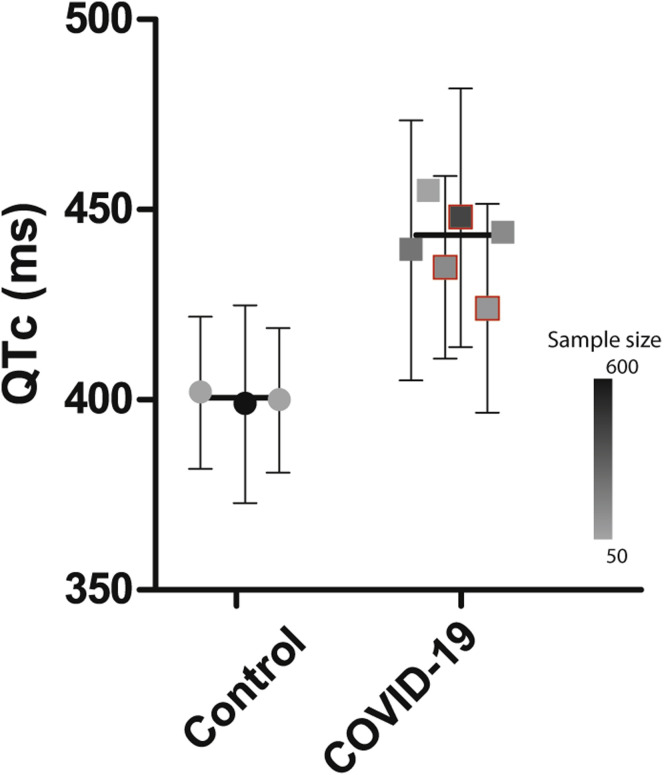
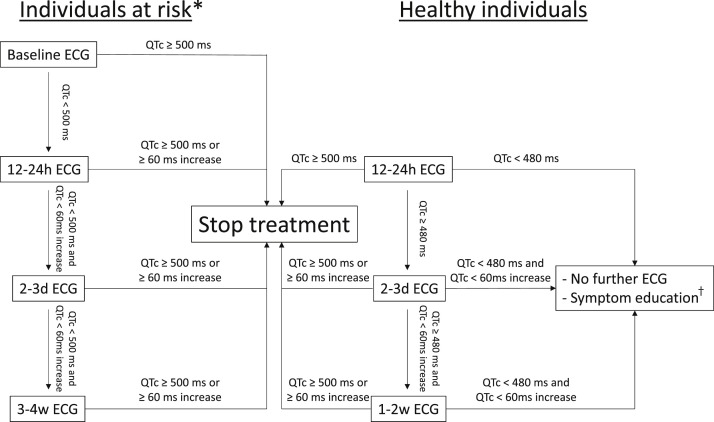
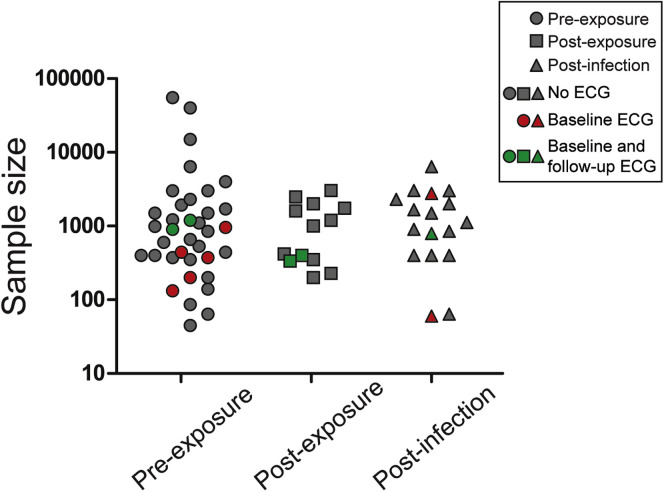
(Hydroxy)chloroquine ((H)CQ) is being investigated as a treatment for COVID-19, but studies have so far demonstrated either no or a small benefit. However, these studies have been mostly performed in patients admitted to the hospital and hence likely already (severely) affected. Another suggested approach uses prophylactic (H)CQ treatment aimed at preventing either severe acute respiratory syndrome coronavirus 2 infection or the development of disease. A substantial number of clinical trials are planned or underway aimed at assessing the prophylactic benefit of (H)CQ. However, (H)CQ may lead to QT prolongation and potentially induce life-threatening arrhythmias. This may be of particular relevance to patients with preexisting cardiovascular disease and those taking other QT-prolonging drugs. In addition, it is known that a certain percentage of the population carries genetic variant(s) that reduces their repolarization reserve, predisposing them to (H)CQ-induced QT prolongation, and this may be more relevant to female patients who already have a longer QT interval to start with. This review provides an overview of the current evidence on (H)CQ therapy in patients with COVID-19 and discusses different strategies for prophylactic (H)CQ therapy (ie, preinfection, postexposure, and postinfection). In particular, the potential cardiac effects, including QT prolongation and arrhythmias, will be addressed. Based on these insights, recommendations will be presented as to which preventive measures should be taken when giving (H)CQ prophylactically, including electrocardiographic monitoring.
(羟基)氯喹((H)CQ)正在被研究作为 COVID-19 的治疗方法,但迄今为止的研究表明,它要么没有效果,要么效果很小。然而,这些研究大多是在已经住院的患者中进行的,因此他们可能已经(严重)受到影响。另一种建议的方法是使用预防性(H)CQ 治疗,旨在预防严重急性呼吸综合征冠状病毒 2 感染或疾病的发展。计划或正在进行大量临床试验,旨在评估(H)CQ 的预防作用。然而,(H)CQ 可能导致 QT 延长,并可能引发危及生命的心律失常。这可能对患有先前存在的心血管疾病的患者和正在服用其他 QT 延长药物的患者特别重要。此外,已知人群中有一定比例的人携带基因变异,这会降低他们的复极储备,使他们容易受到(H)CQ 引起的 QT 延长的影响,而这可能对女性患者更为相关,因为她们的 QT 间期本来就更长。本文综述了目前关于 COVID-19 患者(H)CQ 治疗的证据,并讨论了预防性(H)CQ 治疗的不同策略(即感染前、暴露后和感染后)。特别是,将讨论潜在的心脏效应,包括 QT 延长和心律失常。基于这些见解,将提出在预防性使用(H)CQ 时应采取哪些预防措施,包括心电图监测。