• 文献检索
  • 文档翻译
  • 深度研究
  • 学术资讯
  • Suppr Zotero 插件Zotero 插件
  • 邀请有礼
  • 套餐&价格
  • 历史记录
应用&插件
Suppr Zotero 插件Zotero 插件浏览器插件Mac 客户端Windows 客户端微信小程序
定价
高级版会员购买积分包购买API积分包
服务
文献检索文档翻译深度研究API 文档MCP 服务
关于我们
关于 Suppr公司介绍联系我们用户协议隐私条款
关注我们

Suppr 超能文献

核心技术专利:CN118964589B侵权必究
粤ICP备2023148730 号-1Suppr @ 2026

文献检索

告别复杂PubMed语法,用中文像聊天一样搜索,搜遍4000万医学文献。AI智能推荐,让科研检索更轻松。

立即免费搜索

文件翻译

保留排版,准确专业,支持PDF/Word/PPT等文件格式,支持 12+语言互译。

免费翻译文档

深度研究

AI帮你快速写综述,25分钟生成高质量综述,智能提取关键信息,辅助科研写作。

立即免费体验

羟氯喹和阿奇霉素在 2019 冠状病毒病大流行中的应用经验:对 QT 间期监测的影响。

Experience With Hydroxychloroquine and Azithromycin in the Coronavirus Disease 2019 Pandemic: Implications for QT Interval Monitoring.

机构信息

The Smidt Heart Institute, Cedars-Sinai Health System Los Angeles CA.

Enterprise Information Systems Data Intelligence Team Cedars-Sinai Health System Los Angeles CA.

出版信息

J Am Heart Assoc. 2020 Jun 16;9(12):e017144. doi: 10.1161/JAHA.120.017144. Epub 2020 May 28.

DOI:10.1161/JAHA.120.017144
PMID:32463348
原文链接:https://pmc.ncbi.nlm.nih.gov/articles/PMC7429030/
Abstract

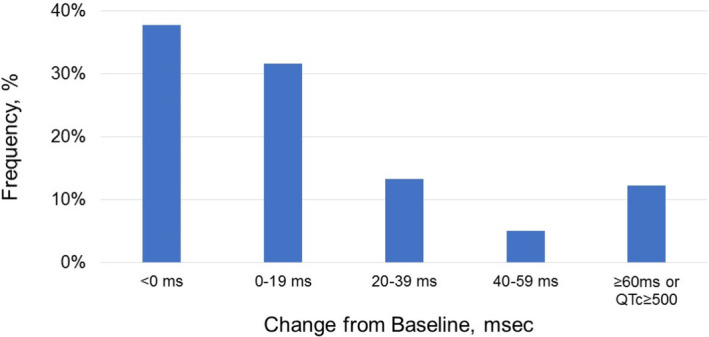
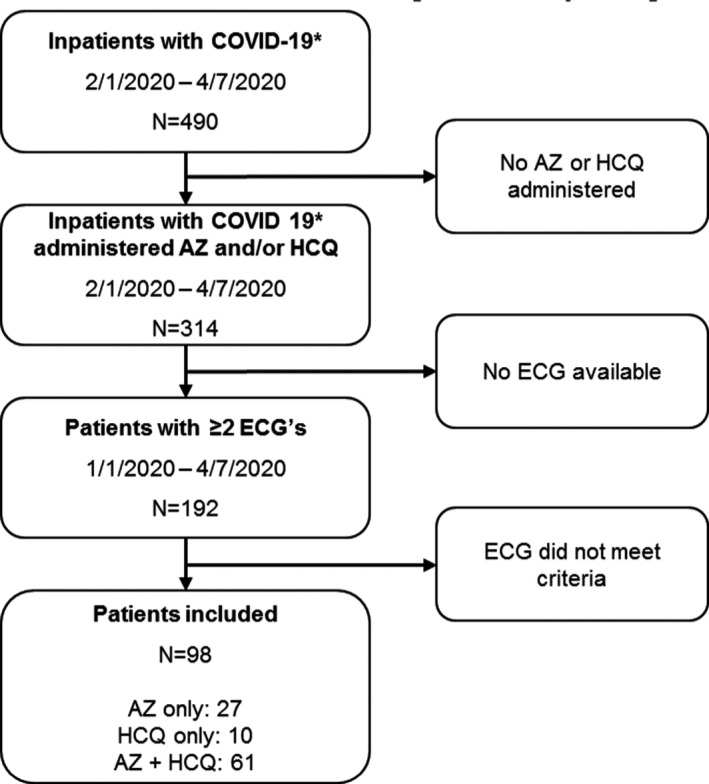
Background Despite a lack of clinical evidence, hydroxychloroquine and azithromycin are being administered widely to patients with verified or suspected coronavirus disease 2019 (COVID-19). Both drugs may increase risk of lethal arrhythmias associated with QT interval prolongation. Methods and Results We analyzed a case series of COVID-19-positive/suspected patients admitted between February 1, 2020, and April 4, 2020, who were treated with azithromycin, hydroxychloroquine, or a combination of both drugs. We evaluated baseline and postmedication QT interval (corrected QT interval [QTc]; Bazett) using 12-lead ECGs. Critical QTc prolongation was defined as follows: (1) maximum QTc ≥500 ms (if QRS <120 ms) or QTc ≥550 ms (if QRS ≥120 ms) and (2) QTc increase of ≥60 ms. Tisdale score and Elixhauser comorbidity index were calculated. Of 490 COVID-19-positive/suspected patients, 314 (64%) received either/both drugs and 98 (73 COVID-19 positive and 25 suspected) met study criteria (age, 62±17 years; 61% men). Azithromycin was prescribed in 28%, hydroxychloroquine in 10%, and both in 62%. Baseline mean QTc was 448±29 ms and increased to 459±36 ms (=0.005) with medications. Significant prolongation was observed only in men (18±43 ms versus -0.2±28 ms in women; =0.02). A total of 12% of patients reached critical QTc prolongation. Changes in QTc were highest with the combination compared with either drug, with much greater prolongation with combination versus azithromycin (17±39 ms versus 0.5±40 ms; =0.07). No patients manifested torsades de pointes. Conclusions Overall, 12% of patients manifested critical QTc prolongation, and the combination caused greater prolongation than either drug alone. The balance between uncertain benefit and potential risk when treating COVID-19 patients should be carefully assessed.

摘要

背景

尽管缺乏临床证据,但羟氯喹和阿奇霉素仍被广泛用于确诊或疑似 2019 年冠状病毒病(COVID-19)患者。这两种药物均可能增加与 QT 间期延长相关的致命性心律失常风险。

方法和结果

我们分析了 2020 年 2 月 1 日至 4 月 4 日期间收治的 COVID-19 阳性/疑似患者的病例系列,这些患者接受了阿奇霉素、羟氯喹或两者联合治疗。我们使用 12 导联心电图评估了基线和用药后的 QT 间期(校正 QT 间期[QTc];Bazett)。临界 QTc 延长定义如下:(1)最大 QTc≥500 ms(如果 QRS<120 ms)或 QTc≥550 ms(如果 QRS≥120 ms)和(2)QTc 增加≥60 ms。计算了 Tisdale 评分和 Elixhauser 合并症指数。在 490 例 COVID-19 阳性/疑似患者中,314 例(64%)接受了一种或两种药物治疗,98 例(73 例 COVID-19 阳性和 25 例疑似)符合研究标准(年龄 62±17 岁;61%为男性)。阿奇霉素的处方率为 28%,羟氯喹为 10%,两者联合应用为 62%。基线平均 QTc 为 448±29 ms,用药后增加至 459±36 ms(=0.005)。仅在男性中观察到显著延长(18±43 ms 与女性的-0.2±28 ms;=0.02)。共有 12%的患者达到临界 QTc 延长。与单一药物相比,联合用药时 QTc 的变化最大,与阿奇霉素相比,联合用药时的延长更为显著(17±39 ms 与 0.5±40 ms;=0.07)。没有患者出现尖端扭转型室性心动过速。

结论

总体而言,有 12%的患者出现临界 QTc 延长,联合用药比单独用药引起的延长更明显。在治疗 COVID-19 患者时,应谨慎评估不确定的获益与潜在风险之间的平衡。
https://cdn.ncbi.nlm.nih.gov/pmc/blobs/3c45/7429030/30b917039b8c/JAH3-9-e017144-g003.jpg
https://cdn.ncbi.nlm.nih.gov/pmc/blobs/3c45/7429030/d4f8d40b3b97/JAH3-9-e017144-g001.jpg
https://cdn.ncbi.nlm.nih.gov/pmc/blobs/3c45/7429030/33983bf1300e/JAH3-9-e017144-g002.jpg
https://cdn.ncbi.nlm.nih.gov/pmc/blobs/3c45/7429030/30b917039b8c/JAH3-9-e017144-g003.jpg
https://cdn.ncbi.nlm.nih.gov/pmc/blobs/3c45/7429030/d4f8d40b3b97/JAH3-9-e017144-g001.jpg
https://cdn.ncbi.nlm.nih.gov/pmc/blobs/3c45/7429030/33983bf1300e/JAH3-9-e017144-g002.jpg
https://cdn.ncbi.nlm.nih.gov/pmc/blobs/3c45/7429030/30b917039b8c/JAH3-9-e017144-g003.jpg

相似文献

1
Experience With Hydroxychloroquine and Azithromycin in the Coronavirus Disease 2019 Pandemic: Implications for QT Interval Monitoring.羟氯喹和阿奇霉素在 2019 冠状病毒病大流行中的应用经验:对 QT 间期监测的影响。
J Am Heart Assoc. 2020 Jun 16;9(12):e017144. doi: 10.1161/JAHA.120.017144. Epub 2020 May 28.
2
Risk of QT Interval Prolongation Associated With Use of Hydroxychloroquine With or Without Concomitant Azithromycin Among Hospitalized Patients Testing Positive for Coronavirus Disease 2019 (COVID-19).COVID-19 住院患者使用羟氯喹(无论是否联合使用阿奇霉素)导致 QT 间期延长的风险。
JAMA Cardiol. 2020 Sep 1;5(9):1036-1041. doi: 10.1001/jamacardio.2020.1834.
3
QT interval prolongation and torsade de pointes in patients with COVID-19 treated with hydroxychloroquine/azithromycin.COVID-19 患者接受羟氯喹/阿奇霉素治疗后出现 QT 间期延长和尖端扭转型室性心动过速。
Heart Rhythm. 2020 Sep;17(9):1425-1433. doi: 10.1016/j.hrthm.2020.05.014. Epub 2020 May 12.
4
Effect of Chloroquine, Hydroxychloroquine, and Azithromycin on the Corrected QT Interval in Patients With SARS-CoV-2 Infection.氯喹、羟氯喹和阿奇霉素对 SARS-CoV-2 感染患者校正 QT 间期的影响。
Circ Arrhythm Electrophysiol. 2020 Jun;13(6):e008662. doi: 10.1161/CIRCEP.120.008662. Epub 2020 Apr 29.
5
Predictive factors for cardiac conduction abnormalities with hydroxychloroquine-containing combinations for COVID-19.羟氯喹联合治疗 COVID-19 导致心脏传导异常的预测因素。
Int J Antimicrob Agents. 2020 Oct;56(4):106142. doi: 10.1016/j.ijantimicag.2020.106142. Epub 2020 Aug 24.
6
Arrhythmic profile and 24-hour QT interval variability in COVID-19 patients treated with hydroxychloroquine and azithromycin.羟氯喹和阿奇霉素治疗的 COVID-19 患者的心律失常谱和 24 小时 QT 间期变异性。
Int J Cardiol. 2020 Oct 1;316:280-284. doi: 10.1016/j.ijcard.2020.05.036. Epub 2020 May 19.
7
Hydroxychloroquine/Azithromycin Therapy and QT Prolongation in Hospitalized Patients With COVID-19.羟氯喹/阿奇霉素治疗与 COVID-19 住院患者的 QT 间期延长。
JACC Clin Electrophysiol. 2021 Jan;7(1):16-25. doi: 10.1016/j.jacep.2020.07.016. Epub 2020 Aug 5.
8
QT prolongation in a diverse, urban population of COVID-19 patients treated with hydroxychloroquine, chloroquine, or azithromycin.在接受羟氯喹、氯喹或阿奇霉素治疗的不同城市新冠患者群体中QT间期延长。
J Interv Card Electrophysiol. 2020 Nov;59(2):337-345. doi: 10.1007/s10840-020-00822-x. Epub 2020 Jul 11.
9
QT Interval Prolongation Under Hydroxychloroquine/Azithromycin Association for Inpatients With SARS-CoV-2 Lower Respiratory Tract Infection.羟氯喹/阿奇霉素联合治疗住院 SARS-CoV-2 下呼吸道感染患者时 QT 间期延长。
Clin Pharmacol Ther. 2020 Nov;108(5):1090-1097. doi: 10.1002/cpt.1968. Epub 2020 Jul 20.
10
Investigation of QT Prolongation with Hydroxychloroquine and Azithromycin for the Treatment of COVID-19.羟氯喹和阿奇霉素治疗新型冠状病毒肺炎(COVID-19)时QT间期延长的研究
J Coll Physicians Surg Pak. 2020 Oct;30(10):153-157. doi: 10.29271/jcpsp.2020.supp2.S153.

引用本文的文献

1
The effect of coronavirus infection on QT and QTc intervals of hospitalized patients in Qazvin, Iran.冠状病毒感染对伊朗加兹温住院患者QT及QTc间期的影响。
Ann Data Sci. 2022 Aug 4:1-12. doi: 10.1007/s40745-022-00425-5.
2
Interleukin-10 levels in azithromycin-induced cardiac damage and the protective role of combined selenium and vitamin E treatment.阿奇霉素所致心脏损伤中白细胞介素-10水平及硒与维生素E联合治疗的保护作用
Toxicol Rep. 2024 Dec 10;14:101860. doi: 10.1016/j.toxrep.2024.101860. eCollection 2025 Jun.
3
An In-Depth Insight into Clinical, Cellular and Molecular Factors in COVID19-Associated Cardiovascular Ailments for Identifying Novel Disease Biomarkers, Drug Targets and Clinical Management Strategies.

本文引用的文献

1
Urgent Guidance for Navigating and Circumventing the QTc-Prolonging and Torsadogenic Potential of Possible Pharmacotherapies for Coronavirus Disease 19 (COVID-19).急件:针对新型冠状病毒病(COVID-19)可能的药物治疗的 QTc 延长和致扭转型心动过速的潜在风险的应对和规避指导建议。
Mayo Clin Proc. 2020 Jun;95(6):1213-1221. doi: 10.1016/j.mayocp.2020.03.024. Epub 2020 Apr 7.
2
Considerations for Drug Interactions on QTc in Exploratory COVID-19 Treatment.探索性新冠肺炎治疗中药物相互作用对QTc的影响因素
Circulation. 2020 Jun 16;141(24):e906-e907. doi: 10.1161/CIRCULATIONAHA.120.047521. Epub 2020 Apr 8.
3
Macrolide treatment for COVID-19: Will this be the way forward?
深入洞察新冠病毒相关心血管疾病的临床、细胞和分子因素,以确定新型疾病生物标志物、药物靶点和临床管理策略。
Arch Microbiol Immunol. 2024;8(3):290-308. doi: 10.26502/ami.936500177. Epub 2024 Jul 19.
4
Cardiac findings in a phase II double-blind randomized placebo-controlled trial of combination therapy (HAZDPac) to treat COVID-19 patients.一项治疗新冠肺炎患者的联合疗法(HAZDPac)II期双盲随机安慰剂对照试验中的心脏研究结果。
BMC Cardiovasc Disord. 2024 Dec 19;24(1):710. doi: 10.1186/s12872-024-04376-y.
5
Hydroxychloroquine, QTc prolongation and risk of torsades de pointes.羟氯喹、QTc间期延长与尖端扭转型室速风险
Arch Med Sci Atheroscler Dis. 2023 Aug 17;8:e75-e80. doi: 10.5114/amsad/169982. eCollection 2023.
6
The In Vitro, In Vivo, and PBPK Evaluation of a Novel Lung-Targeted Cardiac-Safe Hydroxychloroquine Inhalation Aerogel.新型肺部靶向心脏安全羟氯喹吸入性气凝胶的体外、体内和 PBPK 评价。
AAPS PharmSciTech. 2023 Aug 11;24(6):172. doi: 10.1208/s12249-023-02627-3.
7
A report on SARS-CoV-2 first wave in Ecuador: drug consumption dynamics.厄瓜多尔新型冠状病毒肺炎第一波疫情报告:药物消费动态
Front Pharmacol. 2023 Jun 14;14:1197973. doi: 10.3389/fphar.2023.1197973. eCollection 2023.
8
Acute COVID-19 Management in Heart Failure Patients: A Specific Setting Requiring Detailed Inpatient and Outpatient Hospital Care.心力衰竭患者的急性新冠肺炎管理:一种需要详细住院和门诊医院护理的特殊情况。
Biomedicines. 2023 Mar 6;11(3):790. doi: 10.3390/biomedicines11030790.
9
COVID-19: A Comprehensive Review on Cardiovascular Alterations, Immunity, and Therapeutics in Older Adults.新型冠状病毒肺炎:关于老年人心血管改变、免疫及治疗的综合综述
J Clin Med. 2023 Jan 6;12(2):488. doi: 10.3390/jcm12020488.
10
Hospital-Based Quasi-Experimental Study on Hydroxychloroquine Pre-Exposure Prophylaxis for COVID-19 in Healthcare Providers with Its Potential Side-Effects.关于医护人员使用羟氯喹进行新冠病毒病暴露前预防及其潜在副作用的基于医院的准实验研究
Life (Basel). 2022 Dec 7;12(12):2047. doi: 10.3390/life12122047.
大环内酯类药物治疗 COVID-19:这将是未来的方向吗?
Biosci Trends. 2020 May 21;14(2):159-160. doi: 10.5582/bst.2020.03058. Epub 2020 Apr 5.
4
Guidance for cardiac electrophysiology during the COVID-19 pandemic from the Heart Rhythm Society COVID-19 Task Force; Electrophysiology Section of the American College of Cardiology; and the Electrocardiography and Arrhythmias Committee of the Council on Clinical Cardiology, American Heart Association.COVID-19 大流行期间心脏电生理学的指南:心律学会 COVID-19 工作组;美国心脏病学会电生理学分会;美国心脏协会临床心脏病学理事会心电图和心律失常委员会。
Heart Rhythm. 2020 Sep;17(9):e233-e241. doi: 10.1016/j.hrthm.2020.03.028. Epub 2020 Apr 1.
5
A Systematic Review of COVID-19 Epidemiology Based on Current Evidence.基于当前证据的新型冠状病毒肺炎流行病学系统评价
J Clin Med. 2020 Mar 31;9(4):967. doi: 10.3390/jcm9040967.
6
Hydroxychloroquine and azithromycin as a treatment of COVID-19: results of an open-label non-randomized clinical trial.羟氯喹和阿奇霉素治疗 COVID-19:一项开放标签非随机临床试验的结果。
Int J Antimicrob Agents. 2020 Jul;56(1):105949. doi: 10.1016/j.ijantimicag.2020.105949. Epub 2020 Mar 20.
7
In Vitro Antiviral Activity and Projection of Optimized Dosing Design of Hydroxychloroquine for the Treatment of Severe Acute Respiratory Syndrome Coronavirus 2 (SARS-CoV-2).羟氯喹治疗严重急性呼吸综合征冠状病毒 2 (SARS-CoV-2)的体外抗病毒活性和优化剂量设计预测。
Clin Infect Dis. 2020 Jul 28;71(15):732-739. doi: 10.1093/cid/ciaa237.
8
Electrocardiogram abnormalities related to anti-malarials in systemic lupus erythematosus.与系统性红斑狼疮中抗疟药物相关的心电图异常。
Clin Exp Rheumatol. 2018 Jul-Aug;36(4):545-551. Epub 2018 Apr 13.
9
Electrophysiologic Studies on the Risks and Potential Mechanism Underlying the Proarrhythmic Nature of Azithromycin.阿奇霉素致心律失常性质的风险和潜在机制的电生理研究。
Cardiovasc Toxicol. 2017 Oct;17(4):434-440. doi: 10.1007/s12012-017-9401-7.
10
Hydroxychloroquine reduces heart rate by modulating the hyperpolarization-activated current If: Novel electrophysiological insights and therapeutic potential.羟氯喹通过调节超极化激活电流If降低心率:新的电生理见解和治疗潜力。
Heart Rhythm. 2015 Oct;12(10):2186-94. doi: 10.1016/j.hrthm.2015.05.027. Epub 2015 May 27.