From the, Department of Neurobiology and Anatomy, Drexel University College of Medicine, Philadelphia, Pennsylvania, USA.
Alcohol Clin Exp Res. 2020 Sep;44(9):1747-1759. doi: 10.1111/acer.14406. Epub 2020 Jul 26.
Chronic, excessive alcohol drinkers, even without dependence, can exhibit changes in behavior and neurochemical systems. Identifying these changes and their relationship with one another could provide novel avenues for the prevention and treatment of alcohol use disorder. We recently demonstrated, in rats, that neurotensin (NTS) in the paraventricular thalamus (PVT) regulates excessive ethanol (EtOH) drinking. Here, we investigate the effects of chronic EtOH drinking on the PVT-NTS system and its contribution to EtOH-induced behavioral changes.
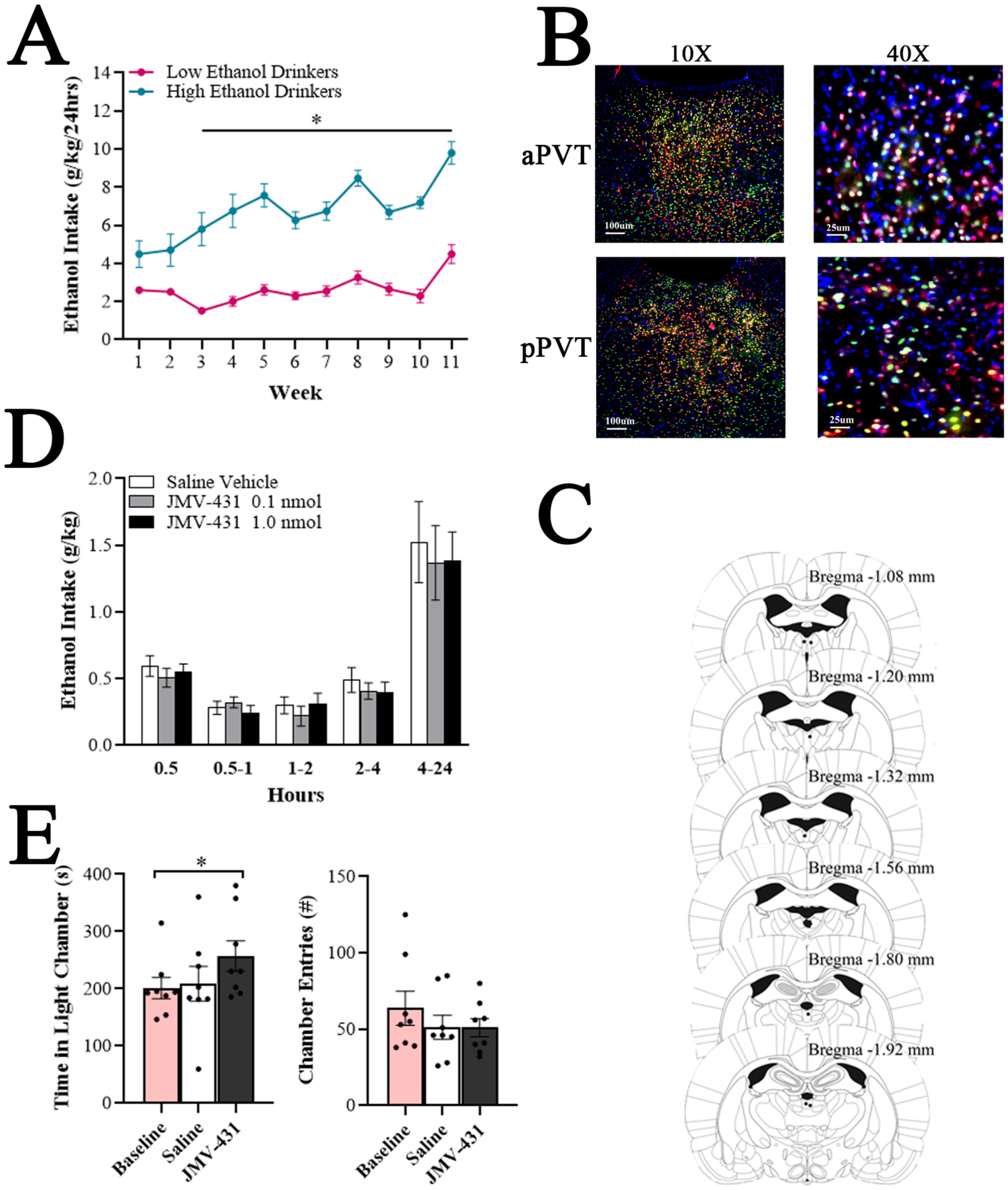
We gave adult male Long-Evans rats 20% EtOH under the intermittent access 2-bottle-choice paradigm or maintained them on chow and water for up to 11 weeks. Prior to EtOH exposure and following several weeks of access, during acute abstinence, we tested these groups for multiple behaviors. In the 12th week, during acute abstinence, we examined gene expression and peptide levels of NTS and its receptors in the anterior and posterior subregions of the PVT. Finally, in chronic EtOH drinkers, during acute abstinence, we microinjected the NTS receptor type 2 (NTS2R) agonist, JMV-431, in the anterior PVT (aPVT) and examined subsequent EtOH intake and behavior.
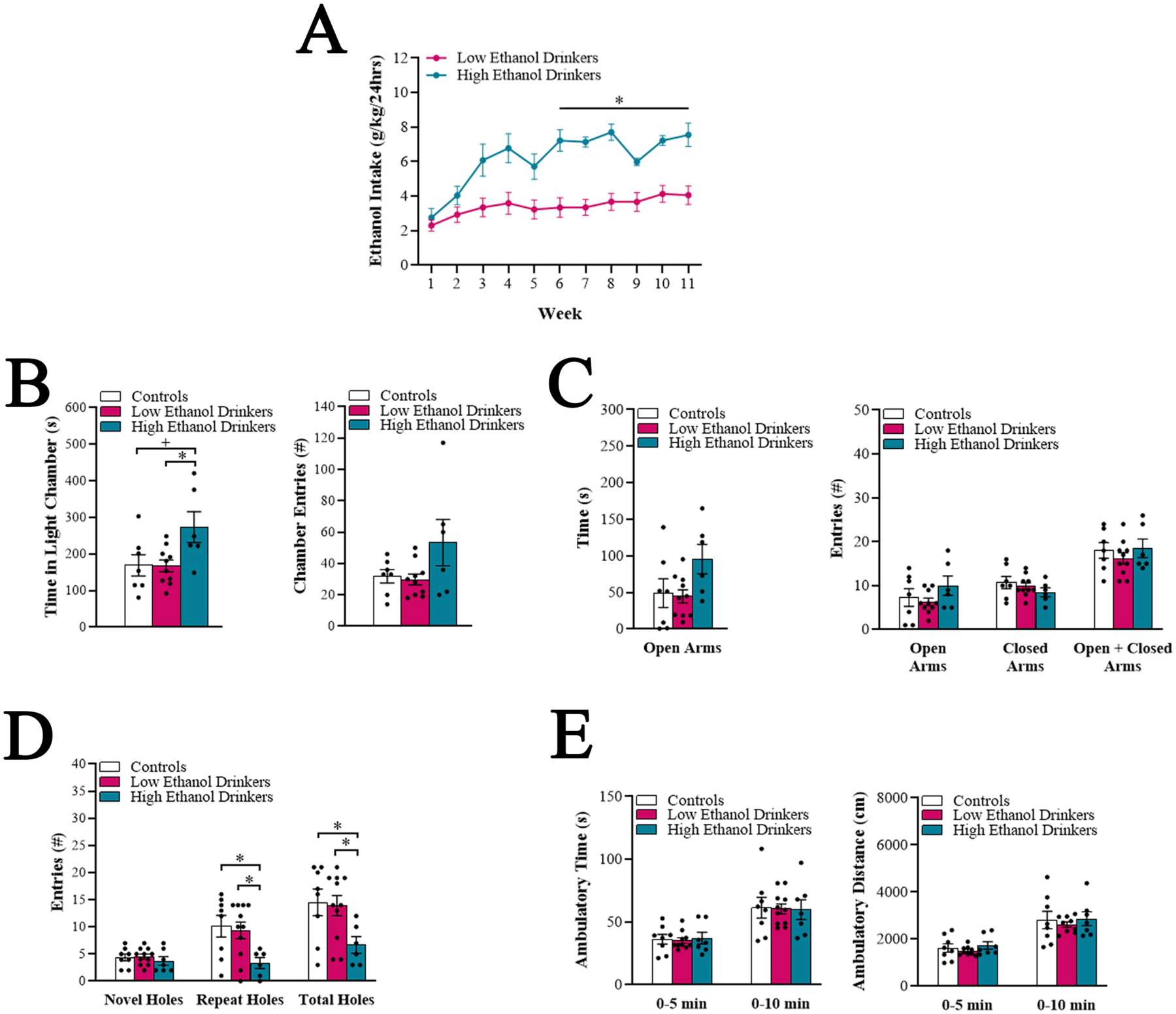
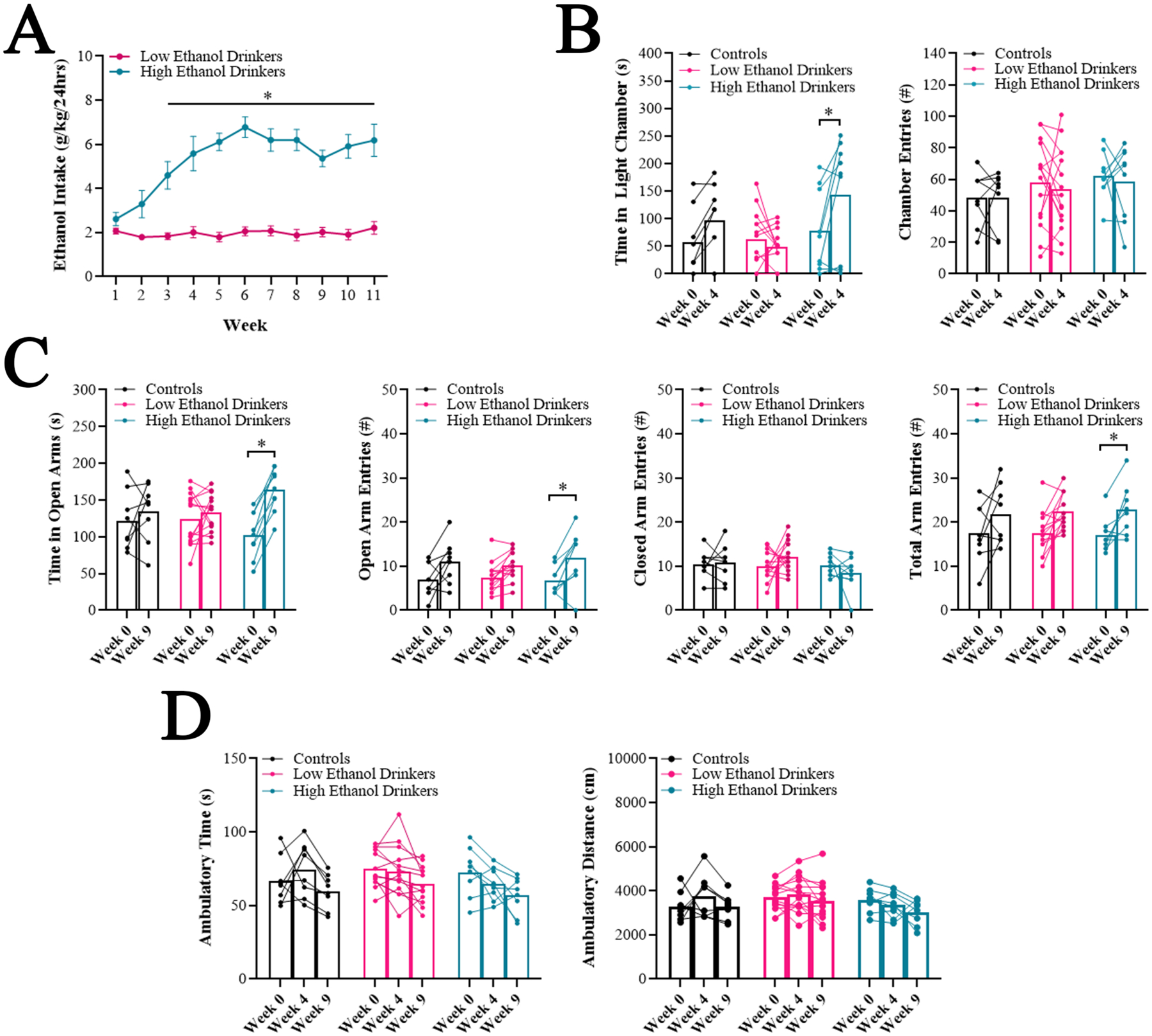
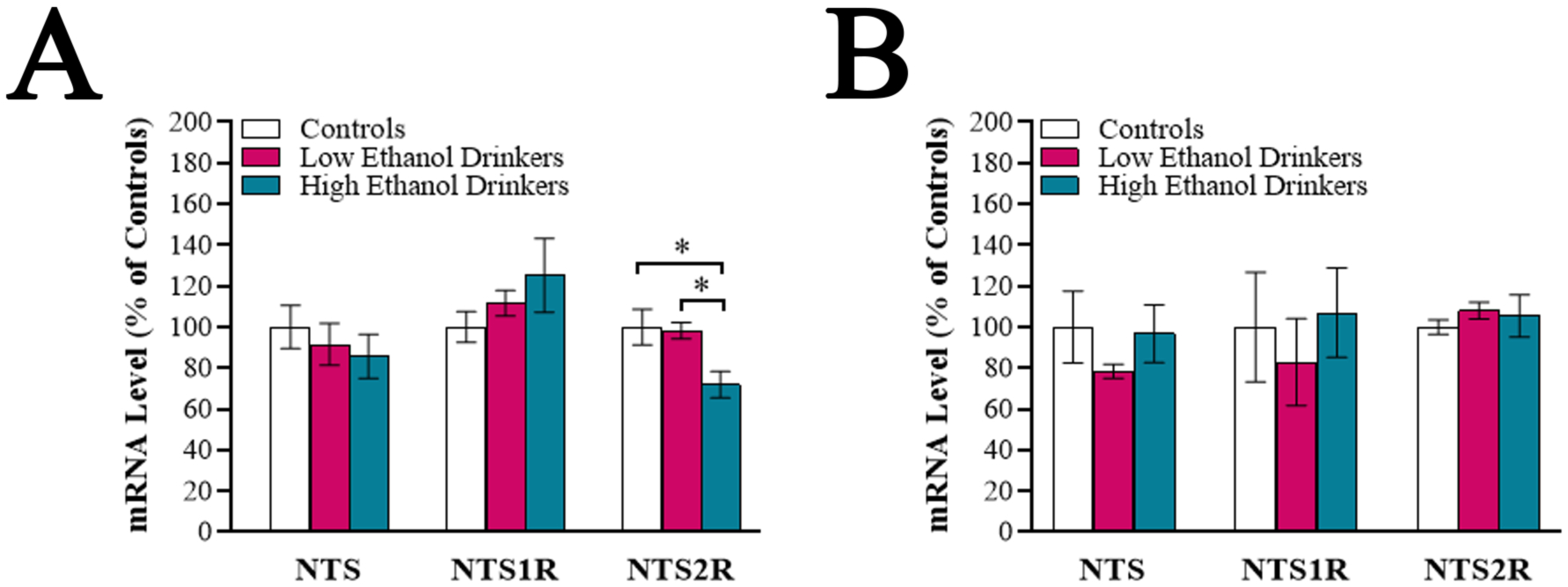
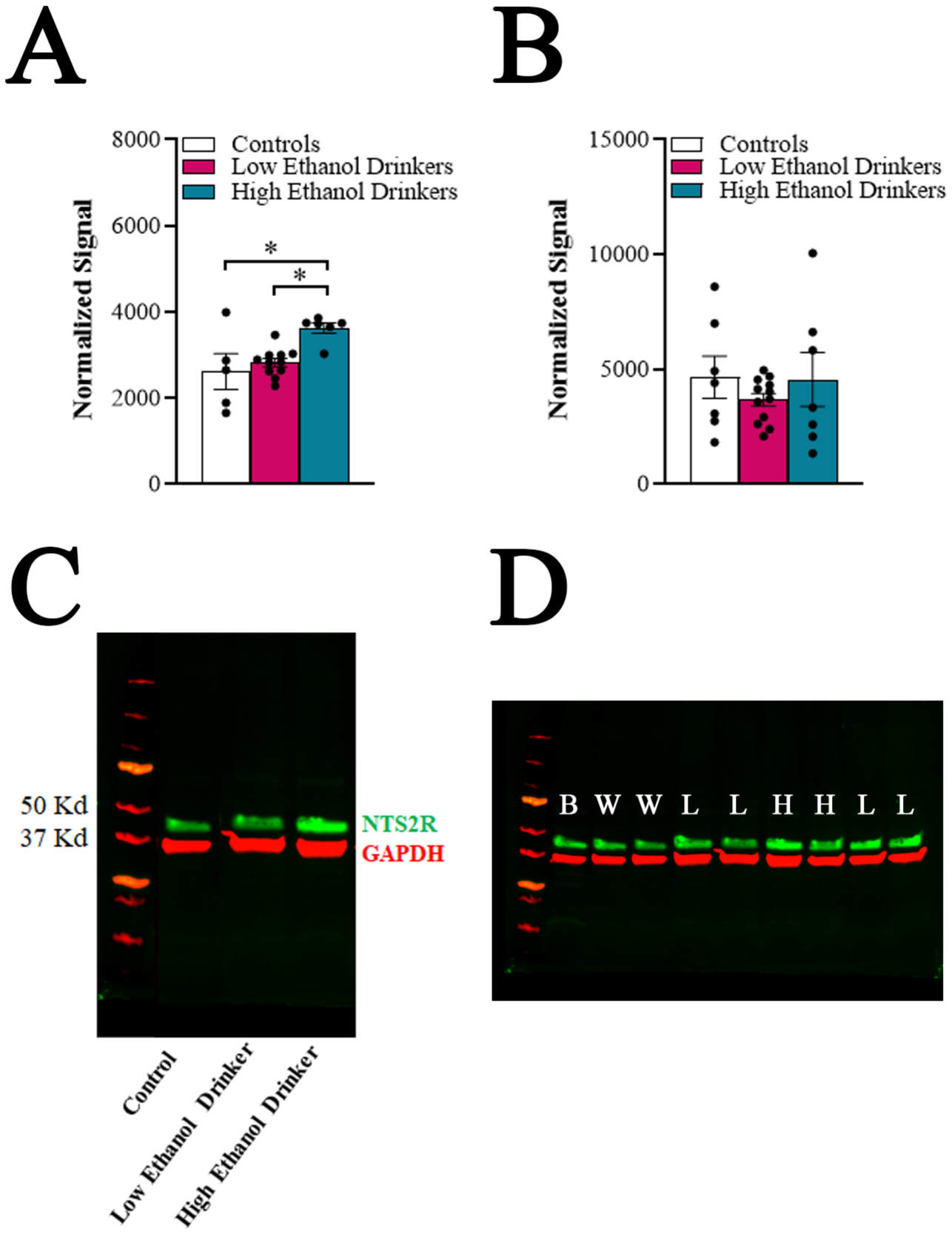
Following chronic intermittent EtOH access, rats were classified by cluster analysis as high or low EtOH drinkers. High EtOH drinkers spent more time in the light chamber of a light-dark box and open arms of an elevated plus maze and entered fewer familiar holes in a hole-board apparatus. These differences were absent prior to EtOH exposure but were detectable as early as 4 weeks into drinking. Time in the light chamber following chronic drinking also predicted level of subsequent drinking. High EtOH drinkers also showed elevated protein levels of NTS2R in the aPVT, and pharmacological stimulation of aPVT NTS2R in low drinkers mimicked the increased time spent in the light chamber that was observed in high drinkers.
Our findings suggest that chronic, excessive, but not lower level, EtOH drinking induces heightened or flexible exploratory behavior, which predicts future EtOH drinking and is partly mediated by elevated NTS2R signaling in the aPVT. These EtOH-induced alterations represent adaptations that could perpetuate excessive drinking and lead to the development of EtOH dependence.
慢性、过量饮酒者,即使没有依赖,也会表现出行为和神经化学系统的变化。识别这些变化及其相互关系可能为预防和治疗酒精使用障碍提供新途径。我们最近在大鼠中证明,室旁丘脑(PVT)中的神经降压素(NTS)调节过量乙醇(EtOH)的摄入。在这里,我们研究了慢性 EtOH 摄入对 PVT-NTS 系统的影响及其对 EtOH 诱导的行为变化的贡献。
我们给予成年雄性长耳大鼠 20% EtOH 间歇式双瓶选择范式,或维持在 Chow 和水直至 11 周。在暴露于 EtOH 之前和在几周的接触后,在急性戒断期间,我们测试了这些组的多种行为。在第 12 周,在急性戒断期间,我们检查了 PVT 前、后亚区 NTS 及其受体的基因表达和肽水平。最后,在慢性 EtOH 饮酒者中,在急性戒断期间,我们在前 PVT(aPVT)中微注射 NTS 受体 2 型(NTS2R)激动剂 JMV-431,并检查随后的 EtOH 摄入量和行为。
在慢性间歇 EtOH 摄入后,根据聚类分析,大鼠被分为高或低 EtOH 饮酒者。高 EtOH 饮酒者在明暗箱的亮室和高架十字迷宫的开放臂中花费的时间更多,在洞板装置中进入的熟悉洞更少。这些差异在暴露于 EtOH 之前不存在,但在饮酒后 4 周即可检测到。慢性饮酒后在亮室中的时间也预测了随后饮酒的水平。高 EtOH 饮酒者的 aPVT 中 NTS2R 的蛋白水平也升高,低饮酒者的 aPVT NTS2R 药理学刺激模拟了高饮酒者在亮室中花费的时间增加。
我们的研究结果表明,慢性、过量(但不是低水平)的 EtOH 摄入会引起更高或更灵活的探索行为,这预示着未来的 EtOH 摄入,部分是由 aPVT 中升高的 NTS2R 信号介导的。这些 EtOH 诱导的改变代表了可能延续过度饮酒并导致 EtOH 依赖发展的适应性变化。