Younes Maged, Aggett Peter, Aguilar Fernando, Crebelli Riccardo, Dusemund Birgit, Filipič Metka, Frutos Maria Jose, Galtier Pierre, Gott David, Gundert-Remy Ursula, Kuhnle Gunter Georg, Leblanc Jean-Charles, Lillegaard Inger Therese, Moldeus Peter, Mortensen Alicja, Oskarsson Agneta, Stankovic Ivan, Waalkens-Berendsen Ine, Woutersen Rudolf Antonius, Wright Matthew, Boon Polly, Chrysafidis Dimitrios, Gürtler Rainer, Mosesso Pasquale, Parent-Massin Dominique, Tobback Paul, Rincon Ana Maria, Tard Alexandra, Lambré Claude
EFSA J. 2018 Apr 5;16(4):e05235. doi: 10.2903/j.efsa.2018.5235. eCollection 2018 Apr.
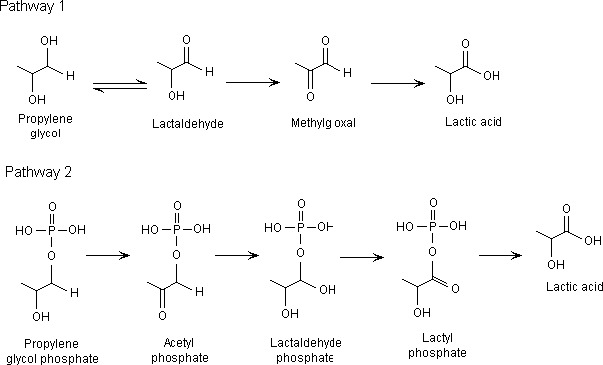
The EFSA Panel on Food Additives and Nutrient Sources added to Food (ANS) provides a scientific opinion re-evaluating the safety of propane-1,2-diol (E 1520) when used as a food additive. In 1996, the Scientific Committee on Food (SCF) established an acceptable daily intake (ADI) of 25 mg/kg body weight (bw) per day for propane-1,2-diol. Propane-1,2-diol is readily absorbed from the gastrointestinal and is expected to be widely distributed to organs and tissues. The major route of metabolism is oxidation to lactic acid and pyruvic acid. At high concentrations, free propane-1,2-diol is excreted in the urine. No treatment-related effects were observed in subchronic toxicity studies. The available data did not raise concern with respect to genotoxicity. Haematological changes suggestive of an increased red blood cell destruction with a compensatory increased rate of haematopoiesis were observed at the highest dose level (5,000 mg/kg bw per day) in a 2-year study in dogs. No adverse effects were reported in a 2-year chronic study in rats with propane-1,2-diol (up to 2,500 mg/kg bw per day). The SCF used this study to derive the ADI. No adverse effects were observed in the available reproductive and developmental toxicity studies. Propane-1,2-diol (E 1520) is authorised according to Annex III in some food additives, food flavourings, enzymes and nutrients and it is then carried over to the final food. Dietary exposure to E 1520 was assessed based on the use levels and analytical data. The Panel considered that for the food categories for which information was available, the exposure was likely to be overestimated. Considering the toxicity database, the Panel concluded that there was no reason to revise the current ADI of 25 mg/kg bw per day. The Panel also concluded that the mean and the high exposure levels (P95) of the brand-loyal refined exposure scenario did not exceed the ADI in any of the population groups from the use of propane-1,2-diol (E 1520) at the reported use levels and analytical results.
欧洲食品安全局食品添加剂和添加到食品中的营养源专家委员会(ANS)提供了一项科学意见,重新评估了1,2 - 丙二醇(E 1520)用作食品添加剂时的安全性。1996年,食品科学委员会(SCF)确定1,2 - 丙二醇的每日可接受摄入量(ADI)为25毫克/千克体重/天。1,2 - 丙二醇易于从胃肠道吸收,预计会广泛分布于各器官和组织。主要代谢途径是氧化为乳酸和丙酮酸。在高浓度时,游离的1,2 - 丙二醇会经尿液排出。在亚慢性毒性研究中未观察到与处理相关的影响。现有数据未引发对遗传毒性的担忧。在一项为期两年的犬类研究中,在最高剂量水平(5000毫克/千克体重/天)观察到血液学变化,提示红细胞破坏增加并伴有代偿性造血速率升高。在一项为期两年的1,2 - 丙二醇大鼠慢性研究(最高剂量达2500毫克/千克体重/天)中未报告不良反应。SCF利用该研究得出ADI。在现有的生殖和发育毒性研究中未观察到不良反应。1,2 - 丙二醇(E 1520)在某些食品添加剂、食品香料、酶和营养物质中根据附件三获得授权,然后会带入最终食品中。基于使用水平和分析数据对E 1520的膳食暴露进行了评估。专家委员会认为,对于有信息可用的食品类别,暴露量可能被高估了。考虑到毒性数据库,专家委员会得出结论,没有理由修订当前25毫克/千克体重/天的ADI。专家委员会还得出结论,在报告的使用水平和分析结果下,品牌忠诚精炼暴露情景的平均和高暴露水平(P95)在任何人群组中均未超过使用1,2 - 丙二醇(E 1520)时的ADI。