Bampidis Vasileios, Azimonti Giovanna, Bastos Maria de Lourdes, Christensen Henrik, Dusemund Birgit, Kos Durjava Mojca, López-Alonso Marta, López Puente Secundino, Marcon Francesca, Mayo Baltasar, Pechová Alena, Petkova Mariana, Ramos Fernando, Sanz Yolanda, Villa Roberto Edoardo, Woutersen Ruud, Mantovani Alberto, Chesson Andrew, Dierick Noël, Gropp Jürgen, Martelli Giovanna, Renshaw Derek, López-Gálvez Gloria, Kouba Maryline
EFSA J. 2019 Feb 25;17(2):e05608. doi: 10.2903/j.efsa.2019.5608. eCollection 2019 Feb.
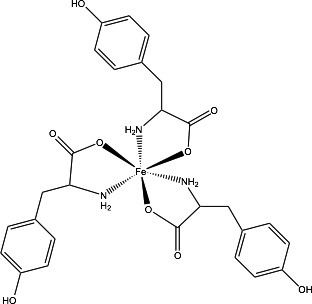
Following a request from the European Commission, EFSA was asked to deliver a scientific opinion on the safety and efficacy of the product TYFER™ (ferric tyrosine chelate) as zootechnical feed additive for chickens, turkeys and minor poultry species for fattening or reared for laying/breeding. The additive is safe for chickens for fattening at the maximum expected level of 200 mg TYFER™/kg complete feed; this conclusion can be extended to chickens reared for laying/breeding and extrapolated to turkeys and all minor poultry species for fattening or reared for laying/breeding. No concerns for consumer safety are expected from the use of the additive in poultry nutrition. The EFSA Panel on Additives and Products or Substances used in Animal Feed (FEEDAP) considers that the additive poses a risk to users by inhalation, and should also be considered as an irritant to skin, eyes and mucous membranes. Due to the presence of nickel, ferric tyrosine chelate should also be considered as a dermal and respiratory sensitiser. The supplementation of feed with the additive is not expected to pose an environmental risk. TYFER™ used at the minimum recommended level (20 mg/kg feed) in chickens diets has the potential to improve zootechnical parameters of birds. The additive at 20 mg/kg feed has the potential to reduce the caecal load spp. by at least 1 log-units in chickens for fattening, thus with a potential impact to reduce the risk of human campylobacteriosis; however, the Panel notes that the load of in the chickens caecum is one of the multiple factors that contribute to load in carcases-meat. The conclusions on the efficacy of the additive can be extended to chickens reared for laying/breeding and extrapolated to turkeys and all minor poultry species for fattening or reared for laying/breeding. The Panel recommends including a specification for maximum lithium content in a potential authorisation of the additive.
应欧盟委员会要求,欧洲食品安全局(EFSA)被要求就TYFER™(酪氨酸铁螯合物)作为鸡、火鸡及小型家禽育肥或产蛋/繁殖饲养用动物营养饲料添加剂的安全性和有效性发表科学意见。该添加剂在预期最高添加量为200毫克TYFER™/千克全价饲料时,对育肥鸡是安全的;这一结论可扩展至产蛋/繁殖饲养的鸡,并可外推至育肥或产蛋/繁殖饲养的火鸡及所有小型家禽。在家禽营养中使用该添加剂预计不会对消费者安全造成担忧。欧洲食品安全局动物饲料添加剂和产品或物质专家小组(FEEDAP)认为,该添加剂通过吸入对使用者构成风险,还应被视为对皮肤、眼睛和粘膜有刺激性。由于含有镍,酪氨酸铁螯合物还应被视为皮肤和呼吸道致敏剂。在饲料中添加该添加剂预计不会构成环境风险。在鸡日粮中以最低推荐水平(20毫克/千克饲料)使用TYFER™有改善家禽饲养技术参数的潜力。在育肥鸡中,20毫克/千克饲料的添加剂有潜力将盲肠弯曲杆菌数量至少减少1个对数单位,从而有可能降低人类弯曲杆菌病的风险;然而,专家小组指出,鸡盲肠中的弯曲杆菌数量是导致胴体肉中弯曲杆菌数量的多个因素之一。该添加剂有效性的结论可扩展至产蛋/繁殖饲养的鸡,并可外推至育肥或产蛋/繁殖饲养的火鸡及所有小型家禽。专家小组建议在该添加剂的潜在授权中纳入最大锂含量的规范。