Yao Weitao, Cai Qiqing, Wang Jiaqiang, Zhang Peng, Wang Xin, Du Xinhui, Niu Xiaohui
Bone and Soft Department, the Affiliated Cancer Hospital of Zheng Zhou University, He Nan cancer Hospital.
Department of Orthopedic Oncology Surgery, Beijing Ji Shui Tan Hospital, Peking University. Beijing, China, No. 31 Xin Jie Kou Dong Jie, Xi Cheng District, Beijing, China.
Medicine (Baltimore). 2020 Jul 2;99(27):e20715. doi: 10.1097/MD.0000000000020715.
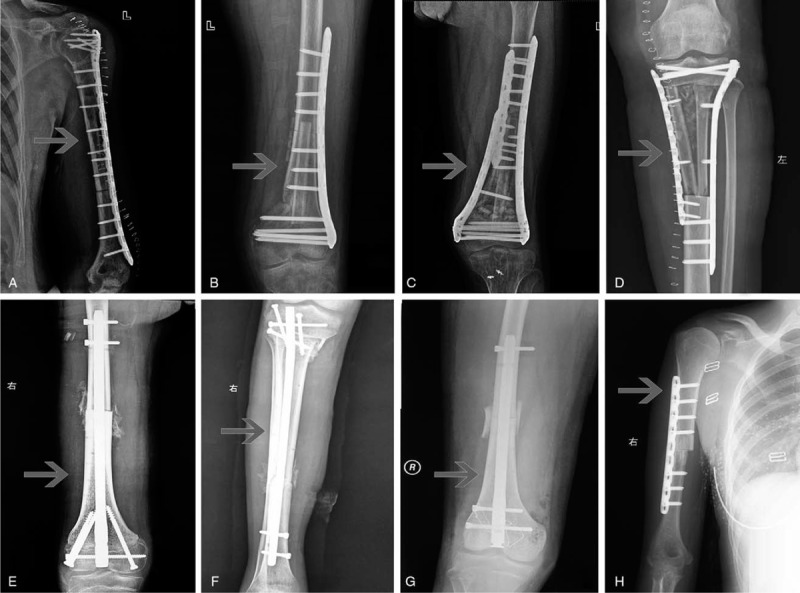
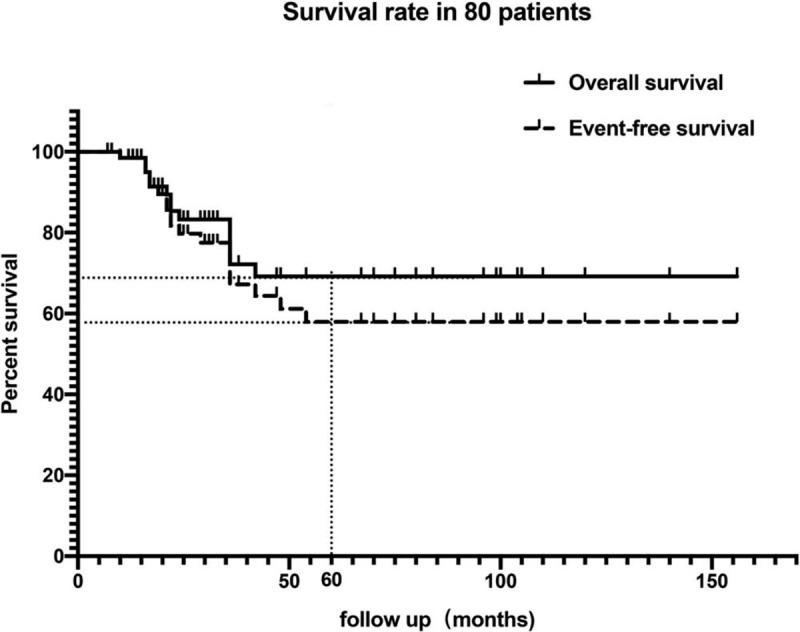
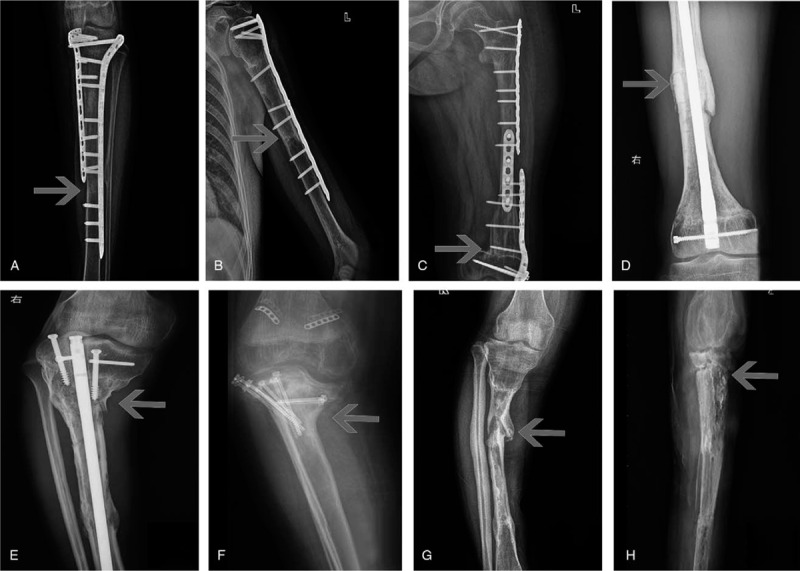
To understand the feasibility, clinical effect, and complications related to biological reconstruction techniques for long limb malignant bone tumors after excision.This retrospective study included eighty patients with malignant bone tumors treated at our hospital between January 2007 and January 2019. After tumor resection, 52 cases of intercalary and 28 cases of osteoarticular bone grafts were used. The implanted bone included devitalized recycling bone, fibular, and allograft.The average follow up period was 42.19 months for 80 patients, among whom 15 (18.75%) died. The 5-year EFS and OS were 58% and 69%, respectively. The average length of the replanted bone was 18.57 cm. The MSTS scores of intercalary and osteoarticular bone grafts were 87.24% and 64.00%, respectively. In 23 cases (44.23%) of metaphyseal and 26 cases (32.5%) of the diaphysis, bone graft union was obtained at the first stage. The factors affecting bone union were the patient's gender, age, devitalization bone methods and whether the implanted bone was completely fixed. Postoperative complications included delayed bone union in 15 patients, fractures in 25 cases, nonunion in 22 cases, bone resorption in 14 cases, and postoperative infection in 4 cases. Twenty-eight cases of bone grafting required revision surgery, including replacement of internal fixation, autologous bone graft, debridement, removal of internal fixation, and replacement with prosthetic replacement.Biological reconstructions with massive bone grafts are useful in the reconstruction of certain malignant extremity bone tumors after wide excision.
了解长骨恶性骨肿瘤切除术后生物重建技术的可行性、临床效果及相关并发症。本回顾性研究纳入了2007年1月至2019年1月在我院接受治疗的80例恶性骨肿瘤患者。肿瘤切除后,采用了52例节段性和28例骨关节骨移植。植入骨包括失活再利用骨、腓骨和同种异体骨。80例患者的平均随访期为42.19个月,其中15例(18.75%)死亡。5年无病生存率和总生存率分别为58%和69%。再植骨的平均长度为18.57厘米。节段性和骨关节骨移植的肌肉骨骼肿瘤学会(MSTS)评分分别为87.24%和64.00%。在23例(44.23%)干骺端和26例(32.5%)骨干病例中,一期获得了骨移植愈合。影响骨愈合的因素包括患者的性别、年龄、失活骨方法以及植入骨是否完全固定。术后并发症包括15例骨愈合延迟、25例骨折、22例骨不连、14例骨吸收和4例术后感染。28例骨移植需要翻修手术,包括更换内固定、自体骨移植、清创、取出内固定以及用假体置换。大块骨移植的生物重建在广泛切除后某些恶性肢体骨肿瘤的重建中是有用的。