Graduate Program in Immunology, University of Michigan Medical School, Ann Arbor, MI 48109, USA.
Division of Pulmonary and Critical Care Medicine, University of Michigan Medical School, Ann Arbor, MI, 48109, USA.
Cells. 2020 Jun 30;9(7):1589. doi: 10.3390/cells9071589.
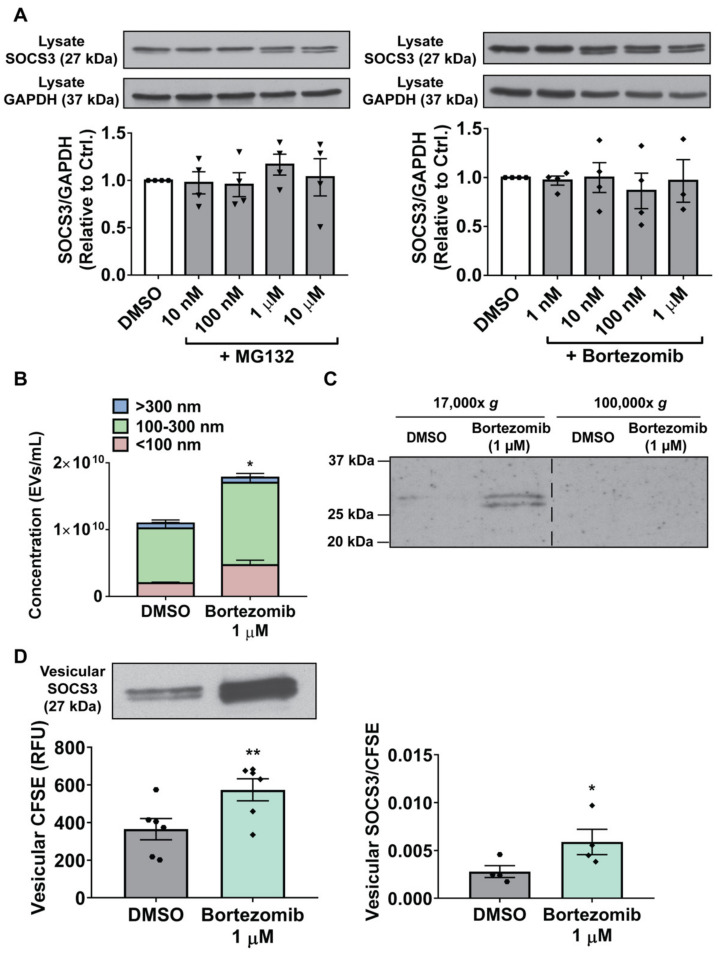
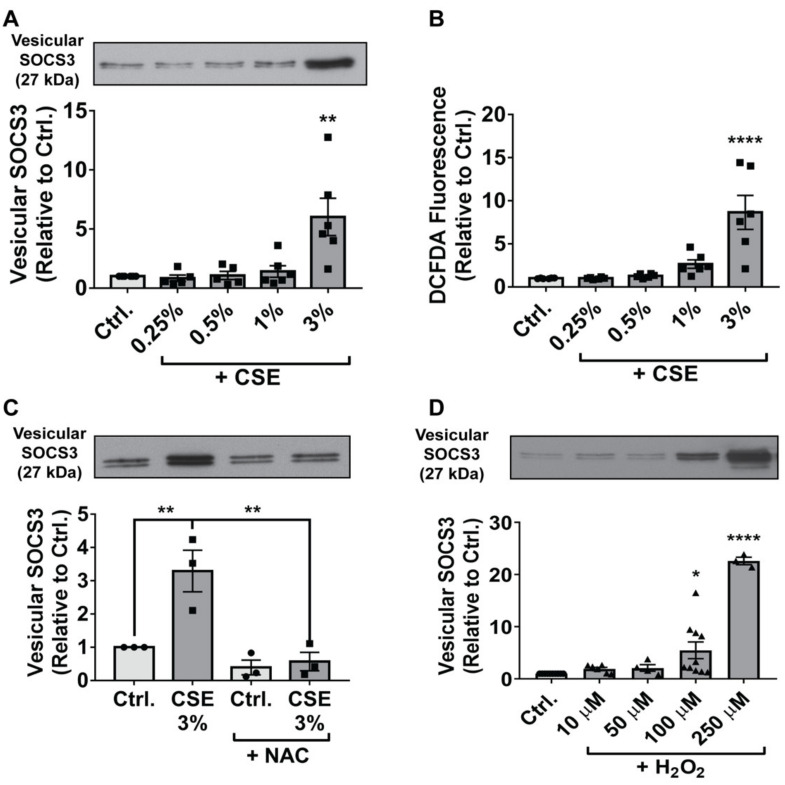
Extracellular vesicles (EVs) contain a diverse array of molecular cargoes that alter cellular phenotype and function following internalization by recipient cells. In the lung, alveolar macrophages (AMs) secrete EVs containing suppressor of cytokine signaling 3 (SOCS3), a cytosolic protein that promotes homeostasis via vesicular transfer to neighboring alveolar epithelial cells. Although changes in the secretion of EV molecules-including but not limited to SOCS3-have been described in response to microenvironmental stimuli, the cellular and molecular machinery that control alterations in vesicular cargo packaging remain poorly understood. Furthermore, the use of quantitative methods to assess the sorting of cytosolic cargo molecules into EVs is lacking. Here, we utilized cigarette smoke extract (CSE) exposure of AMs as an in vitro model of oxidative stress to address these gaps in knowledge. We demonstrate that the accumulation of reactive oxygen species (ROS) in AMs was sufficient to augment vesicular SOCS3 release in this model. Using nanoparticle tracking analysis (NTA) in tandem with a new carboxyfluorescein succinimidyl ester (CFSE)-based intracellular protein packaging assay, we show that the stimulatory effects of CSE were at least in part attributable to elevated amounts of SOCS3 packaged per EV secreted by AMs. Furthermore, the use of a 20S proteasome activity assay alongside treatment of AMs with conventional proteasome inhibitors strongly suggest that ROS stimulated SOCS3 release via inactivation of the proteasome. These data demonstrate that tuning of AM proteasome function by microenvironmental oxidants is a critical determinant of the packaging and secretion of cytosolic SOCS3 protein within EVs.
细胞外囊泡 (EVs) 包含多种分子货物,这些货物在被受体细胞内化后会改变细胞表型和功能。在肺部,肺泡巨噬细胞 (AMs) 分泌含有细胞因子信号转导抑制因子 3 (SOCS3) 的 EV,SOCS3 是一种胞质蛋白,通过囊泡转移到邻近的肺泡上皮细胞来促进内稳态。尽管已经描述了 EV 分子(包括但不限于 SOCS3)的分泌变化对微环境刺激的反应,但控制囊泡货物包装变化的细胞和分子机制仍知之甚少。此外,缺乏使用定量方法来评估胞质货物分子分拣到 EV 中的情况。在这里,我们利用 AM 暴露于香烟烟雾提取物 (CSE) 作为氧化应激的体外模型来解决这些知识空白。我们证明 AM 中活性氧 (ROS) 的积累足以增加该模型中囊泡 SOCS3 的释放。我们使用纳米颗粒跟踪分析 (NTA) 与新的羧基荧光素琥珀酰亚胺酯 (CFSE)-基于细胞内蛋白质包装测定的方法相结合,表明 CSE 的刺激作用至少部分归因于 AM 分泌的每一个 EV 中 SOCS3 的包装量增加。此外,使用 20S 蛋白酶体活性测定法以及用常规蛋白酶体抑制剂处理 AM,强烈表明 ROS 通过失活蛋白酶体刺激 SOCS3 释放。这些数据表明,微环境氧化剂对 AM 蛋白酶体功能的调节是细胞内 SOCS3 蛋白在 EV 中包装和分泌的关键决定因素。