Alkermes, Inc., 852 Winter Street, Waltham, MA, USA.
The University of Texas Health Science Center at San Antonio, 7703 Floyd Curl Drive, San Antonio, TX, USA.
BMC Psychiatry. 2020 Jul 6;20(1):354. doi: 10.1186/s12888-020-02767-x.
Oral antipsychotic (AP) medications are frequently prescribed to people with bipolar I disorder (BD-I). A cross-sectional online survey examined the experiences of people living with BD-I with a history of recent AP use.
Adults with self-reported physician-diagnosed BD-I (N = 200) who received oral APs during the prior year completed a survey on AP-related experiences, including side effects and their perceived burden on social functioning, adherence, and work. Items also assessed preferences for trade-offs (balancing symptom management and side effects) when considering a hypothetical new AP. The perceived impact of specific, prevalent side effects on adherence, work, and preferences for a hypothetical AP were also examined. Analyses were descriptive.
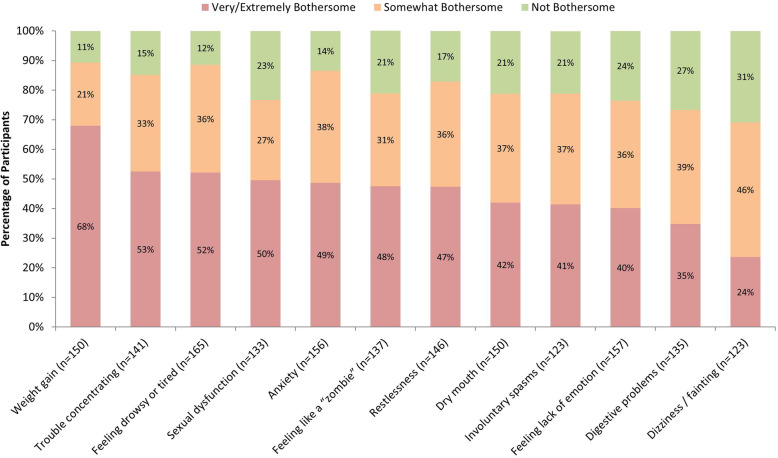
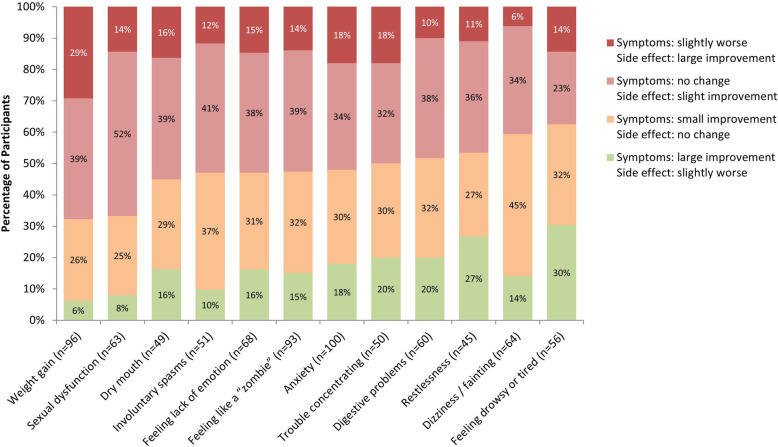
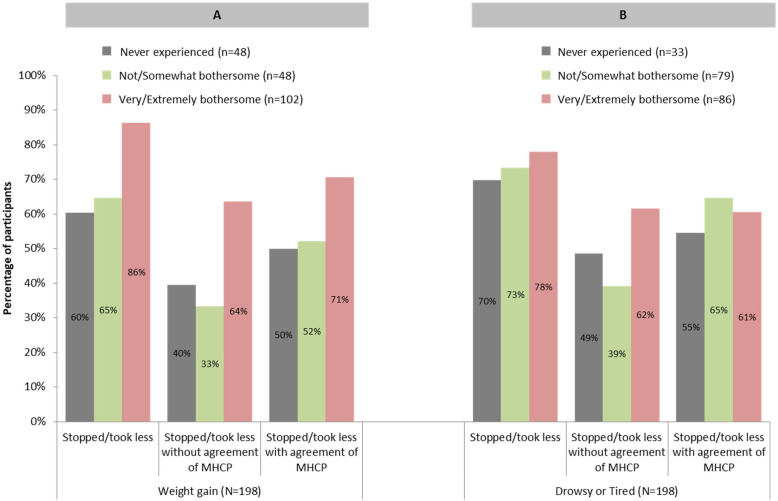
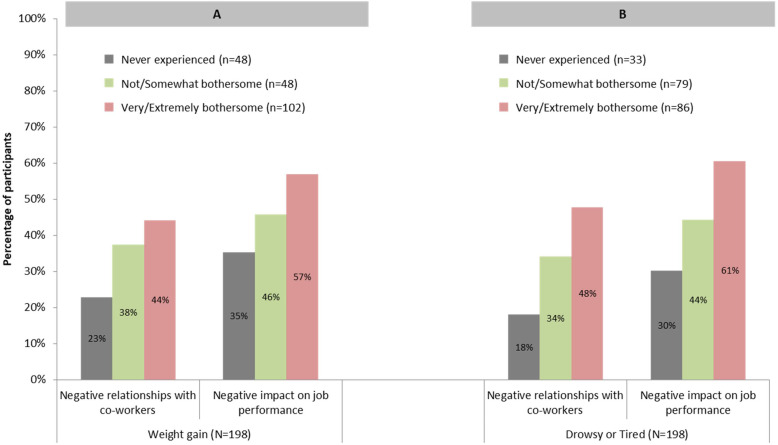
The survey sample had a mean age of 43.2 (SD = 12.4) years, was 60% female, and 31% nonwhite. Almost all participants (98%) had experienced AP side effects. Common self-reported side effects were feeling drowsy or tired (83%), lack of emotion (79%), anxiety (79%), dry mouth (76%), and weight gain (76%). Weight gain was cited as the most bothersome side effect, rated by most participants (68%) as "very" or "extremely bothersome." Nearly half of participants (49%) reported that AP side effects negatively impacted their job performance; almost all (92%) reported that side effects - most commonly anxiety and lack of emotion - negatively impacted social relationships (e.g., family or romantic partners). The most commonly-reported reason for stopping AP use was dislike of side effects (48%). Side effects most likely to lead to stopping or taking less of AP treatment included "feeling like a 'zombie'" (29%), feeling drowsy or tired (25%), and weight gain (24%). When considering a hypothetical new AP, the most common side effects participants wanted to avoid included AP-induced anxiety (50%), weight gain (48%), and "feeling like a 'zombie'" (47%).
Side effects of APs were both common and bothersome, and impacted social functioning, adherence, and work. Findings highlight the prevailing unmet need for new APs with more favorable benefit-risk profiles.
口服抗精神病药物(AP)经常被开给患有双相情感障碍 I 型(BD-I)的患者。一项横断面在线调查研究了近期使用过 AP 的 BD-I 患者的经历。
接受过口服 AP 治疗且在过去一年中被医生诊断为 BD-I 的成年人(N=200)完成了一项关于 AP 相关经历的调查,包括副作用及其对社会功能、依从性和工作的感知负担,同时评估了在考虑新的 AP 时对权衡(平衡症状管理和副作用)的偏好。还检查了特定的、普遍存在的副作用对依从性、工作和对假设性 AP 的偏好的影响。分析采用描述性方法。
调查样本的平均年龄为 43.2(SD=12.4)岁,60%为女性,31%为非白人。几乎所有参与者(98%)都经历过 AP 副作用。常见的自我报告副作用包括困倦或疲倦(83%)、缺乏情绪(79%)、焦虑(79%)、口干(76%)和体重增加(76%)。体重增加被认为是最令人烦恼的副作用,大多数参与者(68%)将其评为“非常”或“极其令人烦恼”。近一半的参与者(49%)报告 AP 副作用对工作表现产生负面影响;几乎所有人(92%)报告副作用-最常见的是焦虑和缺乏情绪-对社交关系产生负面影响(例如,家庭或恋爱伴侣)。停止使用 AP 的最常见原因是不喜欢副作用(48%)。最有可能导致停止或减少 AP 治疗的副作用包括“感觉像个‘僵尸’”(29%)、困倦或疲倦(25%)和体重增加(24%)。当考虑一种假设的新 AP 时,参与者最希望避免的常见副作用包括 AP 引起的焦虑(50%)、体重增加(48%)和“感觉像个‘僵尸’”(47%)。
AP 的副作用既常见又令人烦恼,并且影响社会功能、依从性和工作。研究结果突显了新的 AP 具有更有利的风险收益比的迫切需求。