Department of Gastroenterology, The First Affiliated Hospital of Nanjing Medical University, Nanjing, China.
J Cell Mol Med. 2020 Aug;24(15):8603-8613. doi: 10.1111/jcmm.15489. Epub 2020 Jul 7.
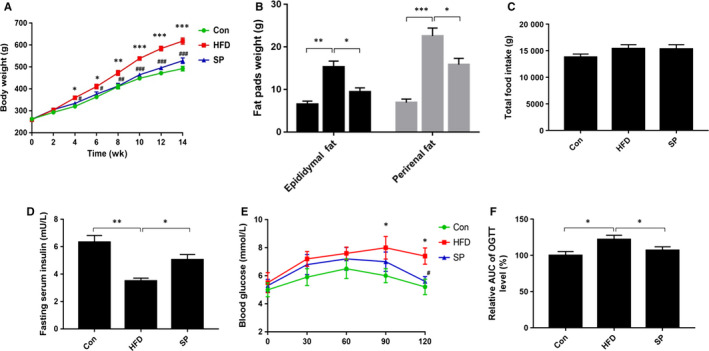
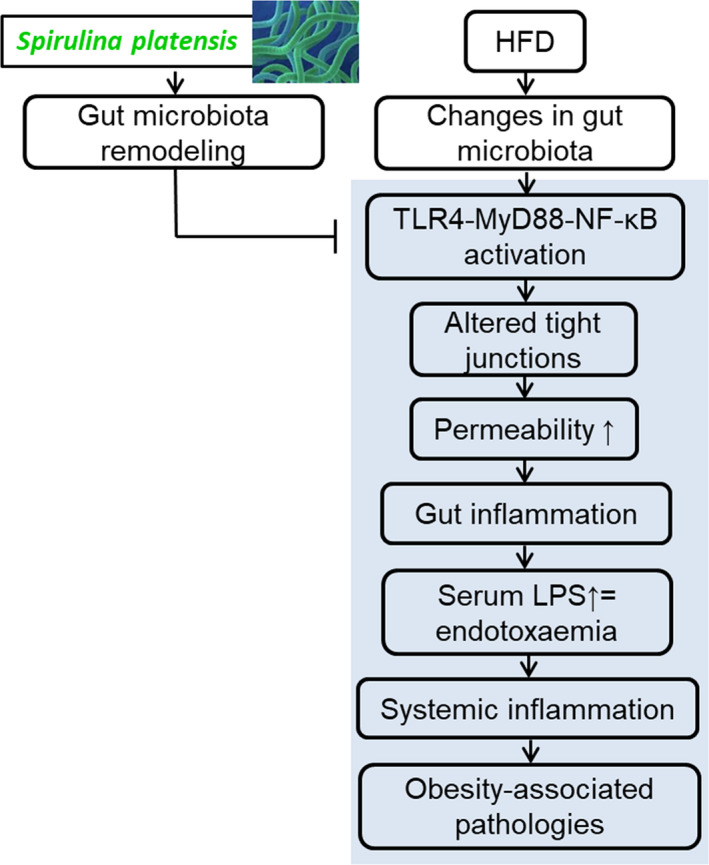
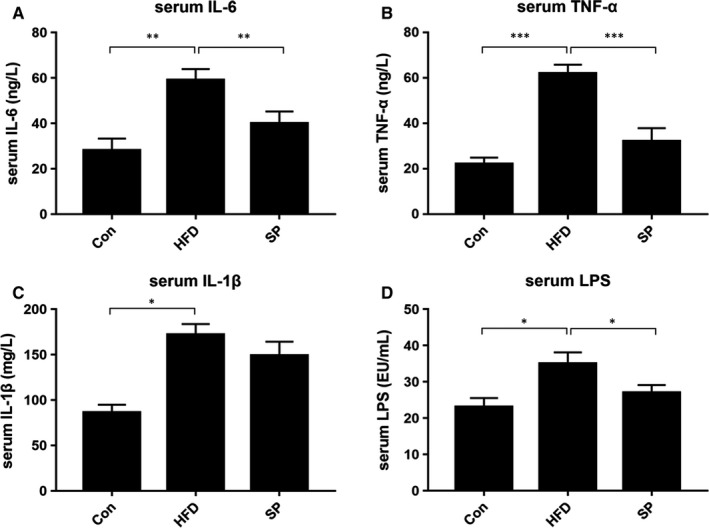
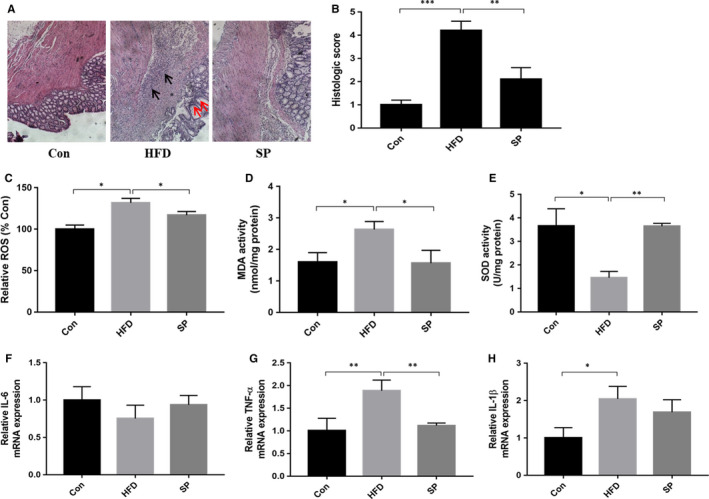
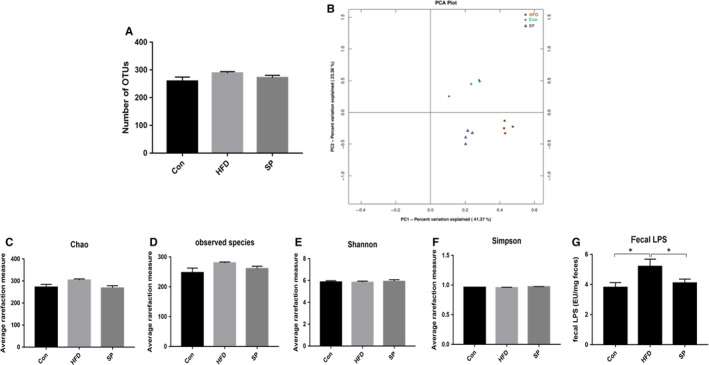
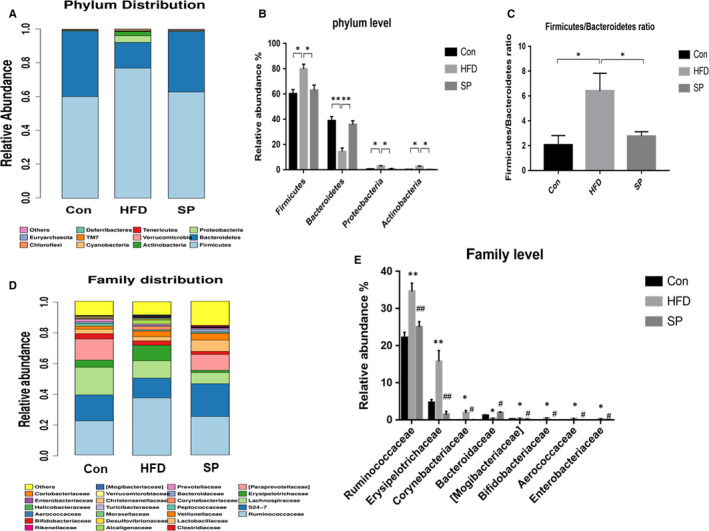
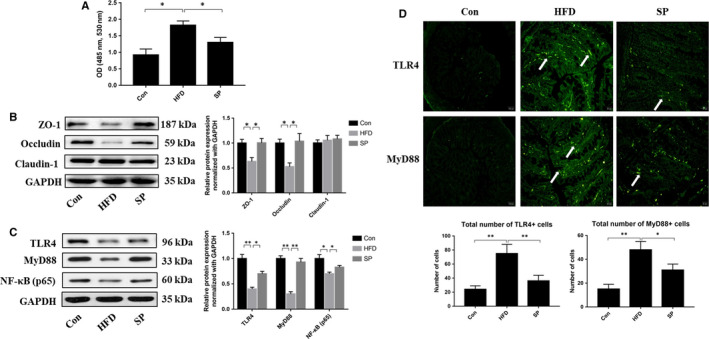
Recent research suggested that taking a high-fat diet (HFD) may lead to a gut microbiota imbalance and colon tissue damage. This would lead to increased intestinal permeability and consequent constant circulation of low-grade inflammatory cytokines. Spirulina platensis can protect against HFD-induced metabolic inflammation and can stimulate the growth of beneficial bacteria in in vitro stool cultures. However, it is unknown whether this beneficial effect acts on intestinal tissues. In this study, rats were fed a high-fat diet fed with 3% S platensis for 14 weeks. We analysed endotoxin, the composition of the microbiota, inflammation and gut permeability. We found that S platensis decreased the bodyweight and visceral fat pads weight of the HFD-fed rats. In addition, it lowered the levels of lipopolysaccharide and pro-inflammatory cytokines in serum. Our results showed that S platensis could largely reduce the relative amount of Proteobacteria and the Firmicutes/Bacteroidetes ratio in faecal samples from HFD-fed rats. S platensis significantly reduced intestinal inflammation, as shown by decreased expression of myeloid differentiation factor 88 (MyD88), toll-like receptor 4 (TLR4), NF-κB (p65) and inflammatory cytokines. S platensis also ameliorated the increased permeability and decreased expression of tight junction proteins in the intestinal mucosa, such as ZO-1, Occludin and Claudin-1. Therefore, in HFD-induced gut dysbiosis rats, S platensis benefits health by inhibiting chronic inflammation and gut dysbiosis, and modulating gut permeability.
最近的研究表明,高脂肪饮食(HFD)可能导致肠道微生物群落失衡和结肠组织损伤。这将导致肠道通透性增加,并随之引起低水平炎症细胞因子的持续循环。钝顶螺旋藻可以防止 HFD 引起的代谢性炎症,并可以刺激体外粪便培养中有益细菌的生长。然而,尚不清楚这种有益作用是否作用于肠道组织。在这项研究中,大鼠喂食高脂肪饮食,并添加 3%的 S 螺旋藻喂养 14 周。我们分析了内毒素、微生物群落组成、炎症和肠道通透性。我们发现 S 螺旋藻降低了高脂肪饮食喂养大鼠的体重和内脏脂肪垫重量。此外,它降低了血清中脂多糖和促炎细胞因子的水平。我们的结果表明,S 螺旋藻可以大大减少高脂肪饮食喂养大鼠粪便样本中变形菌门和厚壁菌门/拟杆菌门比值的相对含量。S 螺旋藻显著降低了肠道炎症,表现为髓样分化因子 88(MyD88)、Toll 样受体 4(TLR4)、NF-κB(p65)和炎症细胞因子的表达降低。S 螺旋藻还改善了肠道黏膜通透性的增加和紧密连接蛋白 ZO-1、Occludin 和 Claudin-1 的表达降低。因此,在 HFD 诱导的肠道菌群失调大鼠中,S 螺旋藻通过抑制慢性炎症和肠道菌群失调以及调节肠道通透性来有益于健康。