Department of Dermatology, Nihon University Hospital, Tokyo 101-830, Japan.
Plasma ChemiBio Laboratory, Nasushiobara, Tochigi 329-2813, Japan.
Int J Mol Sci. 2020 Jul 5;21(13):4771. doi: 10.3390/ijms21134771.
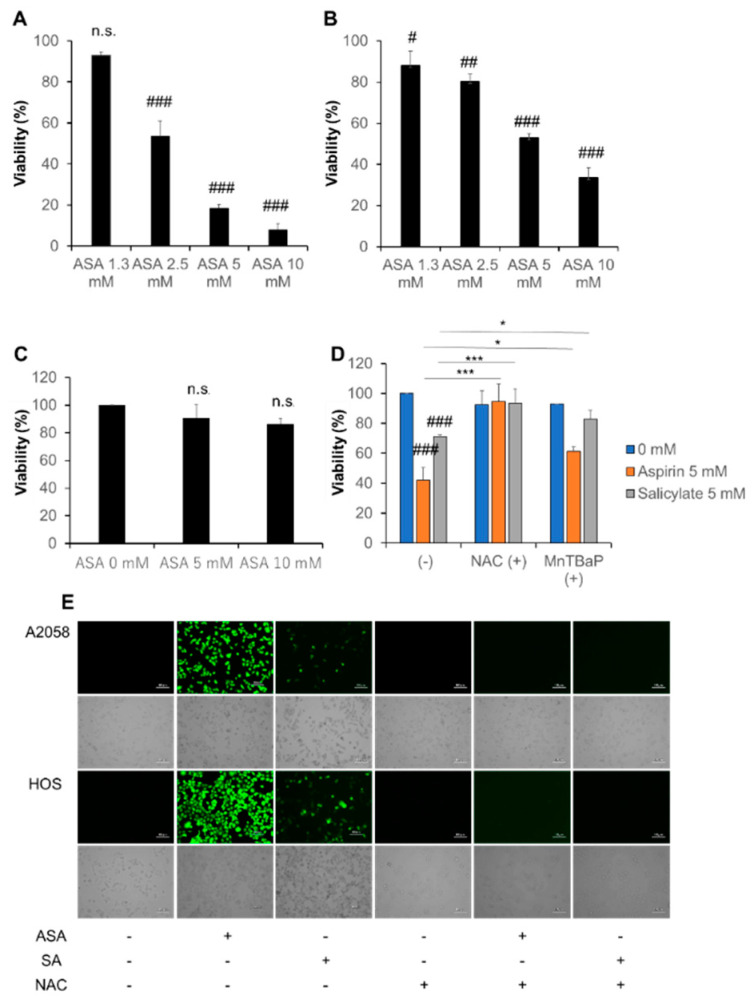
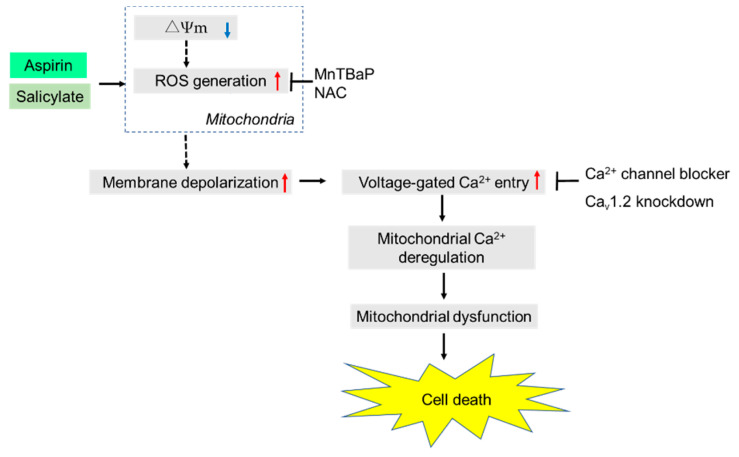
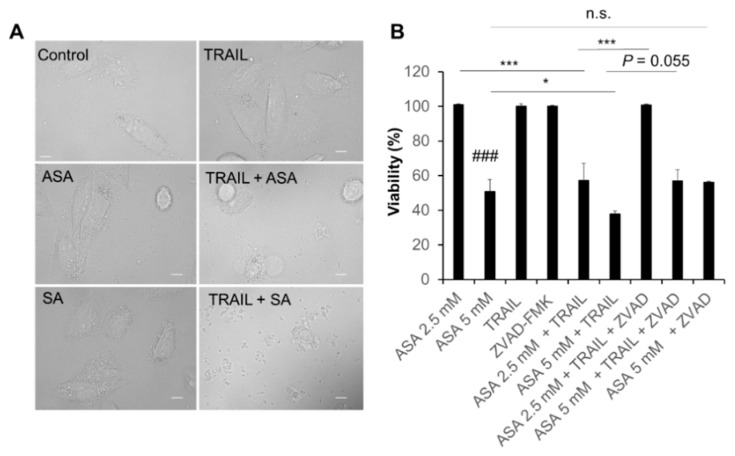
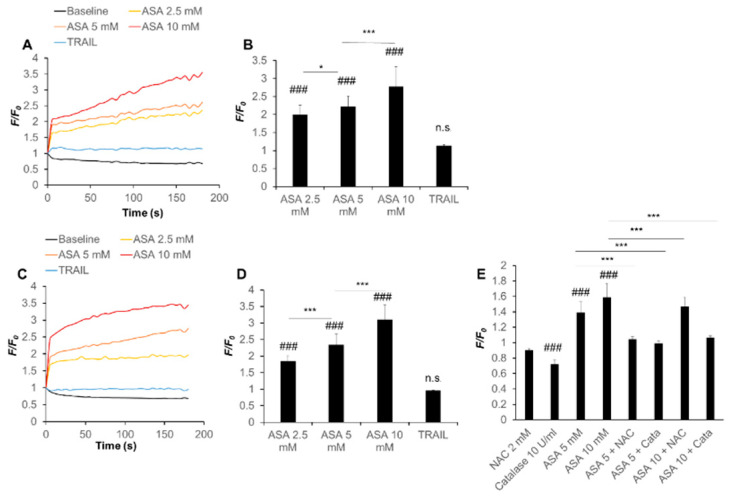
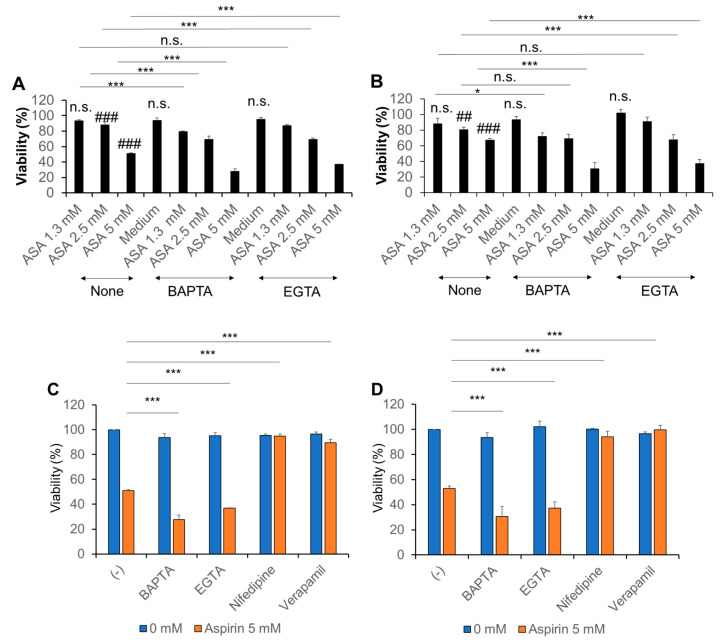
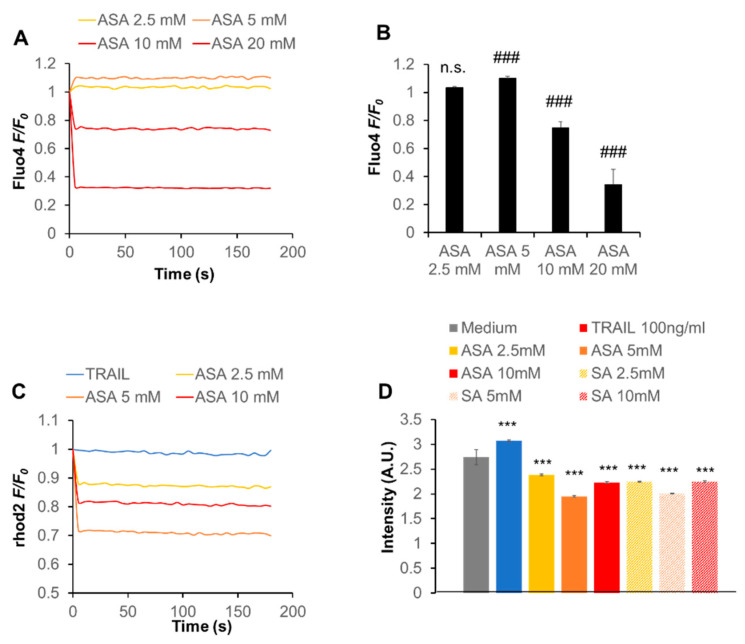
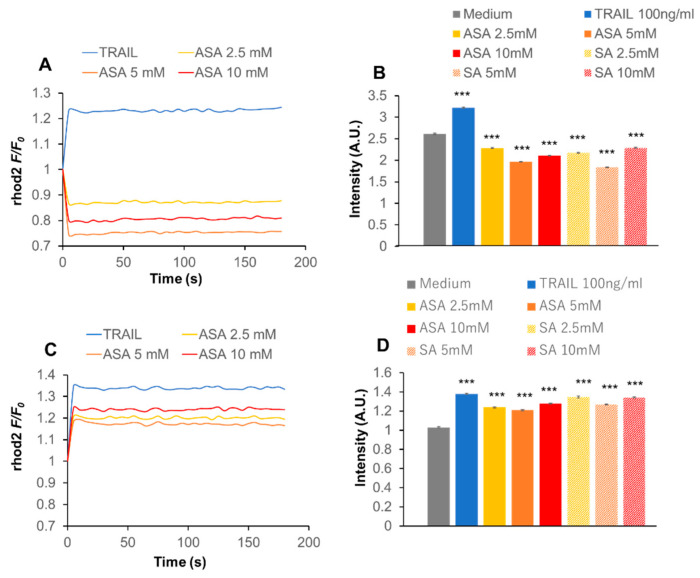
Aspirin (acetylsalicylic acid) and its metabolite salicylate, have an anti-melanoma effect by evoking mitochondrial dysfunction through poorly understood mechanisms. Depolarization of the plasma membrane potential leads to voltage-gated Ca entry (VGCE) and caspase-3 activation. In the present study, we investigated the role of depolarization and VGCE in aspirin's anti-melanoma effect. Aspirin and to a lesser extent, salicylate (≥2.5 mM) induced a rapid (within seconds) depolarization, while they caused comparable levels of depolarization with a lag of 2~4 h. Reactive oxygen species (ROS) generation also occurred in the two-time points, and antioxidants abolished the early ROS generation and depolarization. At the same concentrations, the two drugs induced apoptotic and necrotic cell death in a caspase-independent manner, and antioxidants and Ca channel blockers prevented cell death. Besides ROS generation, reduced mitochondrial Ca (Ca) and mitochondrial membrane potential preceded cell death. Moreover, the cells expressed the Ca1.2 isoform of l-type Ca channel, and knockdown of Ca1.2 abolished the decrease in Ca. Our findings suggest that aspirin and salicylate induce Ca remodeling, mitochondrial dysfunction, and cell death via ROS-dependent depolarization and VGCE activation.
阿司匹林(乙酰水杨酸)及其代谢产物水杨酸盐通过尚未完全阐明的机制引起线粒体功能障碍,从而产生抗黑色素瘤作用。质膜去极化导致电压门控钙内流(VGCE)和 caspase-3 激活。在本研究中,我们研究了去极化和 VGCE 在阿司匹林抗黑色素瘤作用中的作用。阿司匹林和在较小程度上水杨酸盐(≥2.5mM)引起快速(几秒钟内)去极化,而它们在 2-4 小时的滞后时间引起可比水平的去极化。两种药物在两个时间点都产生了活性氧物种(ROS),抗氧化剂消除了早期的 ROS 生成和去极化。在相同浓度下,两种药物以 caspase 非依赖性方式诱导凋亡和坏死细胞死亡,抗氧化剂和钙通道阻滞剂可预防细胞死亡。除了 ROS 生成之外,线粒体 Ca(Ca)减少和线粒体膜电位的降低先于细胞死亡。此外,细胞表达钙通道的 Ca1.2 同工型,而 Ca1.2 的敲低消除了 Ca 的减少。我们的发现表明,阿司匹林和水杨酸盐通过 ROS 依赖性去极化和 VGCE 激活诱导 Ca 重塑、线粒体功能障碍和细胞死亡。