Department of Infectious Disease Epidemiology, Robert Koch Institute, Berlin, Germany.
Charité, Universitätsmedizin Berlin, Berlin, Germany.
BMC Res Notes. 2020 Jul 7;13(1):326. doi: 10.1186/s13104-020-05158-3.
This study piloted a European technical protocol for conducting chronic hepatitis C prevalence surveys in the general population. The pilot study took place in the Bulgarian city of Stara Zagora in 2018, and results of setting up, conducting and evaluating the survey are presented.
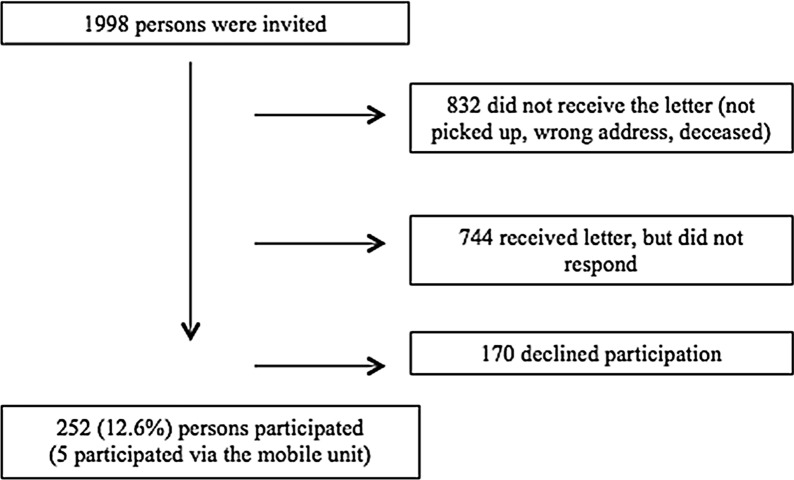
A probability-based sample of the general adult population was drawn from the local population registry, stratified by age and sex. A sample size of 999 was calculated, and accounting for 50% non-response, 1998 registered invitation letters were sent. Venous blood samples and questionnaire data were collected by the Regional Health Inspectorate in Stara Zagora. Blood samples were tested for anti-HCV, and if reactive for RNA. 252 (21.6%) of the participants were included in the study. Mean age and sex distribution differed between the participants (55.9 years, 60.3% females) and the total sample (48.9 years, 53.4%). The weighted chronic HCV prevalence among participants was 0.9% [95% CI 0.2-4.2%]. The approach of only sending registered letters contributed to a low response rate, and more efforts are needed to reduce non-response, especially among men and younger age groups. Results of the evaluation were integrated in the final technical protocol.
本研究试行欧洲技术方案,用于在普通人群中开展慢性丙型肝炎患病率调查。该试点研究于 2018 年在保加利亚城市斯塔拉扎戈拉进行,现将设立、开展和评估调查的结果呈现。
从当地人口登记处按年龄和性别分层抽取普通成年人口的概率样本。计算出样本量为 999 人,考虑到 50%的无应答率,共发出 1998 份注册邀请信。由斯塔拉扎戈拉地区卫生局收集静脉血样和问卷调查数据。对血液样本进行抗 HCV 检测,如果呈反应性,则进行 RNA 检测。252 名(21.6%)参与者纳入研究。参与者(55.9 岁,60.3%女性)和总样本(48.9 岁,53.4%女性)的平均年龄和性别分布存在差异。参与者中加权慢性 HCV 患病率为 0.9%[95%CI 0.2-4.2%]。仅发送挂号信的方法导致应答率较低,需要做出更多努力来减少无应答率,特别是在男性和年轻人群中。评估结果被整合到最终的技术方案中。