Matsushita Kenji, Yamada-Furukawa Masae, Kurosawa Mie, Shikama Yosuke
Department of Oral Disease Research, National Center for Geriatrics and Gerontology, Obu, Aichi 474-8511, Japan.
J Inflamm Res. 2020 Jun 30;13:275-283. doi: 10.2147/JIR.S255309. eCollection 2020.
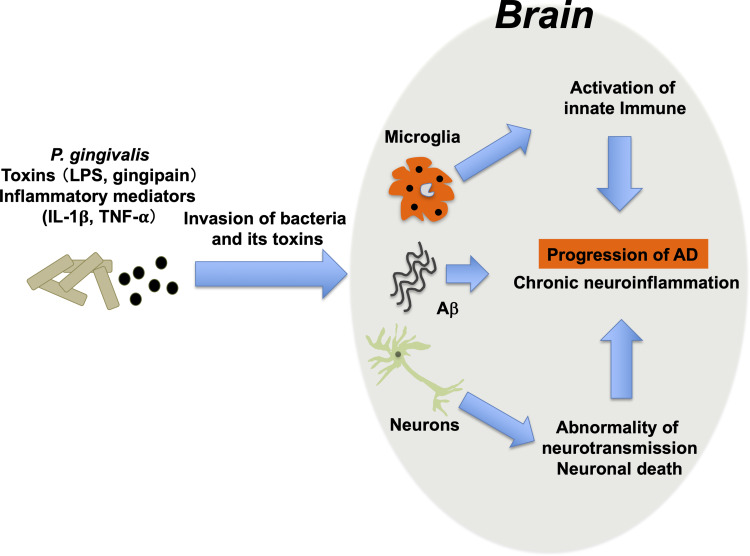
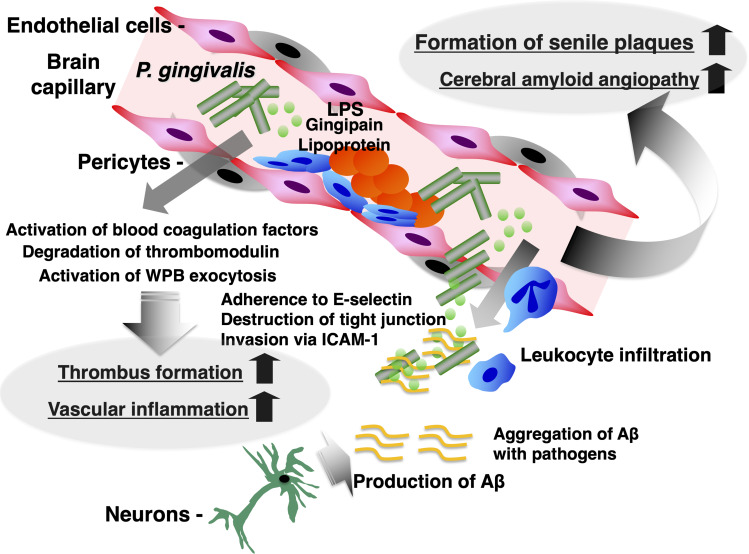
Alzheimer's disease (AD) is the most common cause of dementia, and it exhibits pathological properties such as deposition of extracellular amyloid β (Aβ) and abnormally phosphorylated Tau in nerve cells and a decrease of synapses. Conventionally, drugs targeting Aβ and its related molecules have been developed on the basis of the amyloid cascade hypothesis, but sufficient effects on the disease have not been obtained in past clinical trials. On the other hand, it has been pointed out that chronic inflammation and microbial infection in the brain may be involved in the pathogenesis of AD. Recently, attention has been focused on the relationship between the periodontopathic bacterium and AD. and its toxins have been detected in autopsy brain tissues from patients with AD. In addition, pathological conditions of AD are formed or exacerbated in mice infected with . Compounds that target the toxins of ameliorate the pathogenesis of AD triggered by infection. These findings indicate that the pathological condition of AD may be regulated by controlling the bacteria in the oral cavity and the body. In the current aging society, the importance of oral and periodontal care for preventing the onset of AD will increase.
阿尔茨海默病(AD)是痴呆最常见的病因,其具有细胞外淀粉样β蛋白(Aβ)沉积、神经细胞中Tau蛋白异常磷酸化以及突触减少等病理特征。传统上,基于淀粉样蛋白级联假说开发了针对Aβ及其相关分子的药物,但过去的临床试验中尚未获得对该疾病的充分疗效。另一方面,有人指出大脑中的慢性炎症和微生物感染可能与AD的发病机制有关。最近,人们关注牙周病原菌与AD之间的关系。在AD患者的尸检脑组织中已检测到其及其毒素。此外,感染的小鼠会形成或加重AD的病理状况。针对毒素的化合物可改善感染引发的AD发病机制。这些发现表明,AD的病理状况可能通过控制口腔和体内的细菌来调节。在当前老龄化社会中,口腔和牙周护理对预防AD发病的重要性将会增加。