Center for Comprehensive Care and Research on Memory Disorders, National Center for Geriatrics and Gerontology, Aichi, Japan.
Medical Genome Center, National Center for Geriatrics and Gerontology, Aichi, Japan.
Sci Rep. 2019 Jan 30;9(1):1008. doi: 10.1038/s41598-018-38218-7.
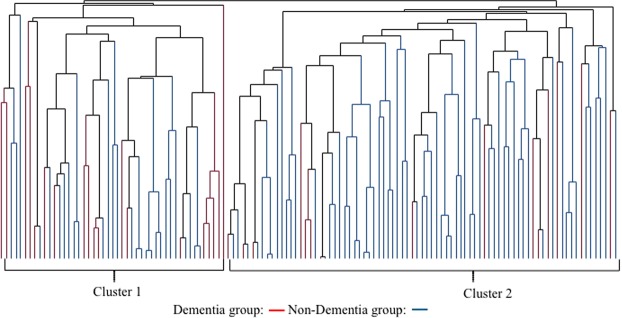
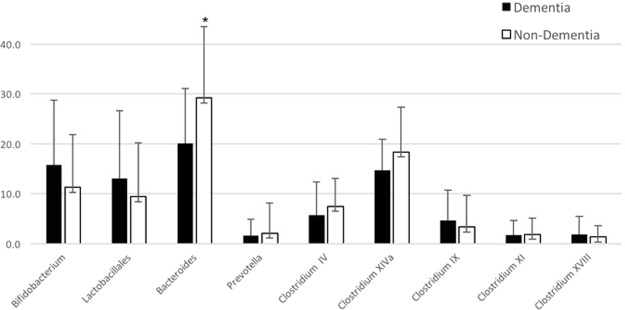
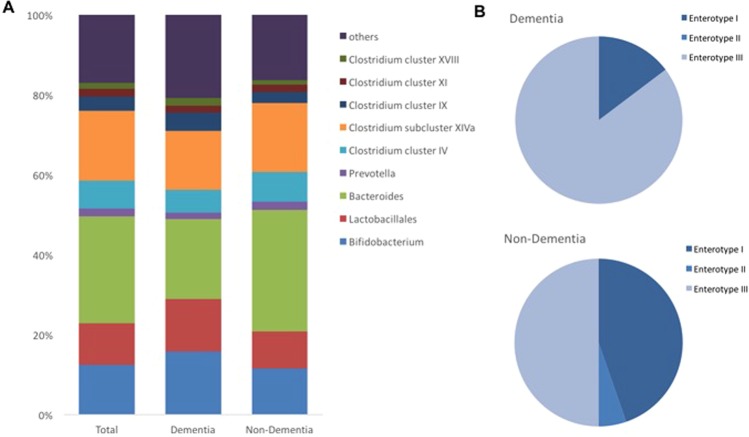
Dysregulation of the gut microbiome is associated with several life-threatening conditions and thus might represent a useful target for the prevention of dementia. However, the relationship between the gut microbial population and dementia has not yet been fully clarified. We recruited outpatients visiting our memory clinic to participate in this study. Information on patient demographics, risk factors, and activities of daily living was collected, and cognitive function was assessed using neuropsychological tests and brain magnetic resonance imaging scans. Faecal samples were obtained, and the gut microbiome was assessed by terminal restriction fragment length polymorphism (T-RFLP) analysis, one of the most well-established and reliable 16S ribosomal RNA-based methods for classifying gut microbiota. Patients were divided into two groups, demented and non-demented. Multivariable logistic regression models were used to identify the variables independently associated with dementia. The T-RFLP analysis revealed differences in the composition of the gut microbiome: the number of Bacteroides (enterotype I) was lower and the number of 'other' bacteria (enterotype III) was higher in demented than non-demented patients. Multivariable analyses showed that the populations of enterotype I and enterotype III bacteria were strongly associated with dementia, independent of the traditional dementia biomarkers. Further studies of the metabolites of gut microbes are needed to determine the mechanism underlying this association.
肠道微生物群的失调与几种危及生命的疾病有关,因此可能成为预防痴呆症的一个有用靶点。然而,肠道微生物群与痴呆症之间的关系尚未完全阐明。我们招募了来我们记忆诊所就诊的门诊病人参与这项研究。收集了患者人口统计学、风险因素和日常生活活动的信息,并通过神经心理学测试和大脑磁共振成像扫描评估认知功能。采集粪便样本,并通过末端限制性片段长度多态性(T-RFLP)分析评估肠道微生物群,这是最成熟和可靠的基于 16S 核糖体 RNA 分类肠道微生物群的方法之一。患者分为痴呆组和非痴呆组。使用多变量逻辑回归模型来确定与痴呆症独立相关的变量。T-RFLP 分析显示肠道微生物群组成存在差异:与非痴呆患者相比,痴呆患者的拟杆菌数量(肠型 I)较低,而“其他”细菌数量(肠型 III)较高。多变量分析表明,肠型 I 和肠型 III 细菌的种群与痴呆症密切相关,与传统的痴呆症生物标志物无关。需要进一步研究肠道微生物代谢物,以确定这种关联的机制。