Centre for Genomic and Experimental Medicine, Institute of Genetics and Molecular Medicine, University of Edinburgh, Edinburgh, EH4 2XU, UK.
Department of Computational Biology, University of Lausanne, 1015, Lausanne, Switzerland.
Genome Med. 2020 Jul 8;12(1):60. doi: 10.1186/s13073-020-00754-1.
The molecular factors which control circulating levels of inflammatory proteins are not well understood. Furthermore, association studies between molecular probes and human traits are often performed by linear model-based methods which may fail to account for complex structure and interrelationships within molecular datasets.
In this study, we perform genome- and epigenome-wide association studies (GWAS/EWAS) on the levels of 70 plasma-derived inflammatory protein biomarkers in healthy older adults (Lothian Birth Cohort 1936; n = 876; Olink® inflammation panel). We employ a Bayesian framework (BayesR+) which can account for issues pertaining to data structure and unknown confounding variables (with sensitivity analyses using ordinary least squares- (OLS) and mixed model-based approaches).
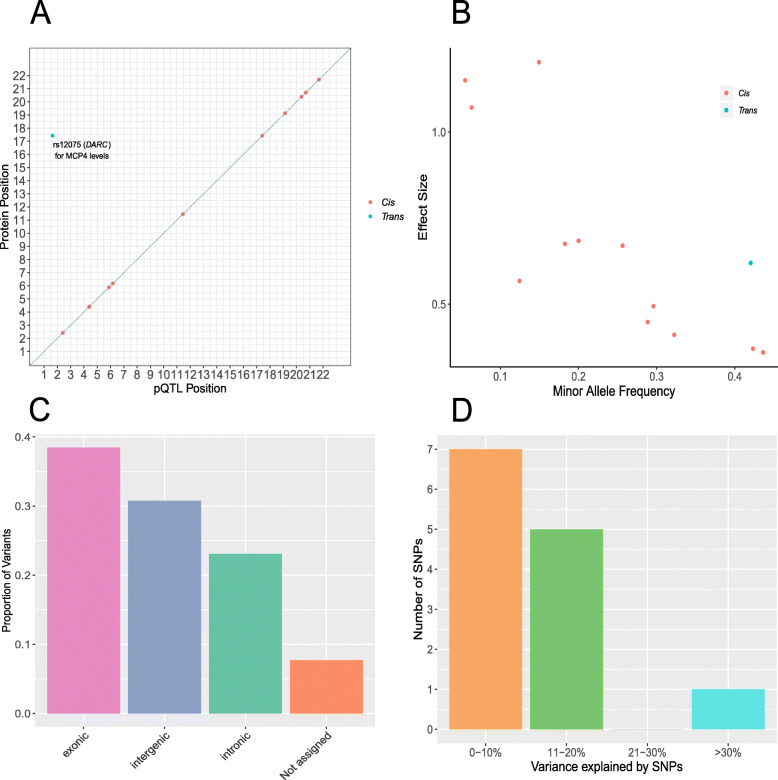
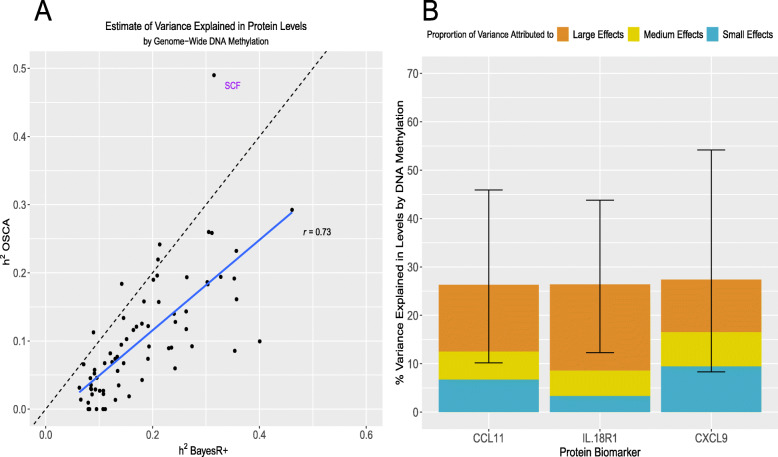
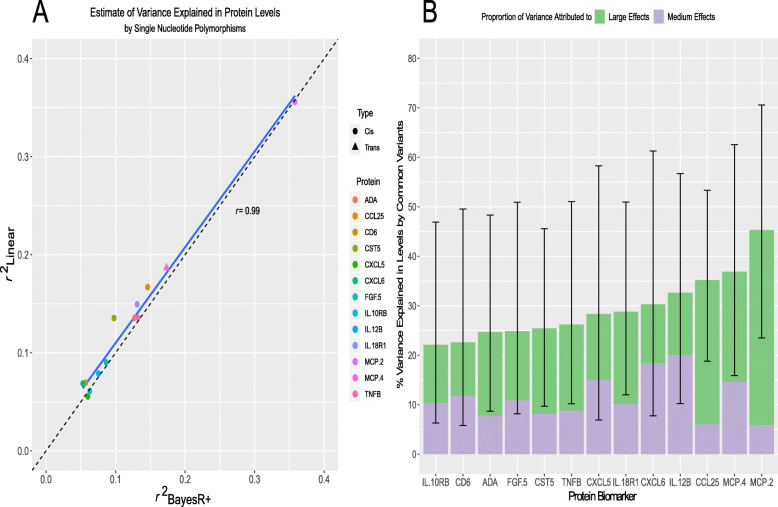
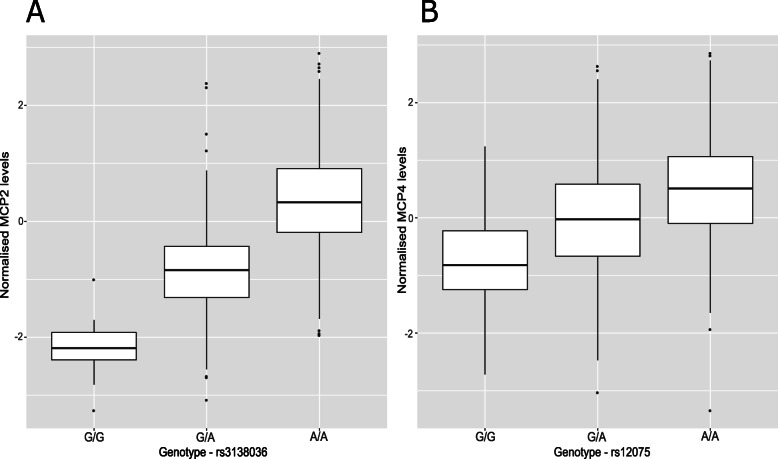
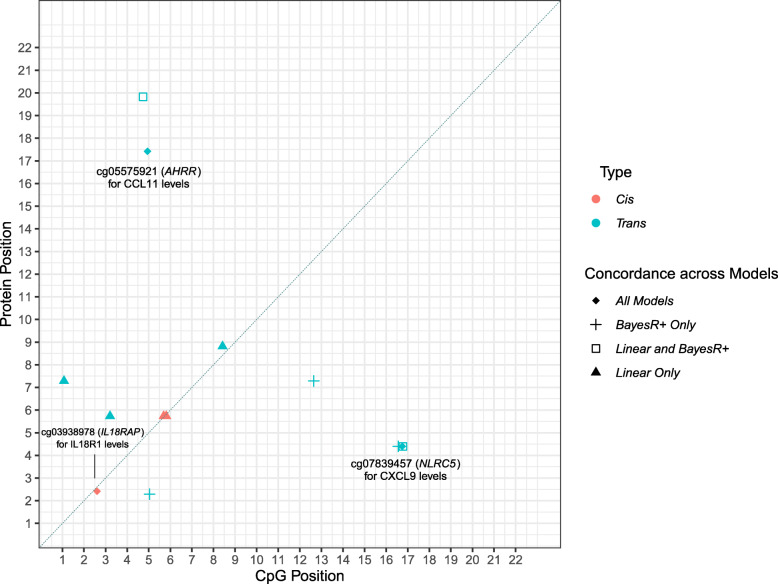
We identified 13 SNPs associated with 13 proteins (n = 1 SNP each) concordant across OLS and Bayesian methods. We identified 3 CpG sites spread across 3 proteins (n = 1 CpG each) that were concordant across OLS, mixed-model and Bayesian analyses. Tagged genetic variants accounted for up to 45% of variance in protein levels (for MCP2, 36% of variance alone attributable to 1 polymorphism). Methylation data accounted for up to 46% of variation in protein levels (for CXCL10). Up to 66% of variation in protein levels (for VEGFA) was explained using genetic and epigenetic data combined. We demonstrated putative causal relationships between CD6 and IL18R1 with inflammatory bowel disease and between IL12B and Crohn's disease.
Our data may aid understanding of the molecular regulation of the circulating inflammatory proteome as well as causal relationships between inflammatory mediators and disease.
控制循环炎症蛋白水平的分子因素尚不清楚。此外,分子探针与人类特征之间的关联研究通常采用基于线性模型的方法,这些方法可能无法解释分子数据集中的复杂结构和相互关系。
在这项研究中,我们对 70 种来自健康老年人(洛锡安出生队列 1936 年;n=876;Olink®炎症面板)的血浆衍生炎症蛋白生物标志物的水平进行了全基因组和全外显子组关联研究(GWAS/EWAS)。我们采用了一种贝叶斯框架(BayesR+),该框架可以解释数据结构和未知混杂变量的问题(使用普通最小二乘法(OLS)和混合模型为基础的方法进行敏感性分析)。
我们在 OLS 和贝叶斯方法中都发现了 13 个与 13 种蛋白相关的 SNP(每个 SNP 各一个)。我们发现了 3 个跨越 3 种蛋白的 CpG 位点(每个 CpG 各一个),它们在 OLS、混合模型和贝叶斯分析中是一致的。标记的遗传变异可以解释蛋白水平的高达 45%的方差(对于 MCP2,单独由 1 个多态性解释的方差高达 36%)。甲基化数据可以解释蛋白水平的高达 46%的变异(对于 CXCL10)。使用遗传和表观遗传数据相结合,可以解释高达 66%的蛋白水平变异(对于 VEGFA)。我们证明了 CD6 和 IL18R1 与炎症性肠病之间以及 IL12B 和克罗恩病之间存在潜在的因果关系。
我们的数据可能有助于理解循环炎症蛋白质组的分子调节以及炎症介质与疾病之间的因果关系。