López Carlos A, Abia Carmen, Rodrigues Joao E, Serrano-Sánchez Federico, Nemes Norbert M, Martínez José L, Fernandez-Díaz María T, Biškup Neven, Alvarez-Galván Consuelo, Carrascoso Felix, Castellanos-Gomez Andres, Alonso José A
Instituto de Ciencia de Materiales de Madrid, CSIC, Cantoblanco, 28049, Madrid, Spain.
INTEQUI (CONICET-UNSL), and Facultad de Química, Bioquímica y Farmacia, UNSL, 5700, Almirante Brown 1455, San Luis, Argentina.
Sci Rep. 2020 Jul 8;10(1):11228. doi: 10.1038/s41598-020-68085-0.
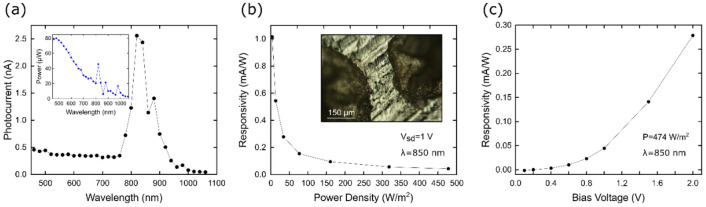
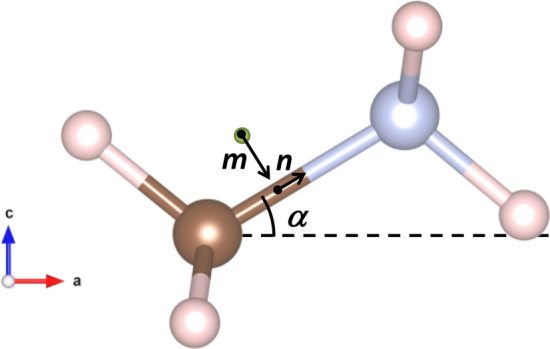
Among the hybrid organic-inorganic perovskites MAPbX (MA: methyl-ammonium CH-NH, X = halogen), the triiodide specimen (MAPbI) is still the material of choice for solar energy applications. Although it is able to absorb light above its 1.6 eV bandgap, its poor stability in humid air atmosphere has been a major drawback for its use in solar cells. However, we discovered that this perovskite can be prepared by ball milling in a straightforward way, yielding specimens with a superior stability. This fact allowed us to take atomic-resolution STEM images for the first time, with sufficient quality to unveil microscopic aspects of this material. We demonstrated full Iodine content, which might be related to the enhanced stability, in a more compact PbI framework with reduced unit-cell volume. A structural investigation from neutron powder diffraction (NPD) data of an undeuterated specimen was essential to determine the configuration of the organic MA unit in the 100-298 K temperature range. A phase transition is identified, from the tetragonal structure observed at RT (space group I4/mcm) to an orthorhombic (space group Pnma) phase where the methyl-ammonium organic units are fully localized. Our NPD data reveal that the MA changes are gradual and start before reaching the phase transition. Optoelectronic measurements yield a photocurrent peak at an illumination wavelength of 820 nm, which is redshifted by 30 nm with respect to previously reported measurements on MAPbI perovskites synthesized by crystallization from organic solvents.
在有机-无机杂化钙钛矿MAPbX(MA:甲基铵CH₃NH₃,X =卤素)中,三碘化物样品(MAPbI₃)仍然是太阳能应用的首选材料。尽管它能够吸收高于其1.6 eV带隙的光,但其在潮湿空气气氛中的稳定性较差一直是其用于太阳能电池的主要缺点。然而,我们发现这种钙钛矿可以通过球磨以直接的方式制备,得到具有优异稳定性的样品。这一事实使我们首次能够获得原子分辨率的扫描透射电子显微镜(STEM)图像,其质量足以揭示这种材料的微观方面。我们证明了在具有减小的晶胞体积的更紧凑的PbI₃框架中存在完整的碘含量,这可能与增强的稳定性有关。对未氘代样品的中子粉末衍射(NPD)数据进行结构研究对于确定100 - 298 K温度范围内有机MA单元的构型至关重要。确定了一个相变,从室温下观察到的四方结构(空间群I4/mcm)转变为正交结构(空间群Pnma)相,其中甲基铵有机单元完全定位。我们的NPD数据表明,MA的变化是渐进的,并且在达到相变之前就开始了。光电测量在820 nm的照明波长处产生一个光电流峰值,相对于先前报道的通过从有机溶剂中结晶合成的MAPbI₃钙钛矿的测量结果,该峰值发生了30 nm的红移。