Department of Biochemistry and Biophysics and Howard Hughes Medical Institute, University of California, San Francisco, San Francisco, CA, USA.
Department of Physiology, University of California, San Francisco, San Francisco, CA, USA.
Nature. 2020 Sep;585(7823):141-145. doi: 10.1038/s41586-020-2480-9. Epub 2020 Jul 8.
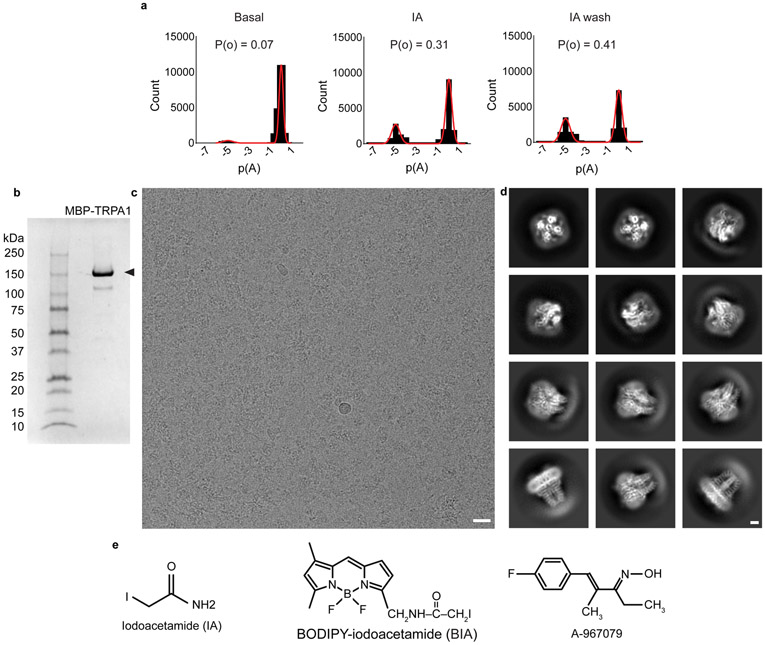
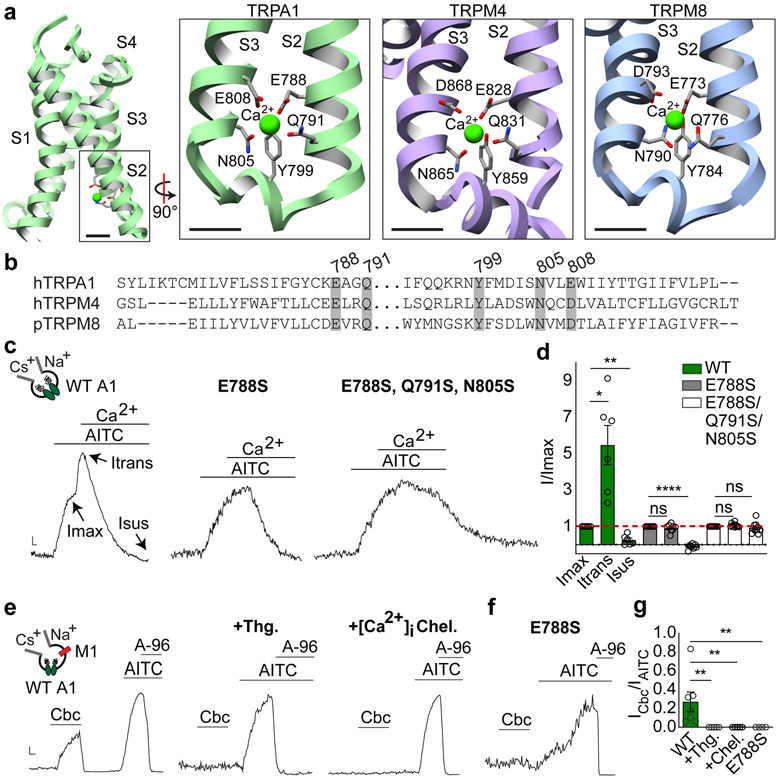
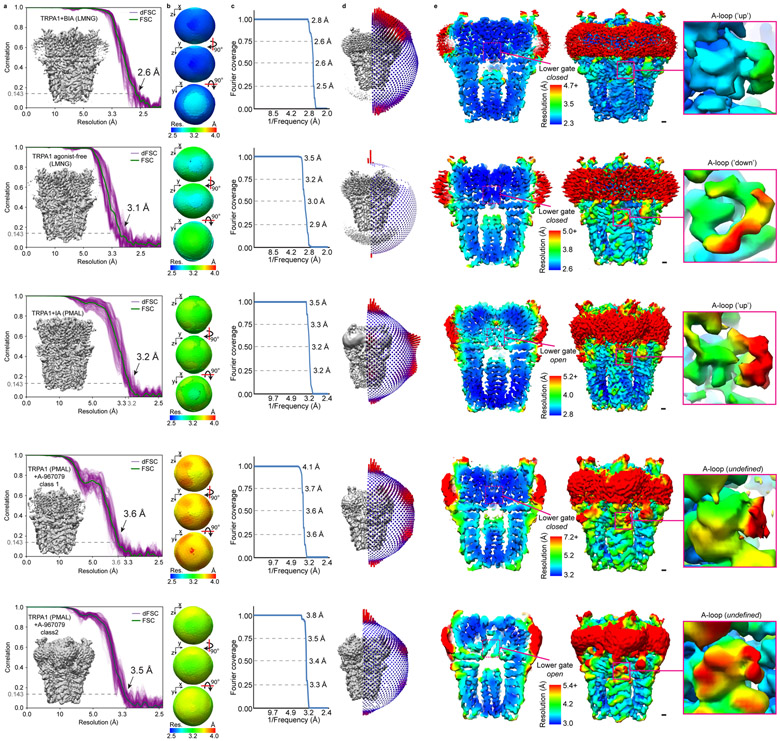
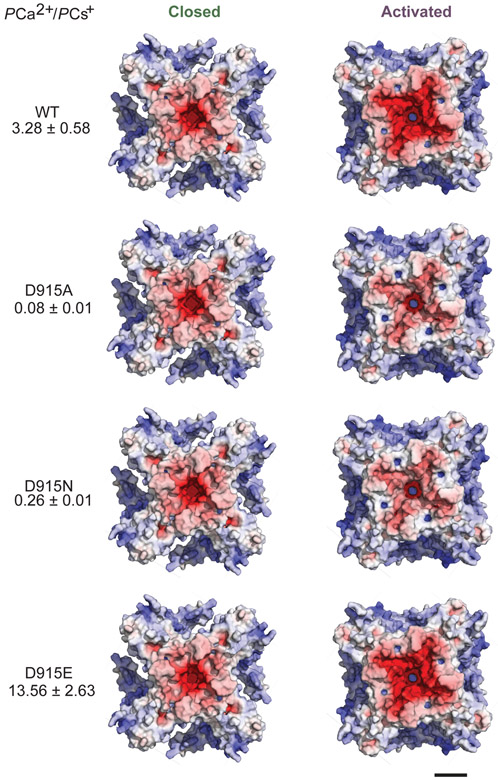
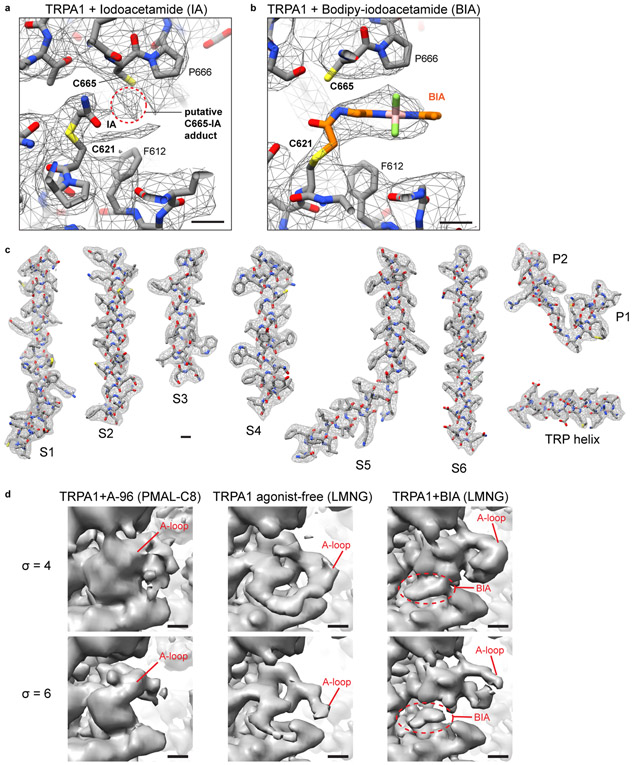
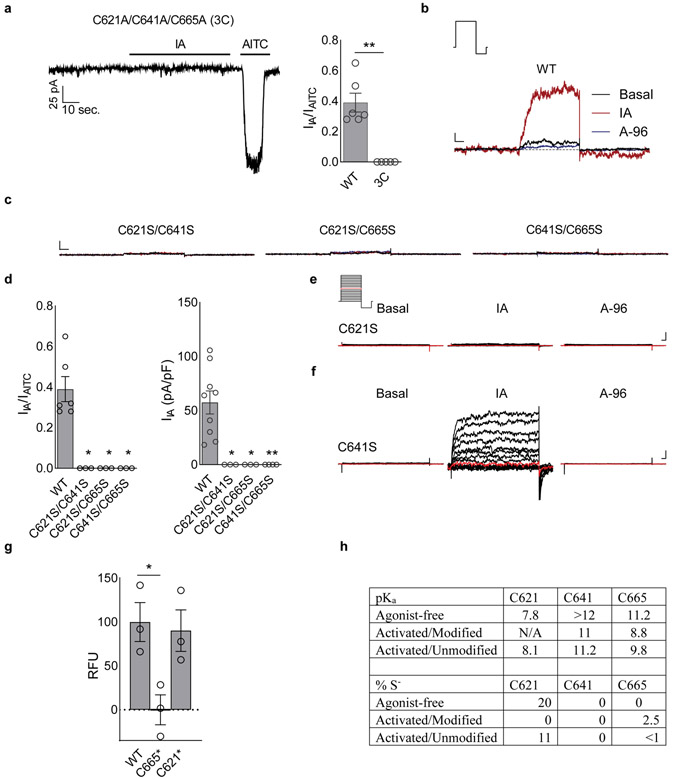
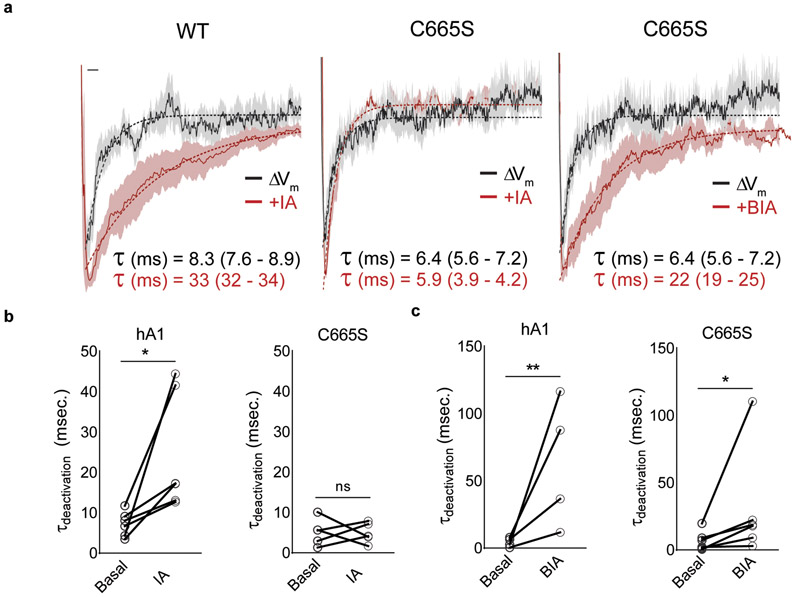
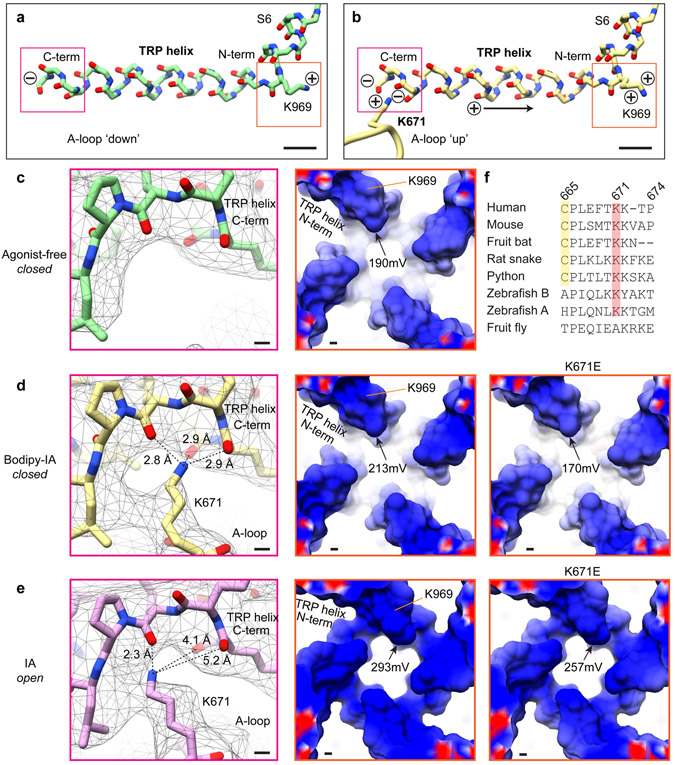
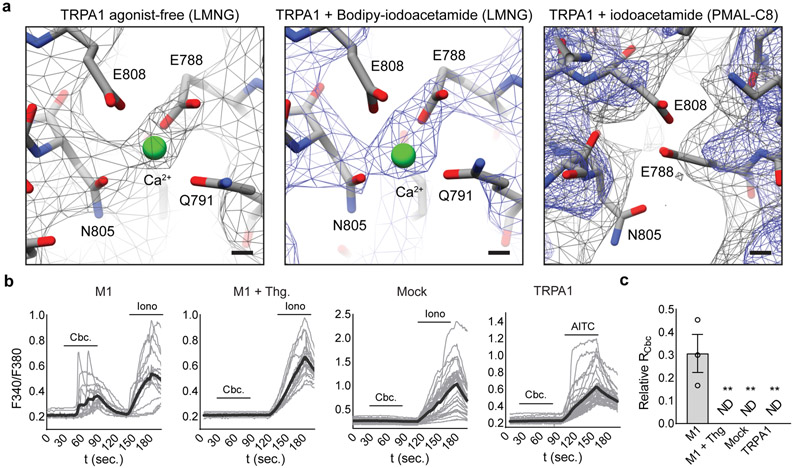
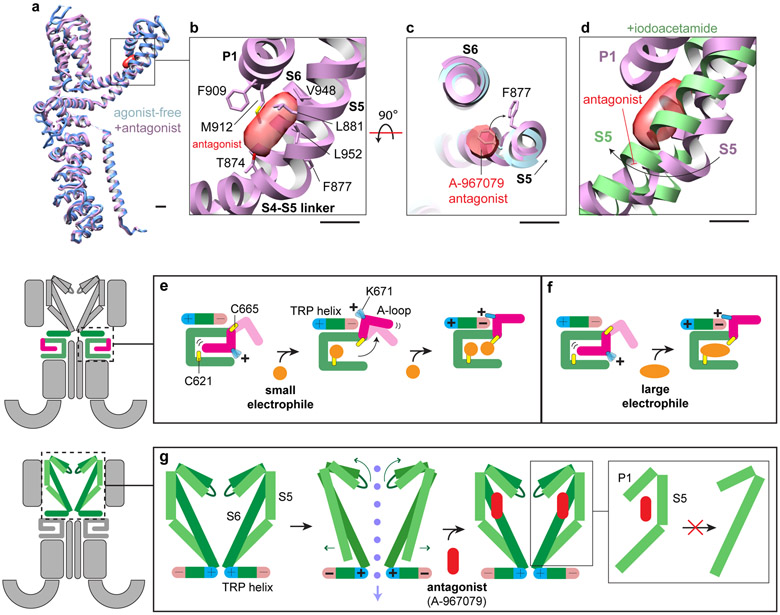
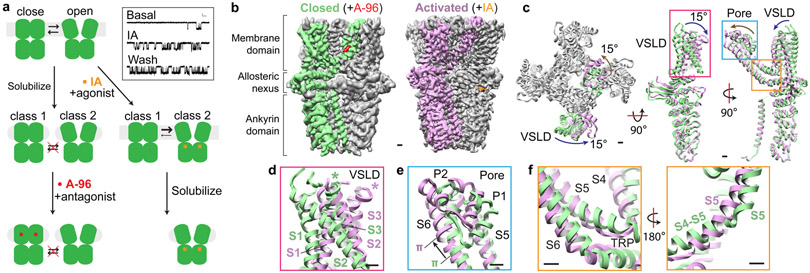
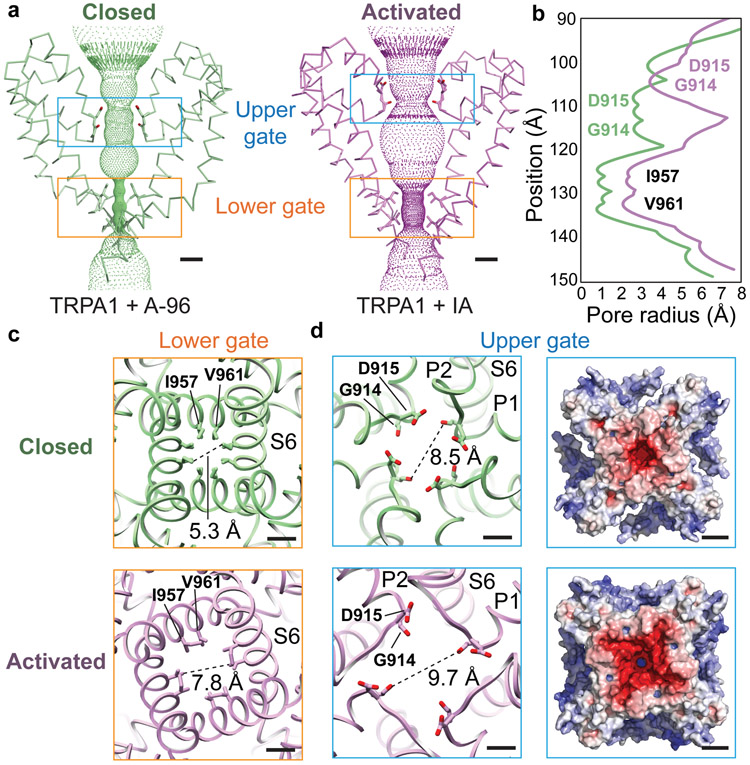
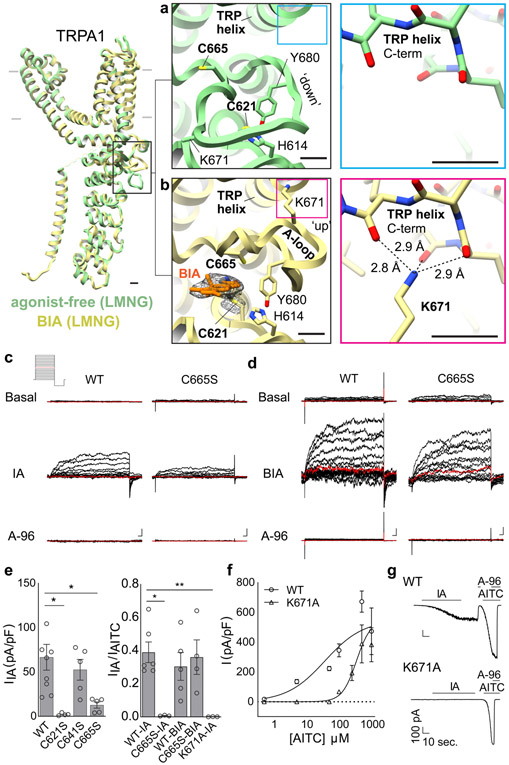
The transient receptor potential ion channel TRPA1 is expressed by primary afferent nerve fibres, in which it functions as a low-threshold sensor for structurally diverse electrophilic irritants, including small volatile environmental toxicants and endogenous algogenic lipids. TRPA1 is also a 'receptor-operated' channel whose activation downstream of metabotropic receptors elicits inflammatory pain or itch, making it an attractive target for novel analgesic therapies. However, the mechanisms by which TRPA1 recognizes and responds to electrophiles or cytoplasmic second messengers remain unknown. Here we use strutural studies and electrophysiology to show that electrophiles act through a two-step process in which modification of a highly reactive cysteine residue (C621) promotes reorientation of a cytoplasmic loop to enhance nucleophilicity and modification of a nearby cysteine (C665), thereby stabilizing the loop in an activating configuration. These actions modulate two restrictions controlling ion permeation, including widening of the selectivity filter to enhance calcium permeability and opening of a canonical gate at the cytoplasmic end of the pore. We propose a model to explain functional coupling between electrophile action and these control points. We also characterize a calcium-binding pocket that is highly conserved across TRP channel subtypes and accounts for all aspects of calcium-dependent TRPA1 regulation, including potentiation, desensitization and activation by metabotropic receptors. These findings provide a structural framework for understanding how a broad-spectrum irritant receptor is controlled by endogenous and exogenous agents that elicit or exacerbate pain and itch.
瞬时受体电位离子通道 TRPA1 表达于初级传入神经纤维,在其中作为结构多样的亲电刺激物的低阈值传感器发挥作用,包括小挥发性环境毒物和内源性致痛脂质。TRPA1 也是一种“受体操纵”通道,其下游代谢型受体的激活会引发炎症性疼痛或瘙痒,使其成为新型镇痛治疗的有吸引力的靶标。然而,TRPA1 识别和响应亲电物或细胞质第二信使的机制仍不清楚。在这里,我们使用结构研究和电生理学表明,亲电物通过两步过程发挥作用,其中高度反应性半胱氨酸残基(C621)的修饰促进细胞质环的重定向,以增强亲核性和修饰附近的半胱氨酸(C665),从而稳定环处于激活状态。这些作用调节控制离子渗透的两个限制,包括选择性过滤器的加宽以增强钙通透性和通道细胞质末端的经典门的打开。我们提出了一个模型来解释亲电物作用与这些控制点之间的功能偶联。我们还描述了一个钙结合口袋,该口袋在 TRP 通道亚型中高度保守,解释了钙依赖性 TRPA1 调节的所有方面,包括代谢型受体的增强、脱敏和激活。这些发现为理解广谱刺激受体如何受到引发或加剧疼痛和瘙痒的内源性和外源性物质的控制提供了结构框架。