Yang Xiaotong, Chen Xianchun, Lei Ting, Qin Lin, Zhou Yang, Hu Chuan, Liu Qingfeng, Gao Huile
Key Laboratory of Drug Targeting and Drug Delivery System of the Education Ministry, Sichuan Engineering Laboratory for Plant-Sourced Drug and Sichuan Research Center for Drug Precision Industrial Technology, West China School of Pharmacy Sichuan University, Chengdu 610041, China.
College of Materials Science and Engineering, Sichuan University, Chengdu 610064, China.
Acta Pharm Sin B. 2020 Jun;10(6):1094-1105. doi: 10.1016/j.apsb.2020.02.011. Epub 2020 Mar 4.
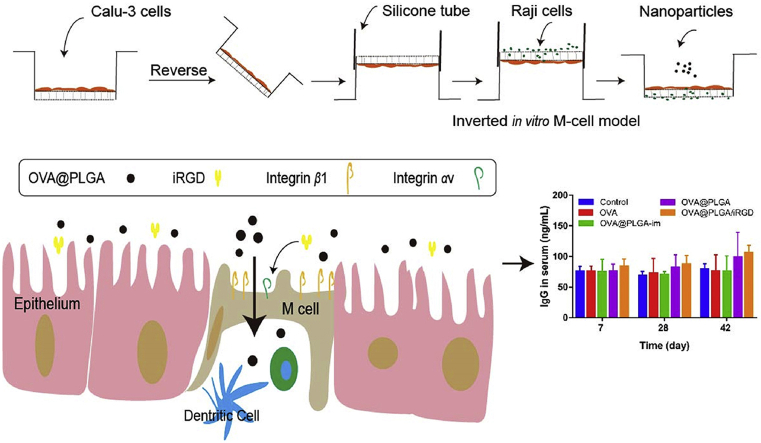
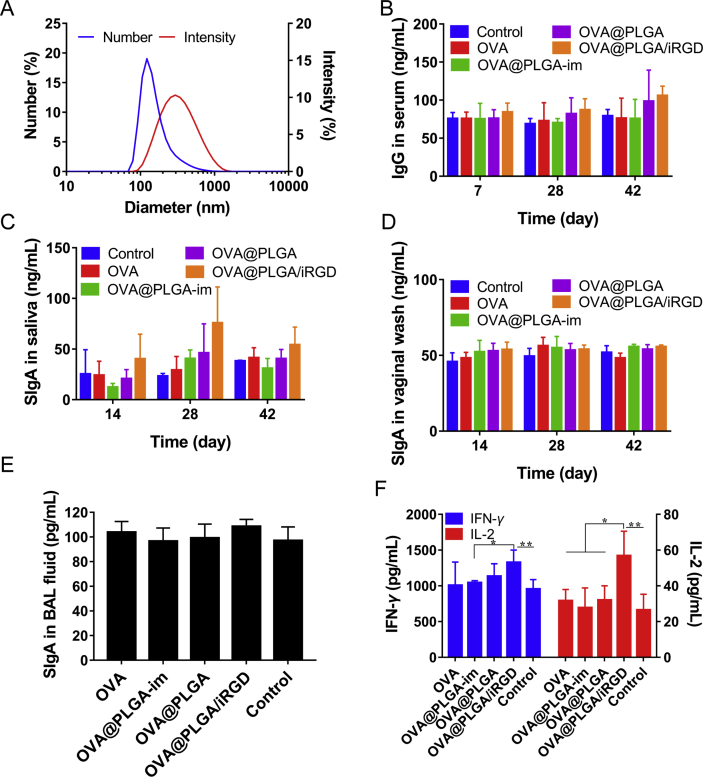
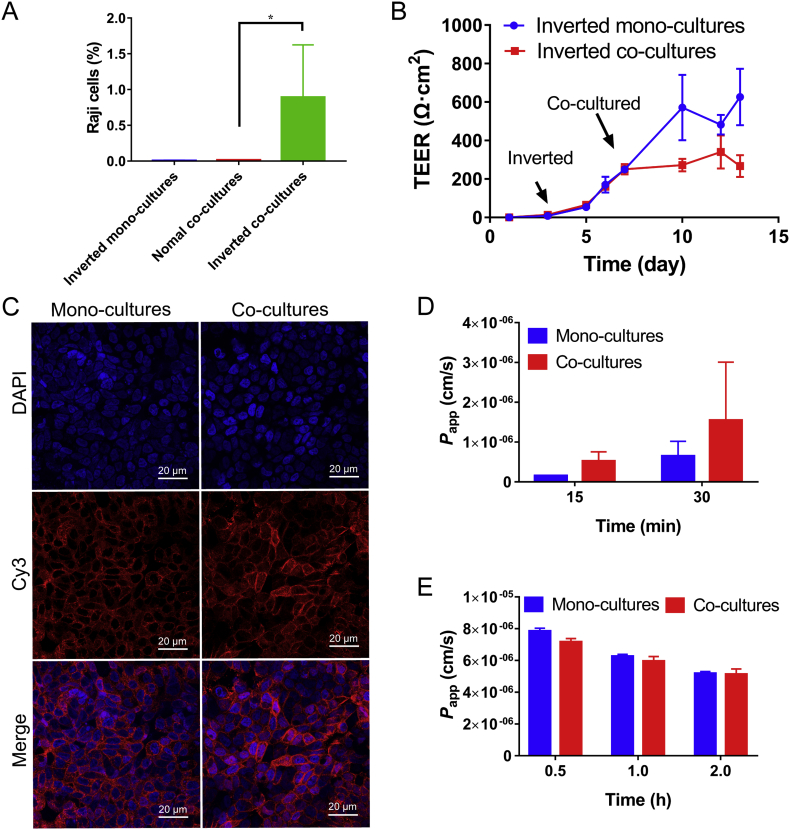
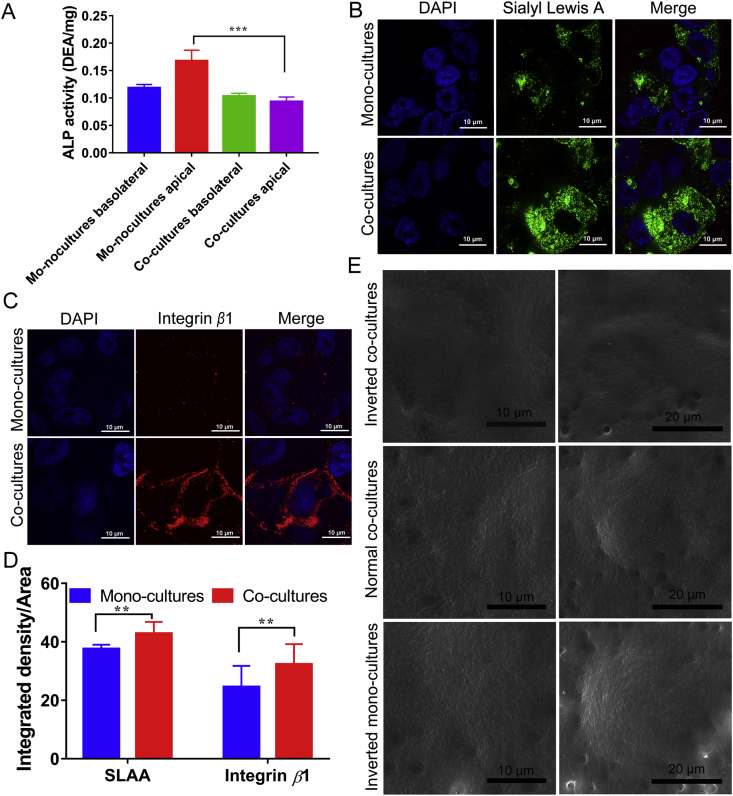
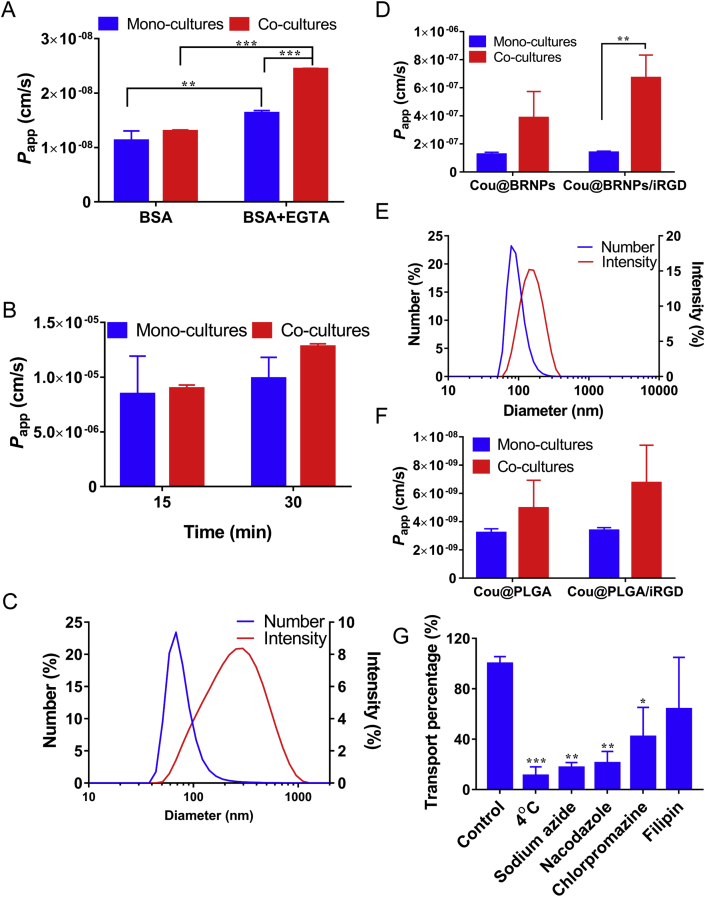
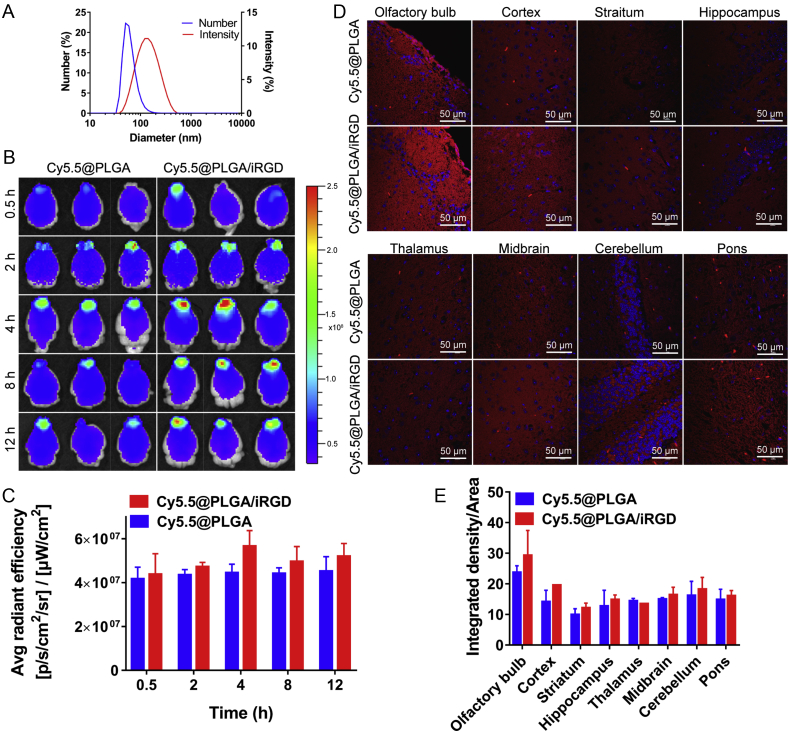
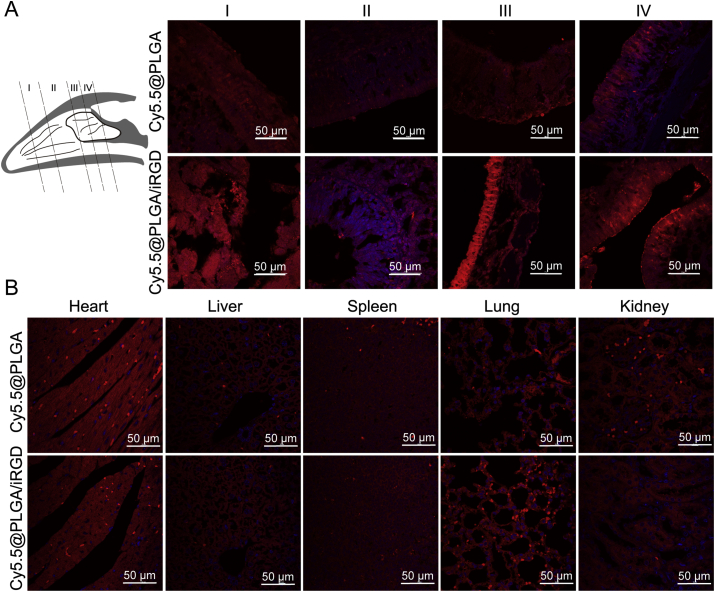
In order to better evaluate the transport effect of nanoparticles through the nasal mucosa, an nasal cavity-mimic model was designed based on M cells. The differentiation of M cells was induced by co-culture of Calu-3 and Raji cells in invert model. The ZO-1 protein staining and the transport of fluorescein sodium and dexamethasone showed that the inverted co-culture model formed a dense monolayer and possessed the transport ability. The differentiation of M cells was observed by up-regulated expression of Sialyl Lewis A antigen (SLAA) and integrin 1, and down-regulated activity of alkaline phosphatase. After targeting M cells with iRGD peptide (cRGDKGPDC), the transport of nanoparticles increased. , the co-administration of iRGD could result in the increase of nanoparticles transported to the brain through the nasal cavity after intranasal administration. In the evaluation of immune effect , the nasal administration of OVA-PLGA/iRGD led to more release of IgG, IFN-, IL-2 and secretory IgA (sIgA) compared with OVA@PLGA group. Collectively, the study constructed M cell model, and proved the enhanced effect of targeting towards M cell with iRGD on improving nasal immunity.
为了更好地评估纳米颗粒通过鼻黏膜的转运效果,基于M细胞设计了一种鼻腔模拟模型。在倒置模型中通过Calu-3细胞和Raji细胞共培养诱导M细胞分化。ZO-1蛋白染色以及荧光素钠和地塞米松的转运表明,倒置共培养模型形成了致密的单层结构并具有转运能力。通过唾液酸化路易斯A抗原(SLAA)和整合素β1表达上调以及碱性磷酸酶活性下调观察到M细胞的分化。用iRGD肽(cRGDKGPDC)靶向M细胞后,纳米颗粒的转运增加。 ,iRGD共同给药可导致鼻内给药后纳米颗粒通过鼻腔转运至脑内的量增加。在免疫效果评估中,与OVA@PLGA组相比,OVA-PLGA/iRGD鼻内给药导致更多的IgG、IFN-γ、IL-2和分泌型IgA(sIgA)释放。总体而言,该研究构建了M细胞模型,并证明了用iRGD靶向M细胞对改善鼻内免疫的增强作用。