Ferluga Sara, Baiz Daniele, Hilton David A, Adams Claire L, Ercolano Emanuela, Dunn Jemma, Bassiri Kayleigh, Kurian Kathreena M, Hanemann Clemens O
Faculty of Health: Medicine, Dentistry and Human Sciences, Institute of Translational and Stratified Medicine, University of Plymouth, Plymouth, UK.
Cellular and Anatomical Pathology, Plymouth Hospitals NHS Trust, Plymouth, UK.
Neurooncol Adv. 2020 Jan 21;2(1):vdaa008. doi: 10.1093/noajnl/vdaa008. eCollection 2020 Jan-Dec.
Meningiomas are the most frequent primary brain tumors of the central nervous system. The standard of treatment is surgery and radiotherapy, but effective pharmacological options are not available yet. The well-characterized genetic background stratifies these tumors in several subgroups, thus increasing diversification. We identified epidermal growth factor receptor-signal transducer and activator of transcription 1 (EGFR-STAT1) overexpression and activation as a common identifier of these tumors.
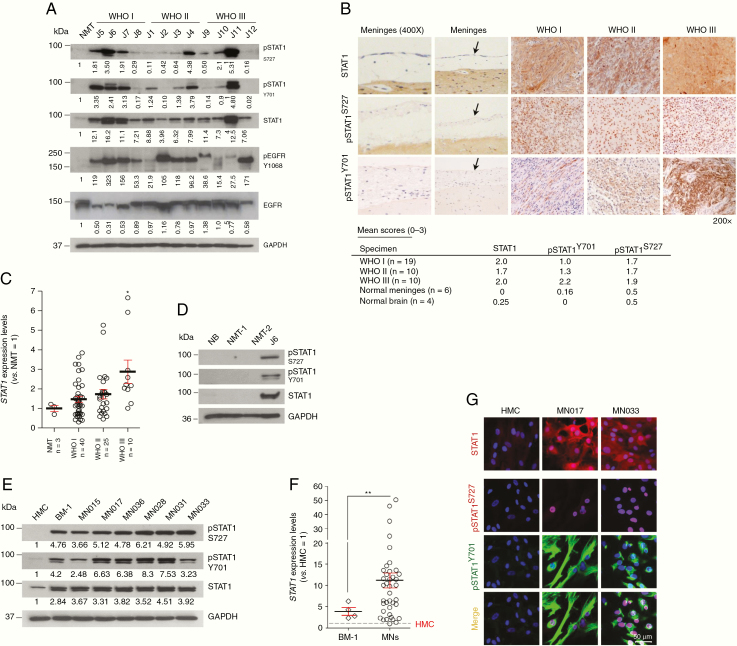
We analyzed STAT1 overexpression and phosphorylation in 131 meningiomas of different grades and locations by utilizing several techniques, including Western blots, qPCR, and immunocytochemistry. We also silenced and overexpressed wild-type and mutant forms of the gene to assess its biological function and its network. Results were further validated by drug testing.
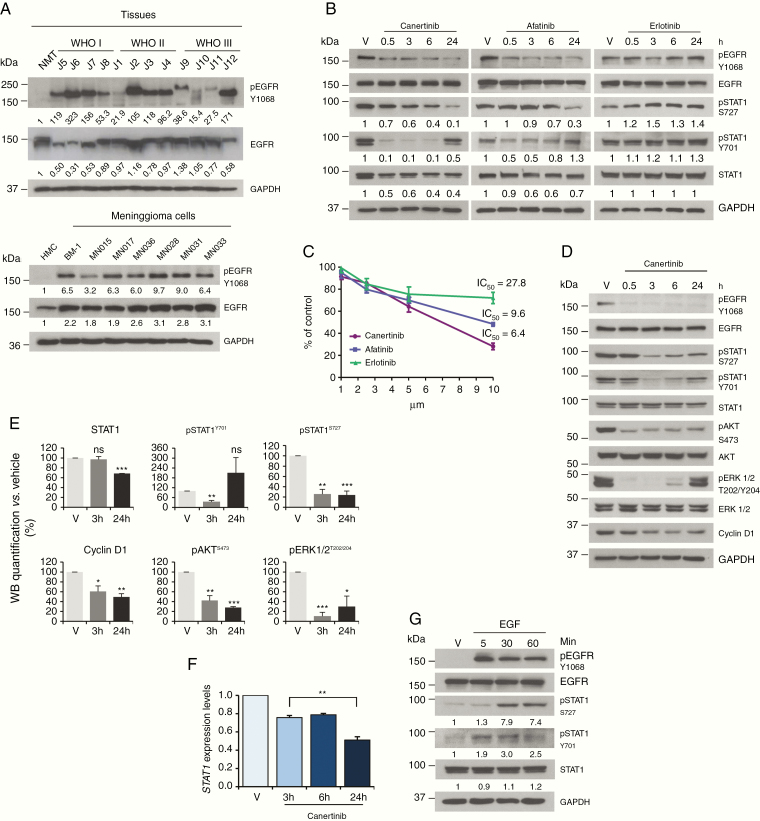
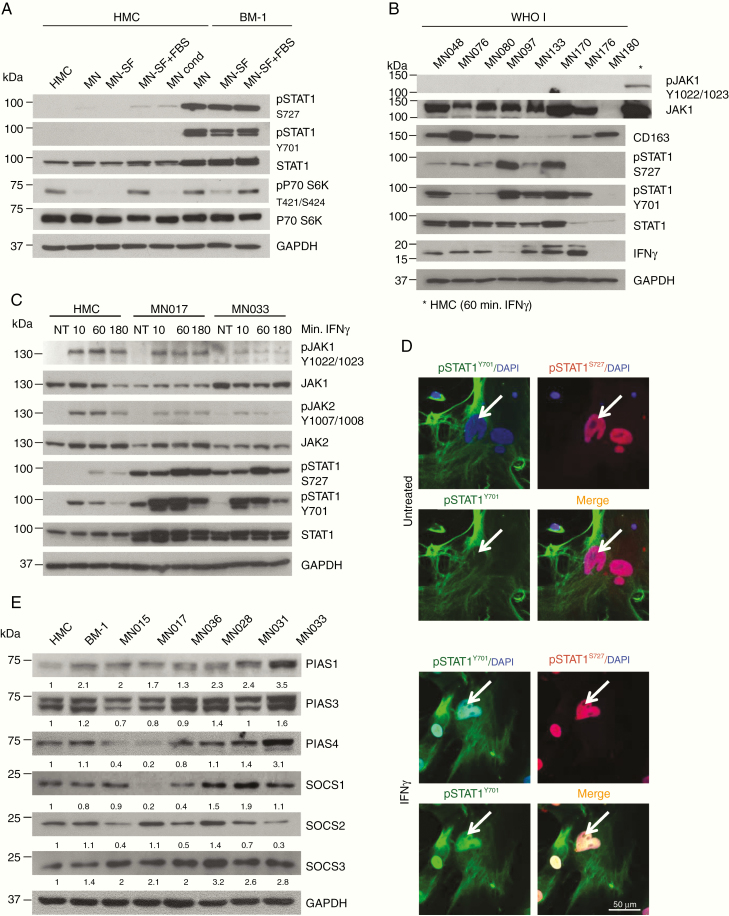
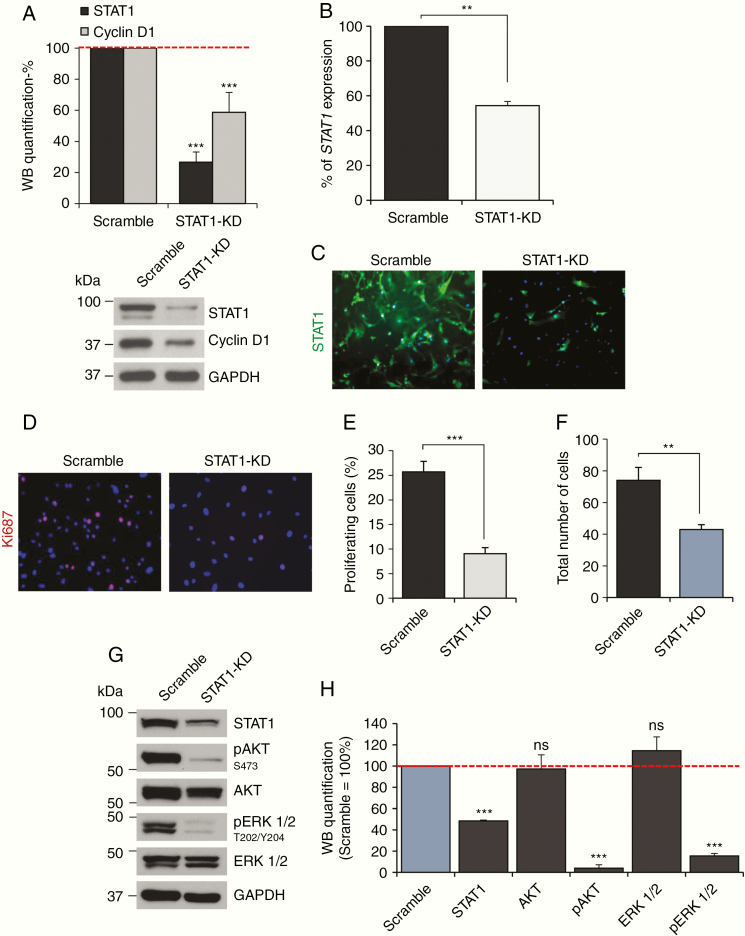
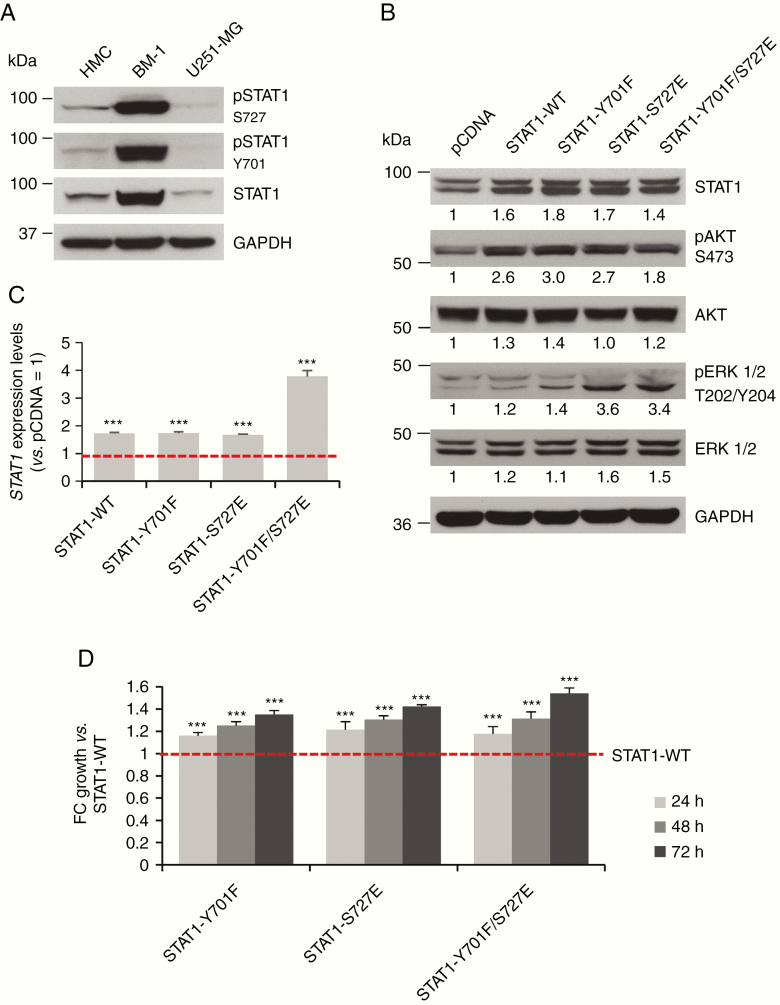
STAT1 was found widely overexpressed in meningioma but not in the corresponding healthy controls. The protein showed constitutive phosphorylation not dependent on the JAK-STAT pathway. knockdown resulted in a significant reduction of cellular proliferation and deactivation of AKT and ERK1/2. STAT1 is known to be activated by EGFR, so we investigated the tyrosine kinase and found that EGFR was also constitutively phosphorylated in meningioma and was responsible for the aberrant phosphorylation of STAT1. The pharmaceutical inhibition of EGFR caused a significant reduction in cellular proliferation and of overall levels of cyclin D1, pAKT, and pERK1/2.
STAT1-EGFR-dependent constitutive phosphorylation is responsible for a positive feedback loop that causes its own overexpression and consequently an increased proliferation of the tumor cells. These findings provide the rationale for further studies aiming to identify effective therapeutic options in meningioma.
脑膜瘤是中枢神经系统最常见的原发性脑肿瘤。治疗标准是手术和放疗,但尚无有效的药物治疗方案。特征明确的遗传背景将这些肿瘤分为几个亚组,从而增加了其多样性。我们发现表皮生长因子受体 - 信号转导和转录激活因子1(EGFR - STAT1)的过表达和激活是这些肿瘤的一个共同特征。
我们利用多种技术,包括蛋白质免疫印迹法、定量聚合酶链反应和免疫细胞化学,分析了131例不同分级和部位的脑膜瘤中STAT1的过表达和磷酸化情况。我们还对该基因的野生型和突变型进行了沉默和过表达,以评估其生物学功能及其网络。结果通过药物测试进一步验证。
发现STAT1在脑膜瘤中广泛过表达,而在相应的健康对照中未过表达。该蛋白显示出不依赖于JAK - STAT途径的组成性磷酸化。敲低导致细胞增殖显著减少以及AKT和ERK1/2失活。已知STAT1由EGFR激活,因此我们研究了酪氨酸激酶,发现EGFR在脑膜瘤中也呈组成性磷酸化,并导致STAT1的异常磷酸化。EGFR的药物抑制导致细胞增殖以及细胞周期蛋白D1、pAKT和pERK1/2的总体水平显著降低。
STAT1 - EGFR依赖性组成性磷酸化导致正反馈回路,引起其自身过表达,进而导致肿瘤细胞增殖增加。这些发现为进一步研究确定脑膜瘤的有效治疗方案提供了理论依据。