Department of Radiation Oncology, The Affiliated Hospital of Qingdao University, Qingdao, Shandong, 266003, China.
J Radiat Res. 2020 Sep 8;61(5):657-665. doi: 10.1093/jrr/rraa043.
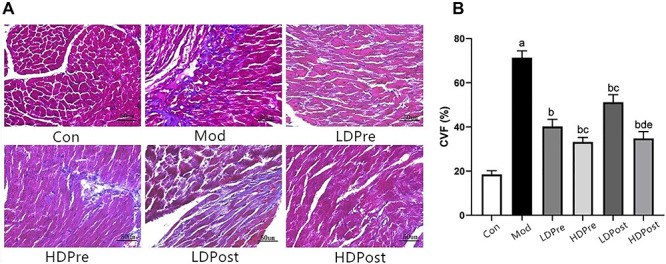
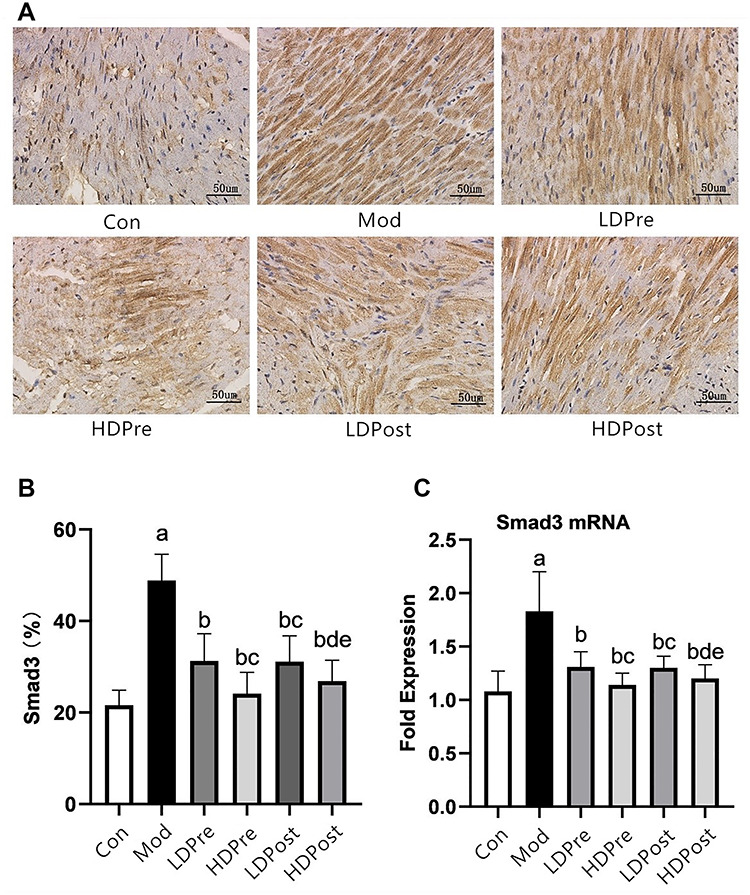
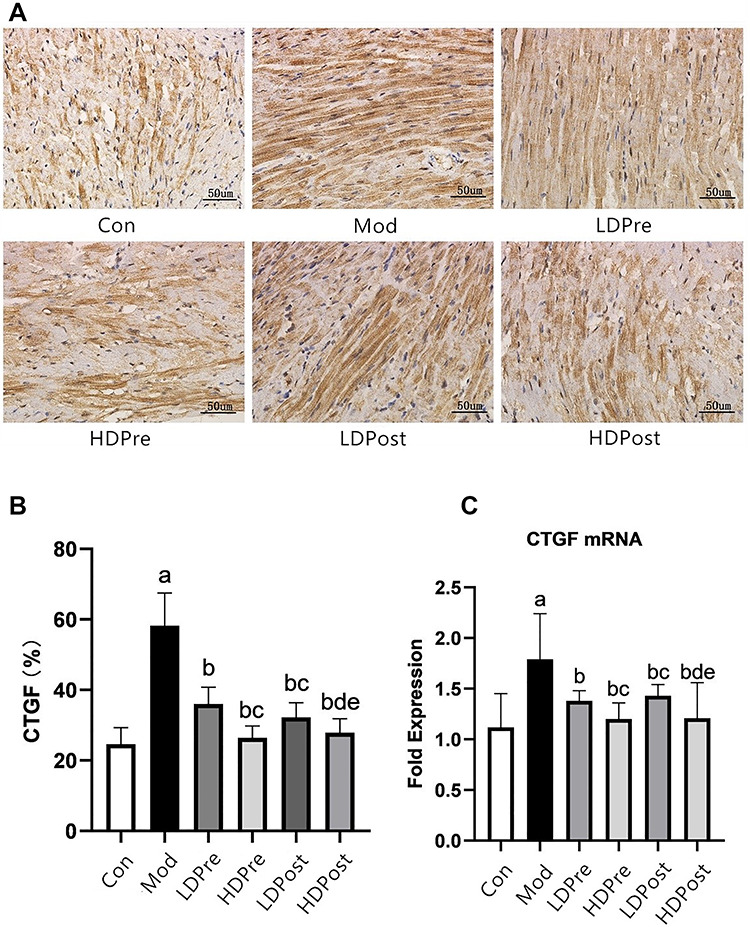
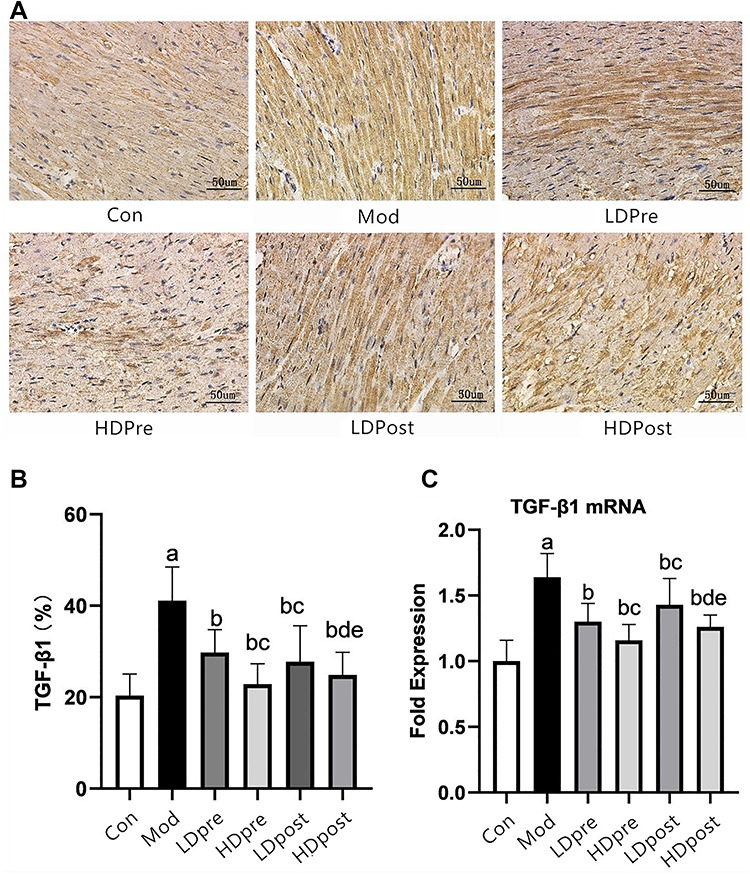
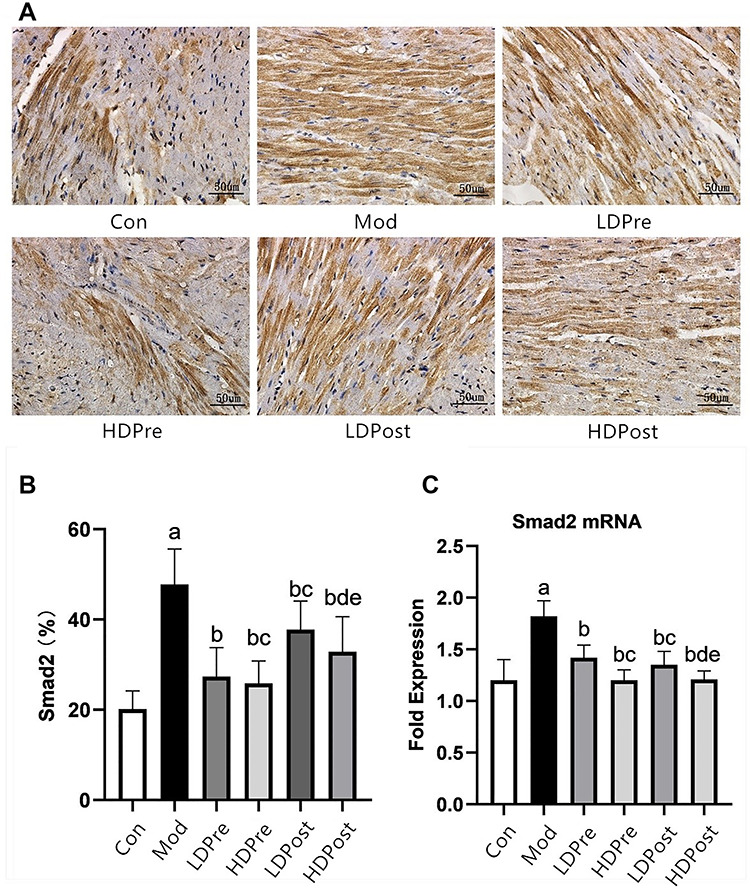
Radiation-induced heart damage is a serious side effect caused by radiotherapy, especially during the treatment of cancer near the chest. Trimetazidine is effective at reducing inflammation in the heart, but how it affects radiation-induced cardiac fibrosis (RICF) is unknown. To investigate the potential effect and molecular mechanism, we designed this project with a C57BL6 male mouse model supposing trimetazidine could inhibit RICF in mice. During the experiment, mice were randomly divided into six groups including a control group (Con), radiation-damaged model group (Mod) and four experimental groups receiving low-dose (10 mg/kg/day) or high-dose (20 mg/kg/day) trimetazidine before or after radiation treatment. Apart from the control group, all mice chests were exposed to 6 MV X-rays at a single dose of 20 Gy to induce RICF, and tissue analysis was done at 8 weeks after irradiation. Fibroblast or interstitial tissues and cardiac fibrosis-like characteristics were determined using haematoxylin and eosin and Masson staining, which can be used to assess myocardial fibrosis. Immunohistochemical analysis and RT-PCR were used to determine gene expression and study the molecular mechanism. As a result, this study suggests that trimetazidine inhibits RICF by reducing gene expression related to myocyte apoptosis and fibrosis formation, i.e. connective tissue growth factor (CTGF), transforming growth factor (TGF)-β1, smad2 and smad3. In conclusion, by regulating the CTGF/TGF-β1/Smad pathway, trimetazidine could be a prospective drug for clinical treatment of RICF.
放射性心脏损伤是放疗特别是胸部附近癌症治疗引起的严重副作用。曲美他嗪可有效减轻心脏炎症,但它如何影响放射性心脏纤维化(RICF)尚不清楚。为了研究其潜在作用和分子机制,我们设计了这项以 C57BL6 雄性小鼠模型为基础的项目,假设曲美他嗪可抑制小鼠的 RICF。在实验中,将小鼠随机分为六组,包括对照组(Con)、放射损伤模型组(Mod)和四组实验组,在放射治疗前或后给予低剂量(10mg/kg/天)或高剂量(20mg/kg/天)曲美他嗪。除对照组外,所有小鼠胸部均单次接受 6MV X 射线照射 20Gy,以诱导 RICF,并在照射后 8 周进行组织分析。苏木精和伊红及 Masson 染色用于确定成纤维细胞或间质组织和心脏纤维化样特征,可用于评估心肌纤维化。免疫组织化学分析和 RT-PCR 用于确定基因表达并研究分子机制。结果表明,曲美他嗪通过降低与心肌细胞凋亡和纤维化形成相关的基因表达,如结缔组织生长因子(CTGF)、转化生长因子(TGF)-β1、smad2 和 smad3,抑制 RICF。总之,通过调节 CTGF/TGF-β1/Smad 通路,曲美他嗪可能成为 RICF 临床治疗的一种有前景的药物。