Department of Pathology, Aga Khan University, Nairobi, Kenya.
Division of Chemical Pathology, Department of Pathology, Stellenbosch University, Cape Town, South Africa.
PLoS One. 2020 Jul 9;15(7):e0235234. doi: 10.1371/journal.pone.0235234. eCollection 2020.
Due to a lack of reliable reference intervals (RIs) for Kenya, we set out to determine RIs for 40 common chemistry and immunoassay tests as part of the IFCC global RI project.
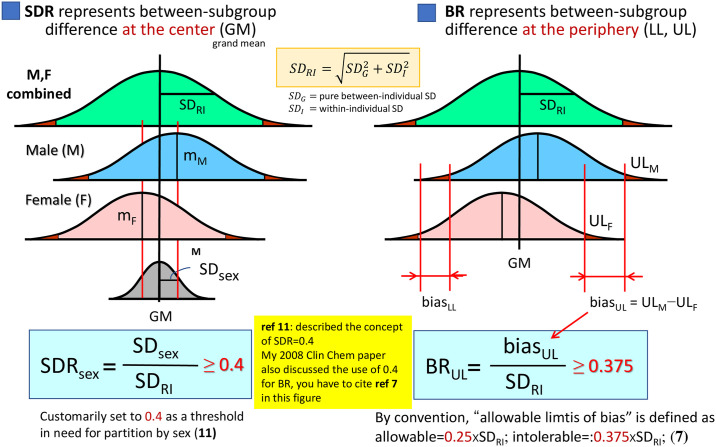
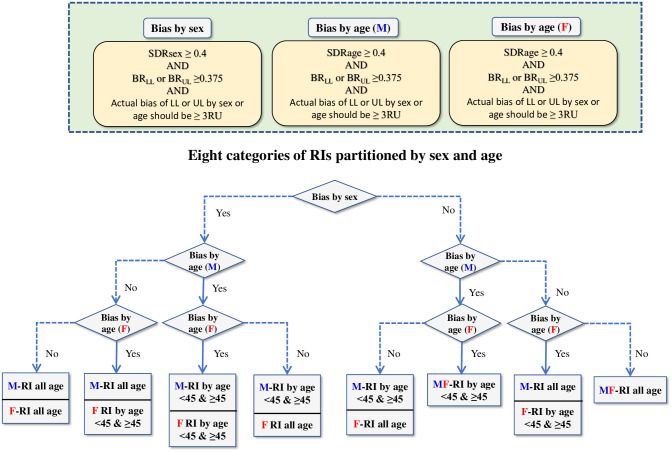
Apparently healthy adults aged 18-65 years were recruited according to a harmonized protocol and samples analyzed using Beckman-Coulter analyzers. Value assigned serum panels were measured to standardize chemistry results. The need for partitioning reference values by sex and age was based on between-subgroup differences expressed as standard deviation ratio (SDR) or bias in lower or upper limits (LLs and ULs) of the RI. RIs were derived using a parametric method with/without latent abnormal value exclusion (LAVE).
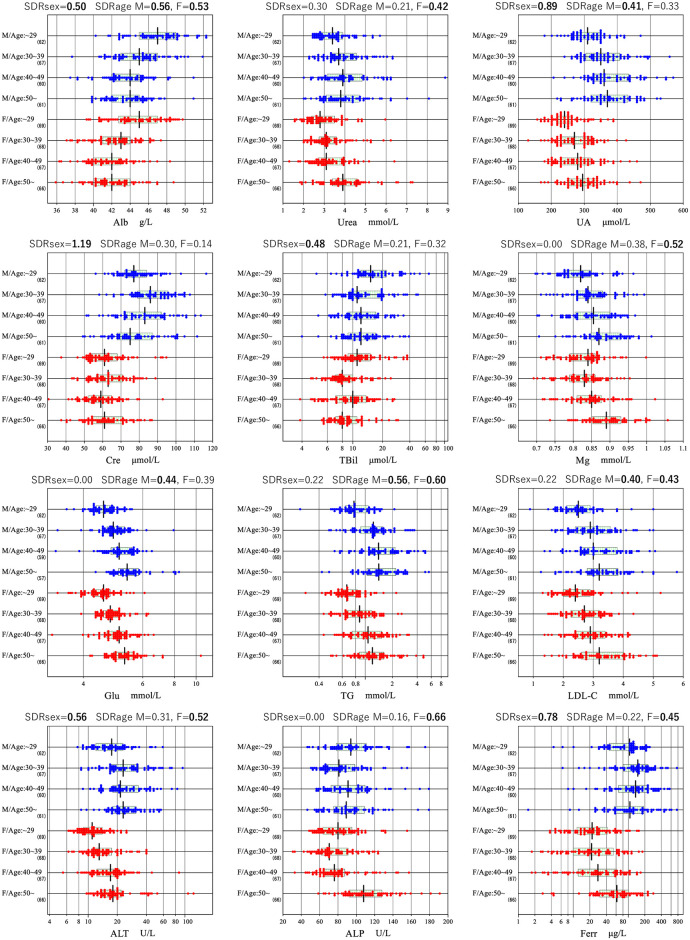
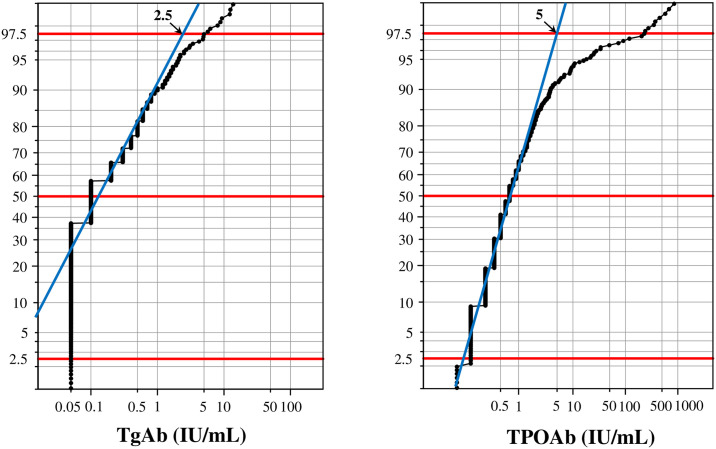
Sex-specific RIs were required for uric acid, creatinine, total bilirubin (TBil), total cholesterol (TC), ALT, AST, CK, GGT, transferrin, transferrin saturation (TfSat) and immunoglobulin-M. Age-specific RIs were required for glucose and triglyceride for both sexes, and for urea, magnesium, TC, HDL-cholesterol ratio, ALP, and ferritin for females. LAVE was effective in optimizing RIs for AST, ALT, GGT iron-markers and CRP by reducing influence of latent anemia and metabolic diseases. Thyroid profile RIs were derived after excluding volunteers with anti-thyroid antibodies. Kenyan RIs were comparable to those of other countries participating in the global study with a few exceptions such as higher ULs for TBil and CRP.
Kenyan RIs for major analytes were established using harmonized protocol from well-defined reference individuals. Standardized RIs for chemistry analytes can be shared across sub-Saharan African laboratories with similar ethnic and life-style profile.
由于肯尼亚缺乏可靠的参考区间 (RI),我们着手确定 40 项常见化学和免疫分析测试的 RI,作为 IFCC 全球 RI 项目的一部分。
根据一项协调一致的方案,招募年龄在 18-65 岁之间的健康成年人,并使用贝克曼库尔特分析仪分析样本。分配血清的赋值面板用于标准化化学结果。根据亚组间差异(表示为标准偏差比 (SDR) 或 RI 的下限 (LL) 和上限 (UL) 的偏差),按性别和年龄对参考值进行分区的需求。RI 使用具有/不具有潜在异常值排除 (LAVE) 的参数方法推导。
需要尿酸、肌酐、总胆红素 (TBil)、总胆固醇 (TC)、丙氨酸氨基转移酶 (ALT)、天冬氨酸氨基转移酶 (AST)、肌酸激酶 (CK)、γ-谷氨酰转移酶 (GGT)、转铁蛋白、转铁蛋白饱和度 (TfSat) 和免疫球蛋白-M 的性别特异性 RI。男女均需要葡萄糖和甘油三酯的年龄特异性 RI,女性还需要尿素、镁、TC、高密度脂蛋白胆固醇比值、碱性磷酸酶和铁蛋白的年龄特异性 RI。LAVE 通过减少潜在贫血和代谢疾病对 AST、ALT、GGT 铁标志物和 CRP 的影响,有效地优化了 RI。在排除具有抗甲状腺抗体的志愿者后,得出了甲状腺谱 RI。肯尼亚的 RI 与参与全球研究的其他国家的 RI 相似,但也有一些例外,例如 Tbil 和 CRP 的 UL 较高。
使用来自定义明确的参考个体的协调方案,为主要分析物建立了肯尼亚 RI。具有类似种族和生活方式特征的撒哈拉以南非洲实验室可以共享化学分析物的标准化 RI。