Silaghi Cornelia, Weis Lisa, Pfister Kurt
Comparative Tropical Medicine and Parasitology, Faculty of Veterinary Medicine, Ludwig-Maximilians-Universität München, 80802 Munich, Germany.
Institute of Infectology, Friedrich-Loeffler-Institut, Greifswald Isle of Riems, 17493 Greifswald, Germany.
Pathogens. 2020 Jul 7;9(7):541. doi: 10.3390/pathogens9070541.
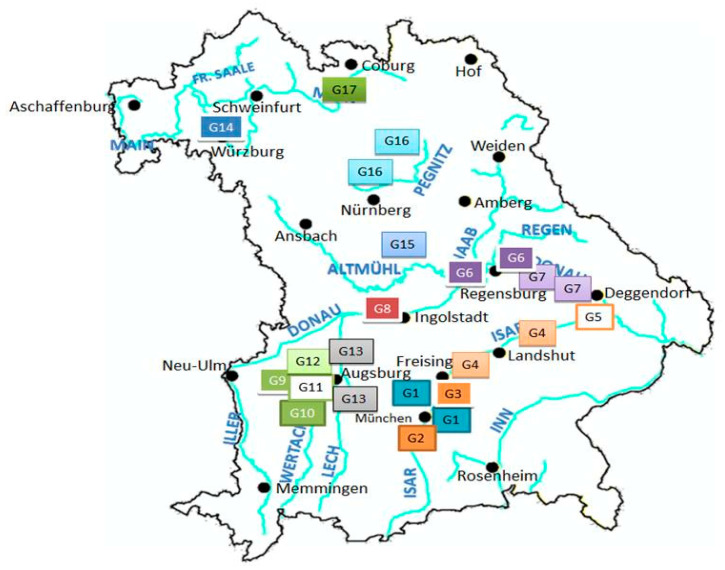
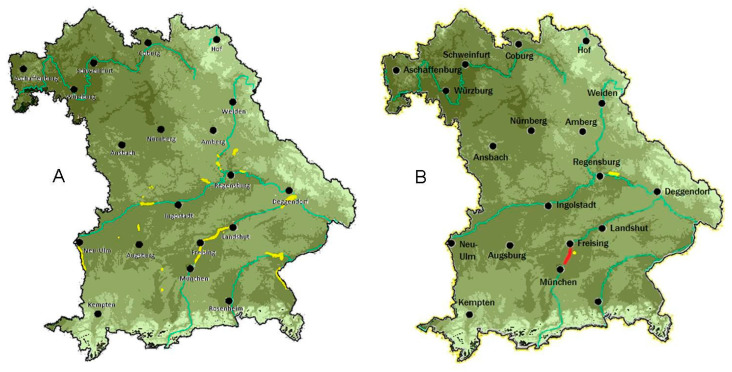
The hard tick transmits , the causative agent of canine babesiosis. Both the occurrence and local distribution of as well as infection rates of questing ticks with are thus far poorly known in Bavaria, Germany. The objectives of this study were to conduct (1) a georeferenced field study on the occurrence of with digital habitat characterization and (2) a PCR analysis of collected in Bavaria for infection with . were collected by flagging at 60 sites specifically selected according to habitat conditions and screened individually for DNA. A digital habitat characterization for was performed according to results of the field analysis including the parameters land use, proximity to water, "potential natural vegetation", red deer corridors and climate data. Altogether, 339 ticks (214 females and 125 males) were collected between 2010 and 2013 at 12 out of 60 sampling sites. All 12 sites were characterized by high humidity with marshy areas. DNA was detected in 1 out of 301 (0.3%) questing in Bavaria. The digital habitat characterization revealed 15 forest areas in Bavaria with similar ecological characteristics as the sites positive for .
硬蜱传播犬巴贝斯虫病的病原体。迄今为止,在德国巴伐利亚州,硬蜱的发生情况、局部分布以及搜寻蜱的感染率均鲜为人知。本研究的目的是:(1)开展一项关于硬蜱发生情况的地理参考实地研究,并进行数字化栖息地特征描述;(2)对在巴伐利亚州采集的硬蜱进行PCR分析,以检测其是否感染犬巴贝斯虫病。通过在根据栖息地条件专门挑选的60个地点进行拖旗法采集硬蜱,并对每个硬蜱单独进行犬巴贝斯虫病DNA筛查。根据实地分析结果,包括土地利用、与水的距离、“潜在自然植被”、马鹿通道和气候数据等参数,对硬蜱进行数字化栖息地特征描述。2010年至2013年期间,在60个采样地点中的12个地点共采集到339只硬蜱(214只雌性和125只雄性)。所有12个地点的特点都是湿度高且有沼泽地区。在巴伐利亚州搜寻的301只硬蜱中,有1只(0.3%)检测到犬巴贝斯虫病DNA。数字化栖息地特征描述显示,巴伐利亚州有15个林区,其生态特征与检测到犬巴贝斯虫病阳性的地点相似。