Harati Rania, Mohammad Mohammad G, Tlili Abdelaziz, El-Awady Raafat A, Hamoudi Rifat
Department of Pharmacy Practice and Pharmacotherapeutics, College of Pharmacy, University of Sharjah, Sharjah P.O. Box 27272, UAE.
Sharjah Institute for Medical Research, University of Sharjah, Sharjah P.O. Box 27272, UAE.
Pharmaceuticals (Basel). 2020 Jul 7;13(7):144. doi: 10.3390/ph13070144.
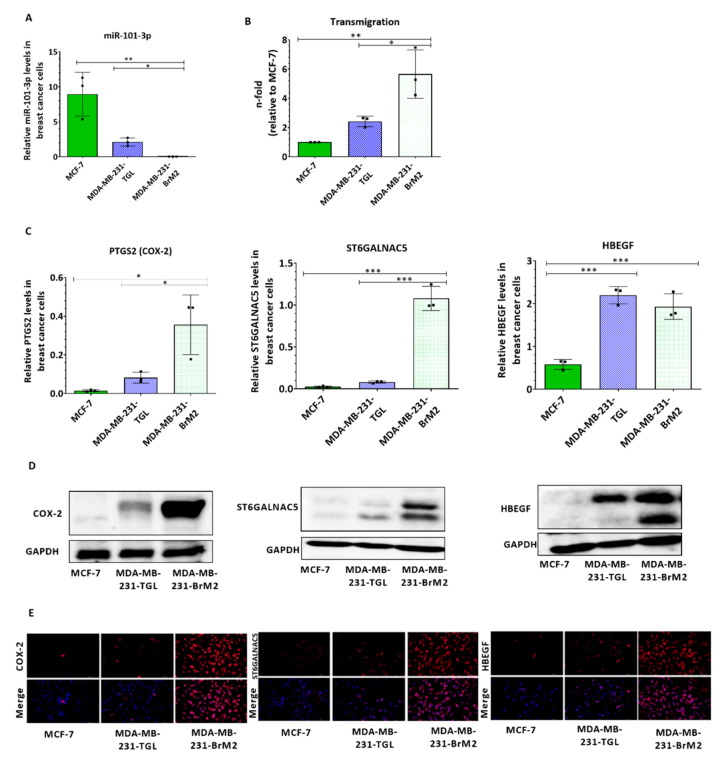
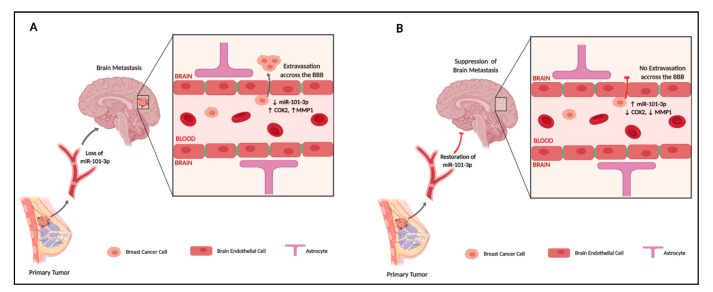
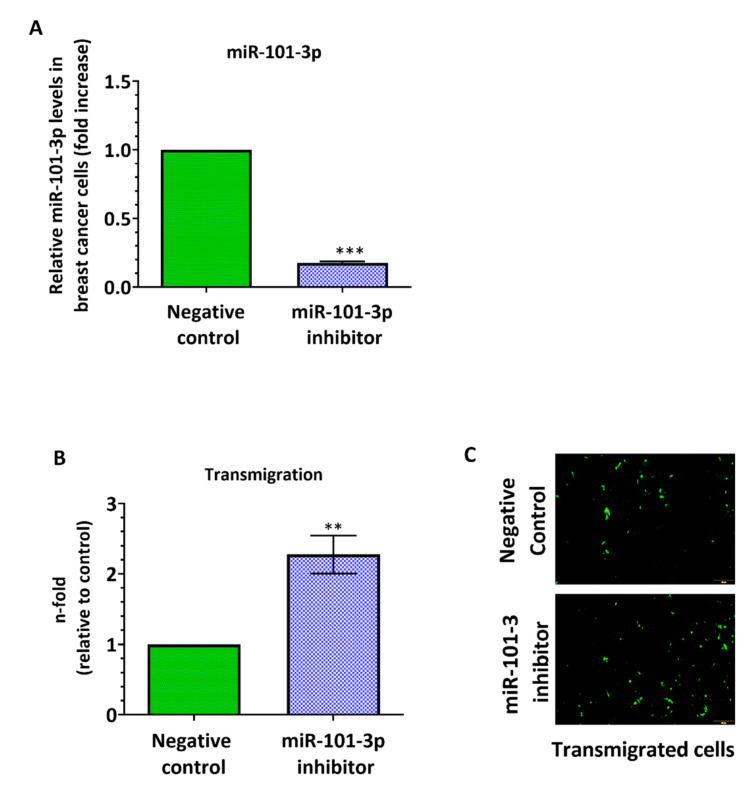
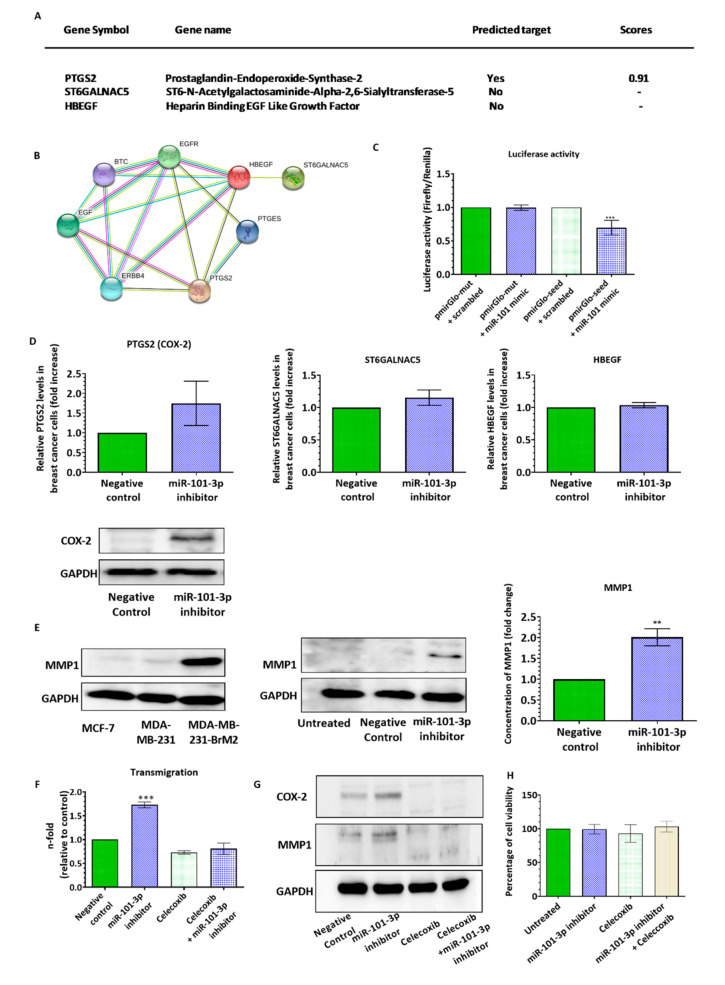
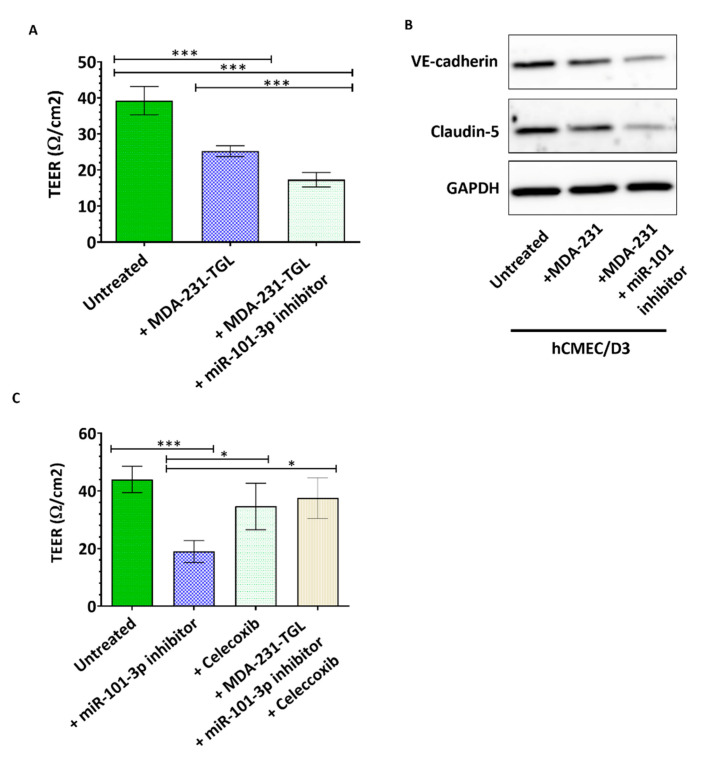
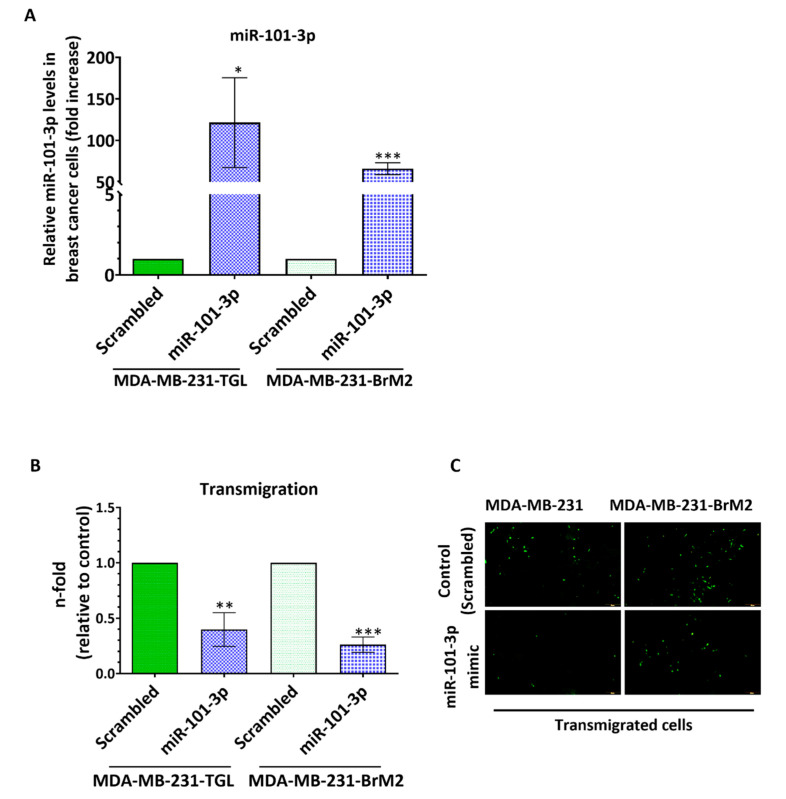
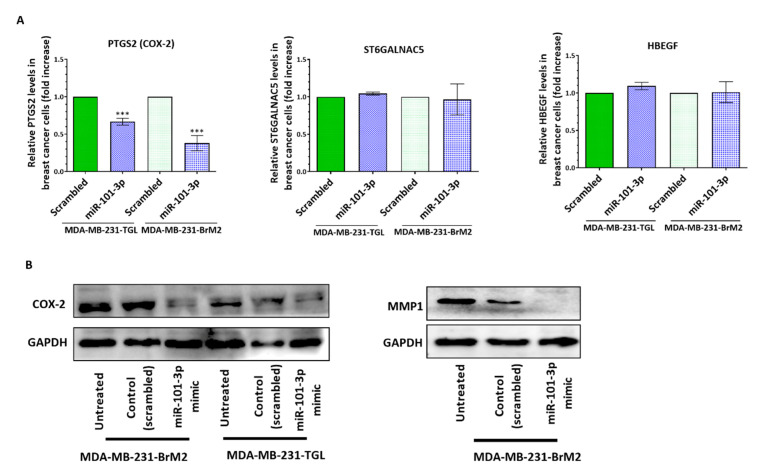
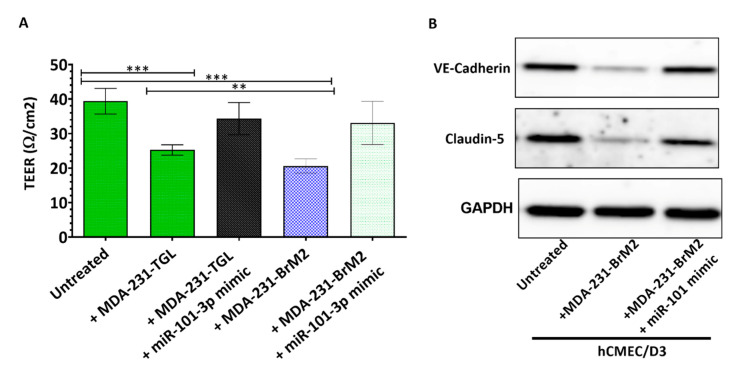
Brain metastases represent one of the incurable end stages in breast cancer (BC). Developing effective or preventive treatments is hampered by a lack of knowledge on the molecular mechanisms driving brain metastasis. Transmigration of BC cells through the brain endothelium is a key event in the pathogenesis of brain metastasis. In this study, we identified miR-101-3p as a critical micro-RNA able to reduce transmigration of BC cells through the brain endothelium. Our results revealed that miR-101-3p expression is downregulated in brain metastatic BC cells compared to less invasive variants, and varies inversely compared to the brain metastatic propensity of BC cells. Using a loss-and-gain of function approach, we found that miR-101-3p downregulation increased transmigration of BC cells through the brain endothelium in vitro by inducing COX-2 expression in cancer cells, whereas ectopic restoration of miR-101-3p exerted a metastasis-reducing effect. In regulatory experiments, we found that miR-101-3p mediated its effect by modulating COX-2-MMP1 signaling capable of degrading the inter-endothelial junctions (claudin-5 and VE-cadherin), key components of the brain endothelium. These findings suggest that miR-101-3p plays a critical role in the transmigration of breast cancer cells through the brain endothelium by modulating the COX-2-MMP1 signaling and thus may serve as a therapeutic target that can be exploited to prevent or suppress brain metastasis in human breast cancer.
脑转移是乳腺癌(BC)不可治愈的终末期之一。由于缺乏对驱动脑转移分子机制的了解,开发有效的治疗方法或预防措施受到阻碍。BC细胞穿过脑内皮细胞的迁移是脑转移发病机制中的关键事件。在本研究中,我们鉴定出miR-101-3p是一种关键的微小RNA,能够减少BC细胞穿过脑内皮细胞的迁移。我们的结果显示,与侵袭性较低的变体相比,脑转移性BC细胞中miR-101-3p的表达下调,并且与BC细胞的脑转移倾向呈负相关。使用功能丧失和功能获得方法,我们发现miR-101-3p的下调通过诱导癌细胞中COX-2的表达增加了BC细胞在体外穿过脑内皮细胞的迁移,而异位恢复miR-101-3p则发挥了减少转移的作用。在调控实验中,我们发现miR-101-3p通过调节能够降解脑内皮细胞关键成分(claudin-5和VE-钙黏蛋白)的内皮细胞间连接的COX-2-MMP1信号传导来介导其作用。这些发现表明,miR-101-3p通过调节COX-2-MMP1信号传导在乳腺癌细胞穿过脑内皮细胞的迁移中起关键作用,因此可能作为一种治疗靶点,用于预防或抑制人类乳腺癌中的脑转移。