Esberg Anders, Johansson Anders, Claesson Rolf, Johansson Ingegerd
Department of Odontology, Umeå University, 901 87 Umeå, Sweden.
Pathogens. 2020 Jul 7;9(7):544. doi: 10.3390/pathogens9070544.
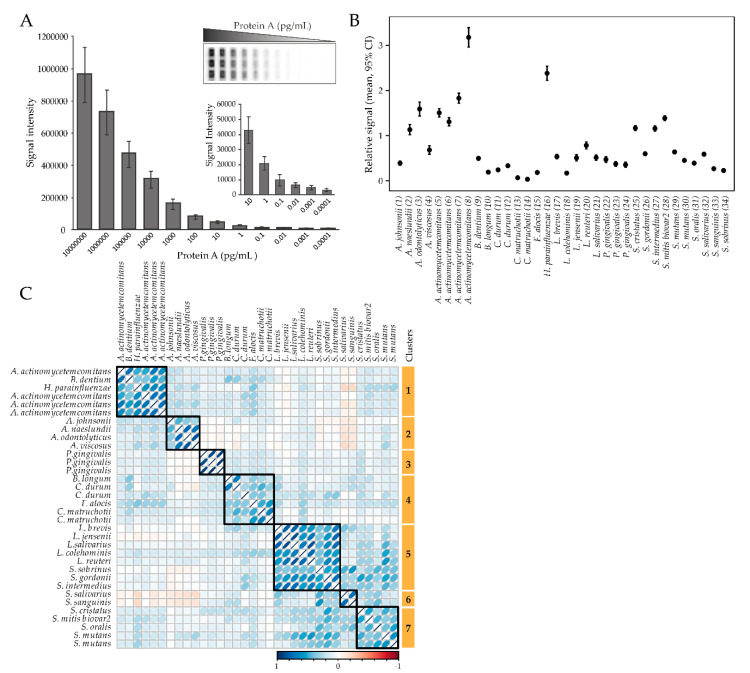
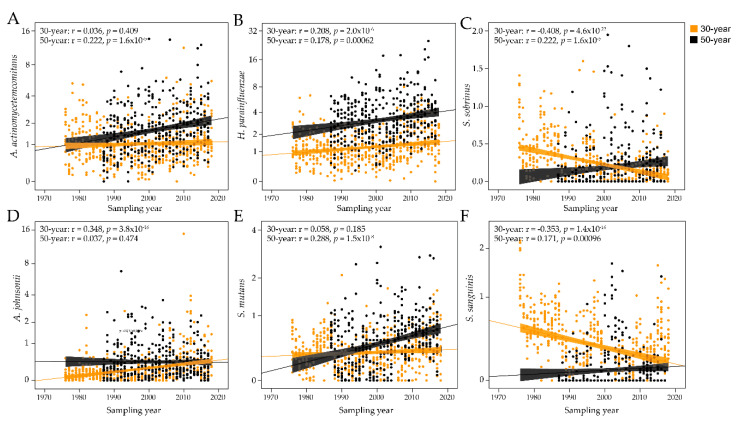
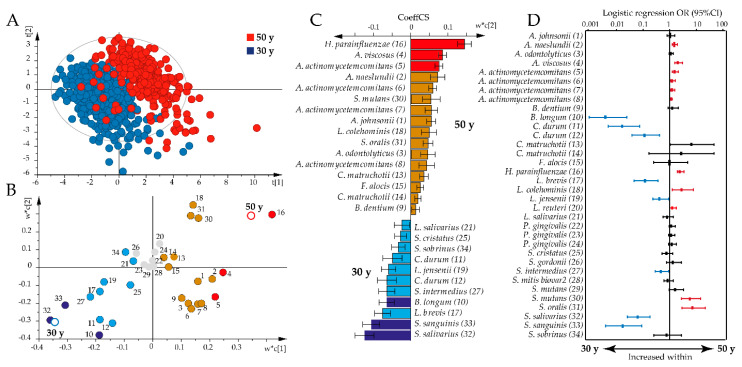
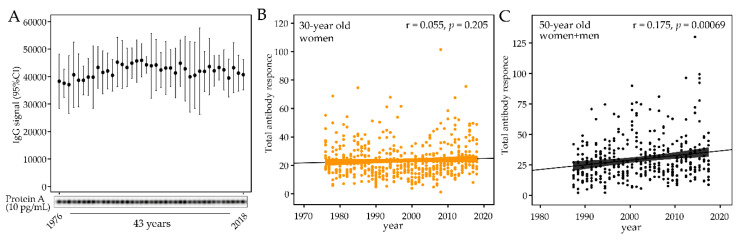
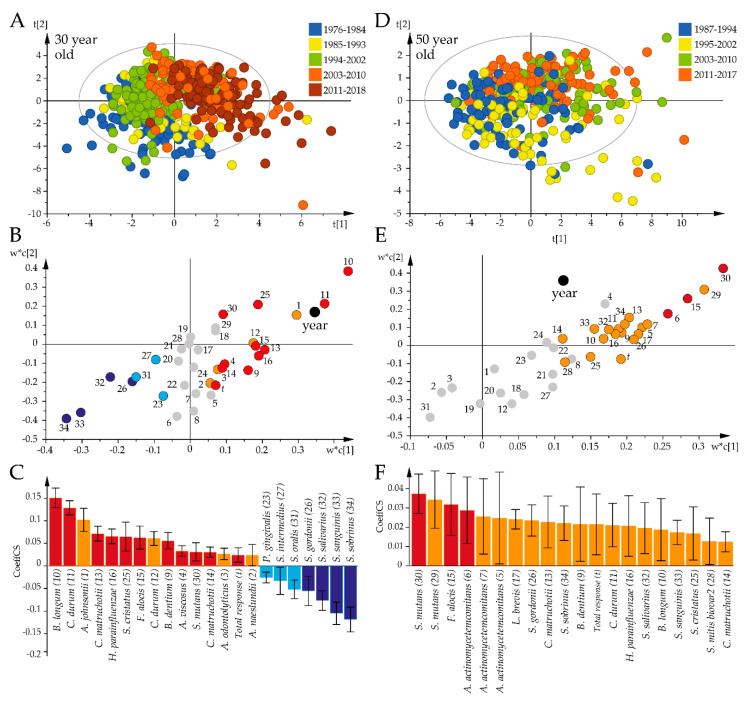
Bacteria colonizing the mouth induce an adaptive immune response with the systemic and local presence of species or strain-specific immunoglobulins. Few studies have addressed global antibody patterns for oral bacteria or potential population time trends. We assessed these aspects in relation to a panel of oral bacteria. Using multiplex immunoblotting, IgG levels for 26 oral bacterial species (54 strains) were determined in 888 plasma samples from 30-year-old early pregnant women ( = 516) and 50-year-old men and women ( = 372) collected between 1976 and 2018. Inter-species correlations were found and age-dependent profiles and levels of immune responses to oral bacteria confirmed. We found temporal trends in the global and single-species antibody responses, but this was age-specific with both inclining and declining shifts. Prominent shifts in the younger group increased IgG towards health-associated and , and in the older group towards disease-associated and , among others. We concluded that temporal shifts occurred from 1976 to 2018, which may reflect improved oral health (more remaining teeth) and altered lifestyle habits, but this needs to be evaluated in observational studies considering more aspects.
口腔中的细菌会引发适应性免疫反应,伴随着特定物种或菌株的免疫球蛋白在全身和局部的出现。很少有研究探讨针对口腔细菌的整体抗体模式或潜在的人群时间趋势。我们针对一组口腔细菌评估了这些方面。通过多重免疫印迹法,在1976年至2018年期间收集的888份血浆样本中测定了26种口腔细菌(54株)的IgG水平,这些样本来自30岁的早期孕妇(n = 516)以及50岁的男性和女性(n = 372)。发现了种间相关性,并证实了对口腔细菌免疫反应的年龄依赖性特征和水平。我们发现整体和单物种抗体反应存在时间趋势,但这因年龄而异,既有上升趋势也有下降趋势。在较年轻的群体中,显著的变化是IgG水平朝着与健康相关的[细菌名称1]和[细菌名称2]升高,而在较年长的群体中,朝着与疾病相关的[细菌名称3]和[细菌名称4]等升高。我们得出结论,1976年至2018年期间发生了时间上的变化,这可能反映了口腔健康状况的改善(剩余牙齿增多)和生活方式习惯的改变,但这需要在考虑更多因素的观察性研究中进行评估。