Porkoláb Gergő, Mészáros Mária, Tóth András, Szecskó Anikó, Harazin András, Szegletes Zsolt, Ferenc Györgyi, Blastyák András, Mátés Lajos, Rákhely Gábor, Deli Mária A, Veszelka Szilvia
Institute of Biophysics, Biological Research Centre, Temesvári krt. 62, H-6726 Szeged, Hungary.
Department of Biotechnology, Faculty of Science and Informatics, University of Szeged, Közép fasor 52, H-6726 Szeged, Hungary.
Pharmaceutics. 2020 Jul 7;12(7):635. doi: 10.3390/pharmaceutics12070635.
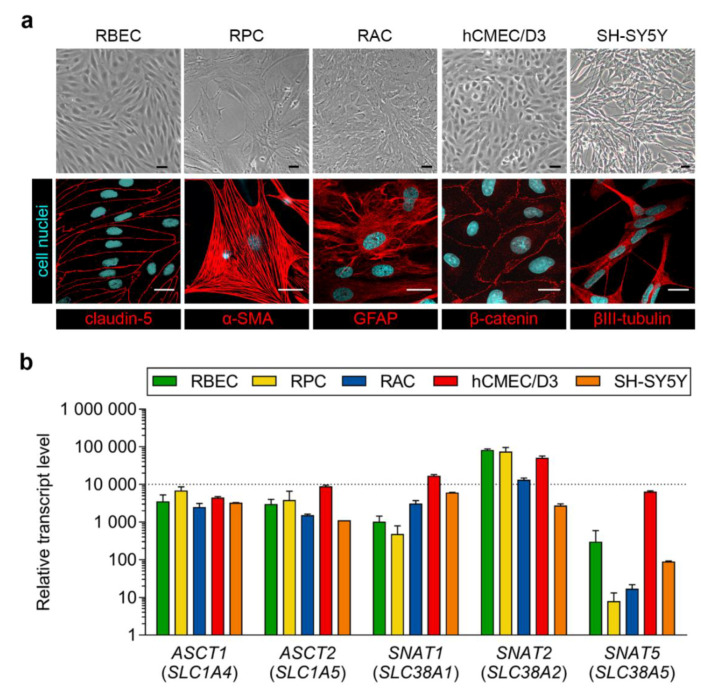
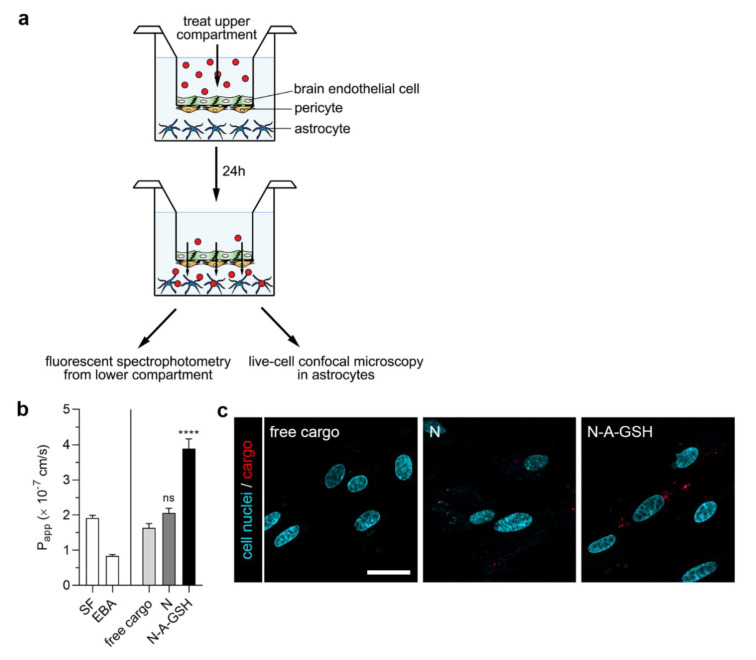
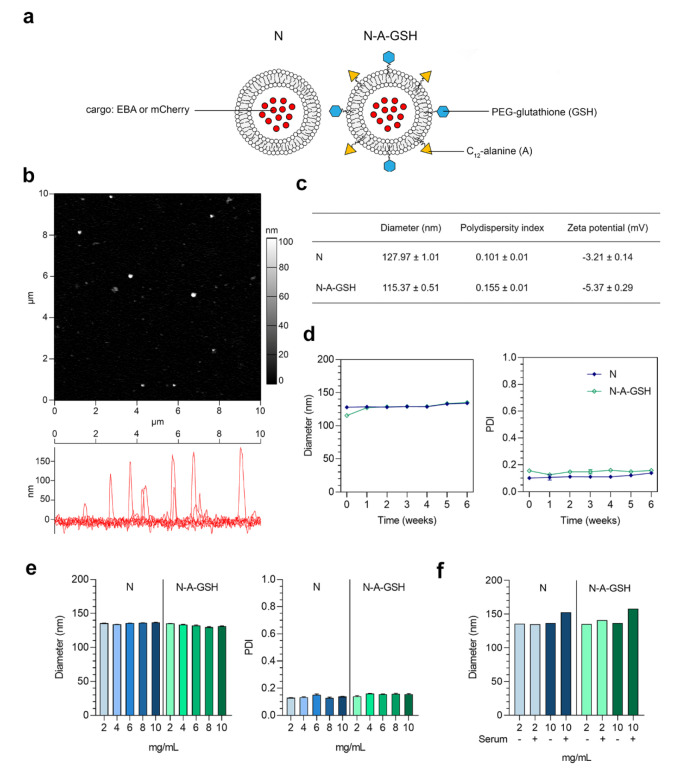
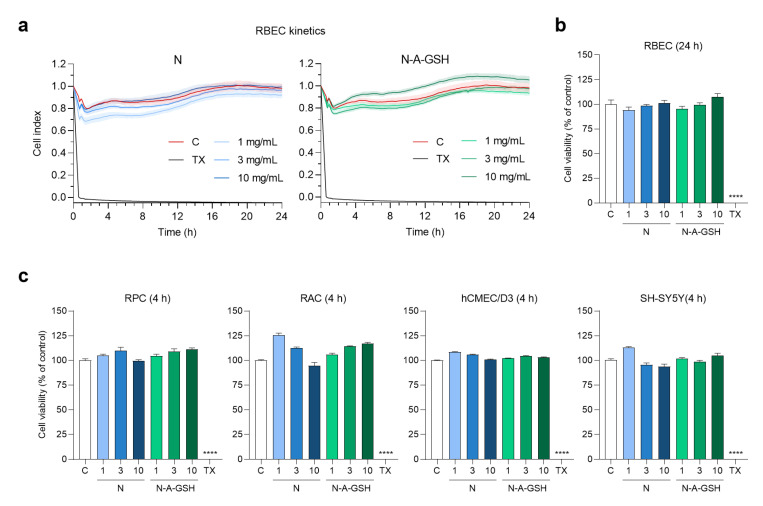
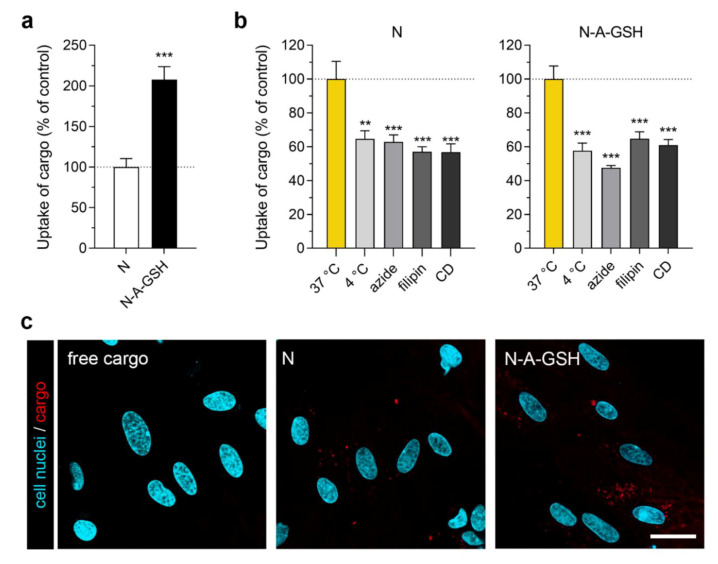
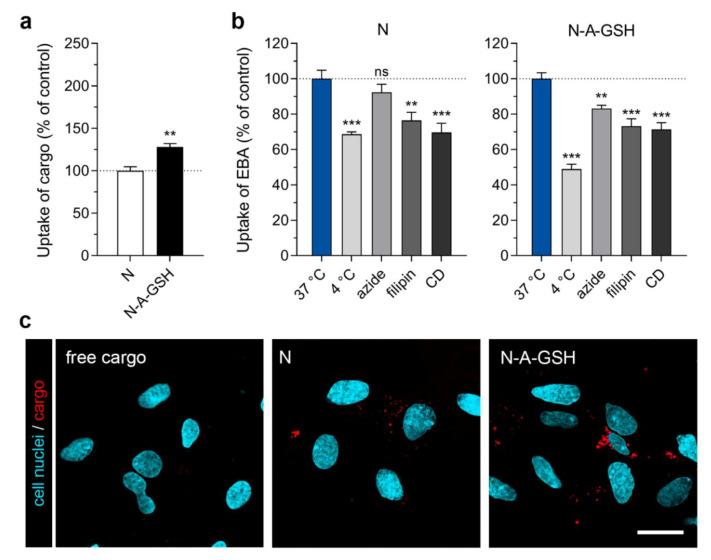
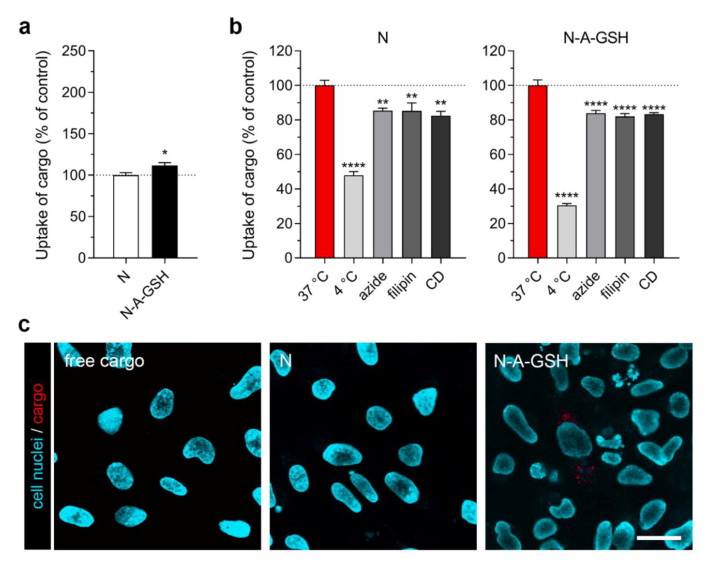
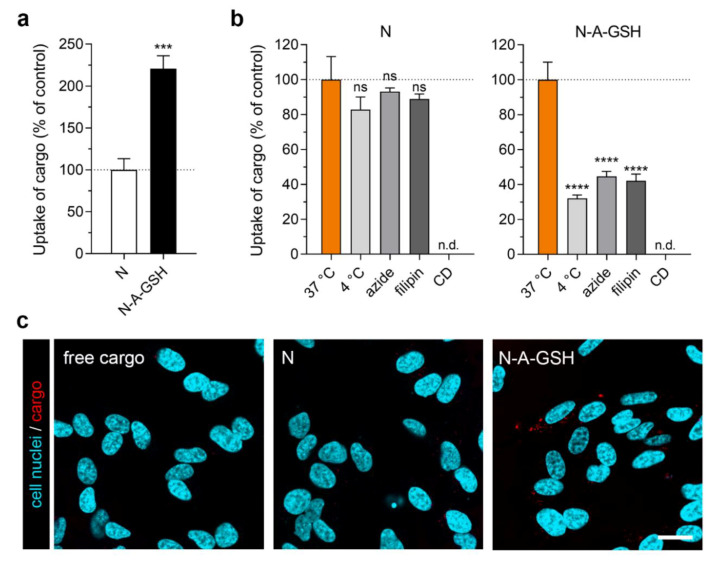
Inefficient drug delivery across the blood-brain barrier (BBB) and into target cells in the brain hinders the treatment of neurological diseases. One strategy to increase the brain penetration of drugs is to use vesicular nanoparticles functionalized with multiple ligands of BBB transporters as vehicles. Once within the brain, however, drugs must also be able to reach their therapeutic targets in the different cell types. It is, therefore, favorable if such nanocarriers are designed that can deliver their cargo not only to brain endothelial cells, but to other cell types as well. Here, we show that alanineglutathione dual-targeting of niosomes enhances the delivery of a large protein cargo into cultured cells of the neurovascular unit, namely brain endothelial cells, pericytes, astrocytes and neurons. Furthermore, using metabolic and endocytic inhibitors, we show that the cellular uptake of niosomes is energy-dependent and is partially mediated by endocytosis. Finally, we demonstate the ability of our targeted nanovesicles to deliver their cargo into astroglial cells after crossing the BBB in vitro. These data indicate that dual-labeling of nanoparticles with alanine and glutathione can potentially be exploited to deliver drugs, even biopharmacons, across the BBB and into multiple cell types in the brain.
药物穿过血脑屏障(BBB)并进入脑内靶细胞的效率低下,这阻碍了神经疾病的治疗。增加药物脑渗透性的一种策略是使用用BBB转运体的多种配体功能化的囊泡纳米颗粒作为载体。然而,一旦进入脑内,药物还必须能够到达不同细胞类型中的治疗靶点。因此,如果设计出这样的纳米载体,使其不仅能够将所载药物递送至脑内皮细胞,还能递送至其他细胞类型,那将是有利的。在此,我们表明,对脂质体进行丙氨酸 - 谷胱甘肽双靶向可增强将大蛋白货物递送至神经血管单元的培养细胞,即脑内皮细胞、周细胞、星形胶质细胞和神经元。此外,使用代谢和内吞抑制剂,我们表明脂质体的细胞摄取是能量依赖性的,并且部分由内吞作用介导。最后,我们证明了我们的靶向纳米囊泡在体外穿过血脑屏障后将所载药物递送至星形胶质细胞的能力。这些数据表明,用丙氨酸和谷胱甘肽对纳米颗粒进行双标记有可能被用于将药物,甚至生物药物,穿过血脑屏障并递送至脑内的多种细胞类型。