Chai Ming G, Cotta Menino O, Abdul-Aziz Mohd H, Roberts Jason A
University of Queensland Centre for Clinical Research (UQCCR), Faculty of Medicine, The University of Queensland, Brisbane 4006, Ausstralia.
Centre for Translational Anti-infective Pharmacodynamics, School of Pharmacy, The University of Queensland, Woollongabba 4102, Australia.
Pharmaceutics. 2020 Jul 7;12(7):638. doi: 10.3390/pharmaceutics12070638.
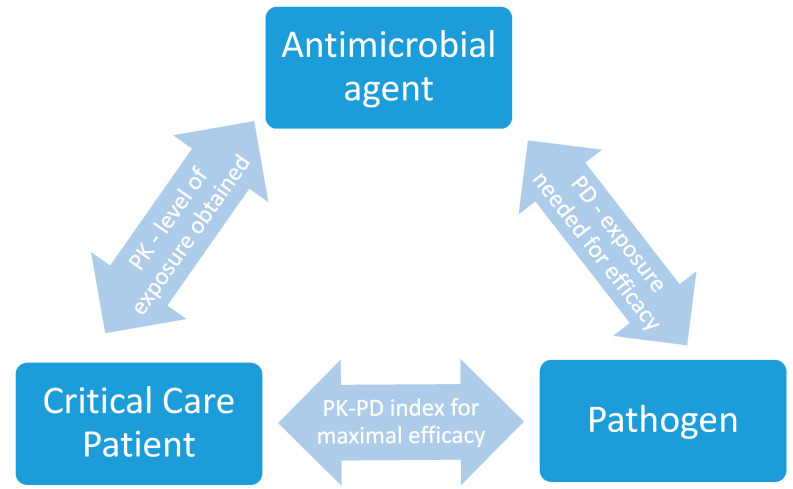
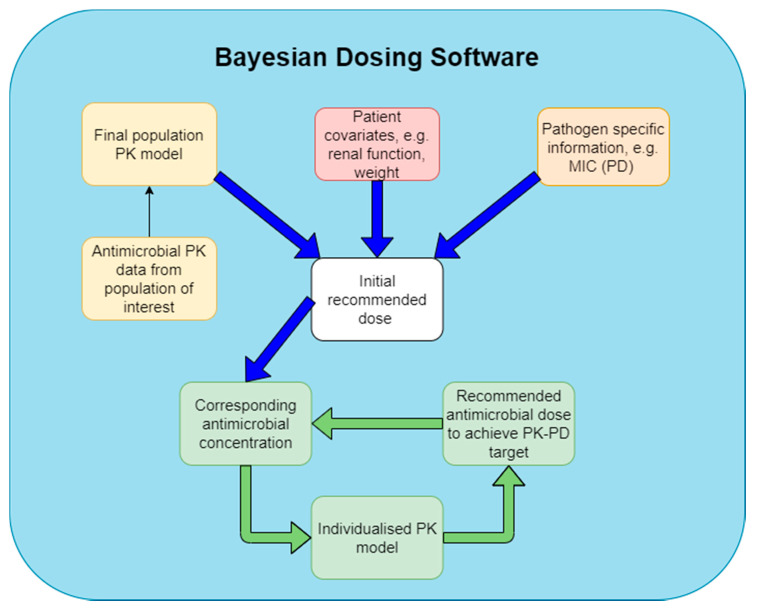
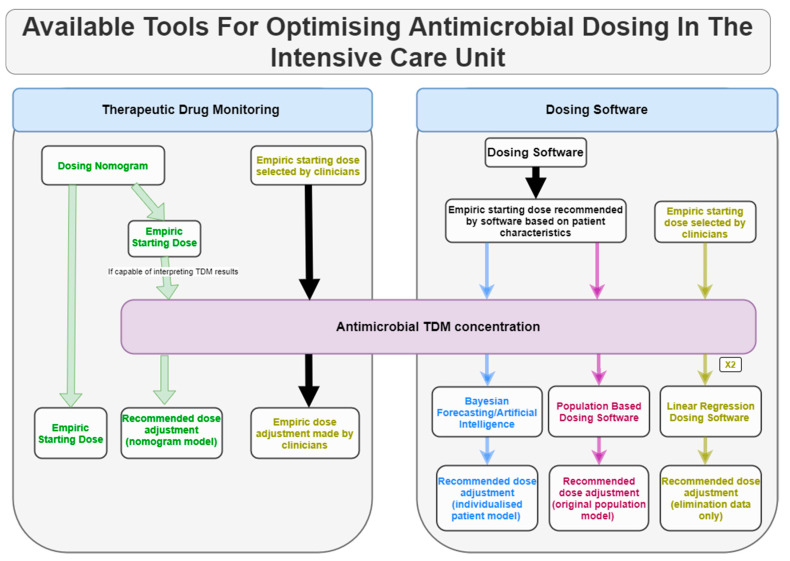
Antimicrobial dosing in the intensive care unit (ICU) can be problematic due to various challenges including unique physiological changes observed in critically ill patients and the presence of pathogens with reduced susceptibility. These challenges result in reduced likelihood of standard antimicrobial dosing regimens achieving target exposures associated with optimal patient outcomes. Therefore, the aim of this review is to explore the various methods for optimisation of antimicrobial dosing in ICU patients. Dosing nomograms developed from pharmacokinetic/statistical models and therapeutic drug monitoring are commonly used. However, recent advances in mathematical and statistical modelling have resulted in the development of novel dosing software that utilise Bayesian forecasting and/or artificial intelligence. These programs utilise therapeutic drug monitoring results to further personalise antimicrobial therapy based on each patient's clinical characteristics. Studies quantifying the clinical and cost benefits associated with dosing software are required before widespread use as a point-of-care system can be justified.
由于各种挑战,包括危重病患者中观察到的独特生理变化以及敏感性降低的病原体的存在,重症监护病房(ICU)中的抗菌药物给药可能会出现问题。这些挑战导致标准抗菌药物给药方案实现与最佳患者预后相关的目标暴露的可能性降低。因此,本综述的目的是探讨优化ICU患者抗菌药物给药的各种方法。由药代动力学/统计模型和治疗药物监测开发的给药列线图是常用的。然而,数学和统计建模的最新进展导致了利用贝叶斯预测和/或人工智能的新型给药软件的开发。这些程序利用治疗药物监测结果,根据每个患者的临床特征进一步个性化抗菌治疗。在作为床旁系统广泛使用之前,需要进行量化给药软件相关临床和成本效益的研究。