CRUK Beatson Institute, Glasgow G61 1BD, UK.
School of Chemistry and Bioscience, University of Bradford, Bradford BD7 1PD, UK.
Cells. 2020 Jul 7;9(7):1635. doi: 10.3390/cells9071635.
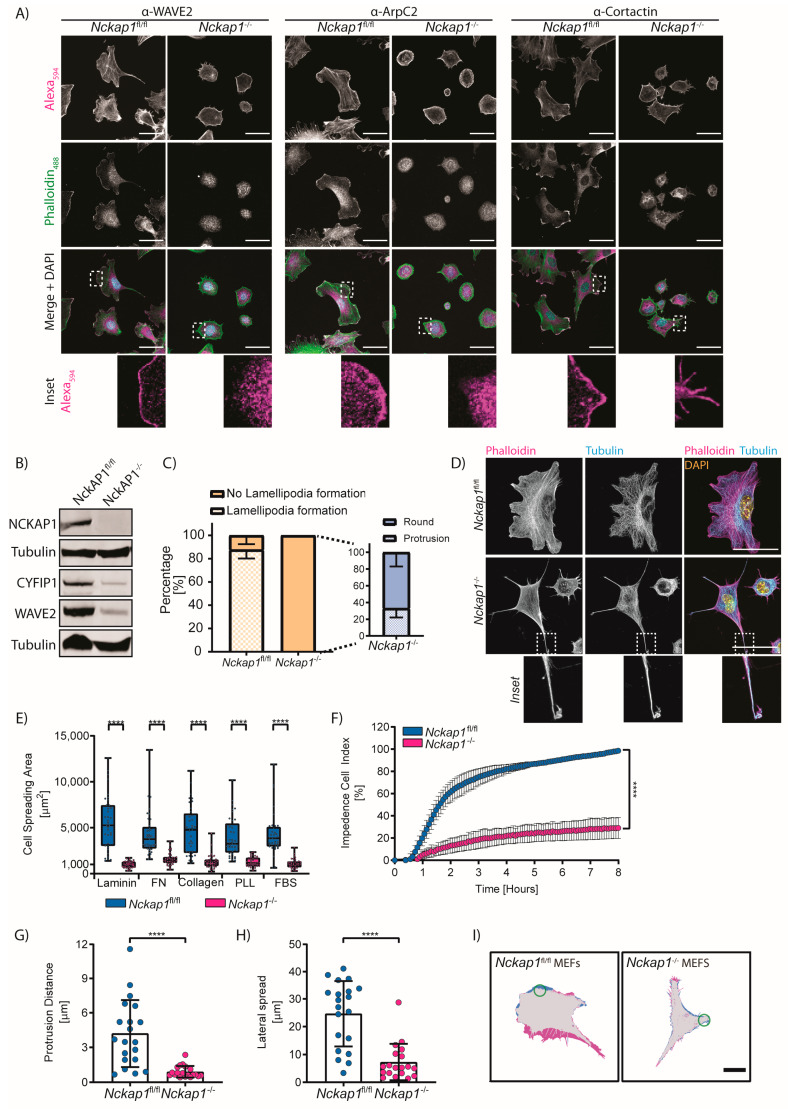
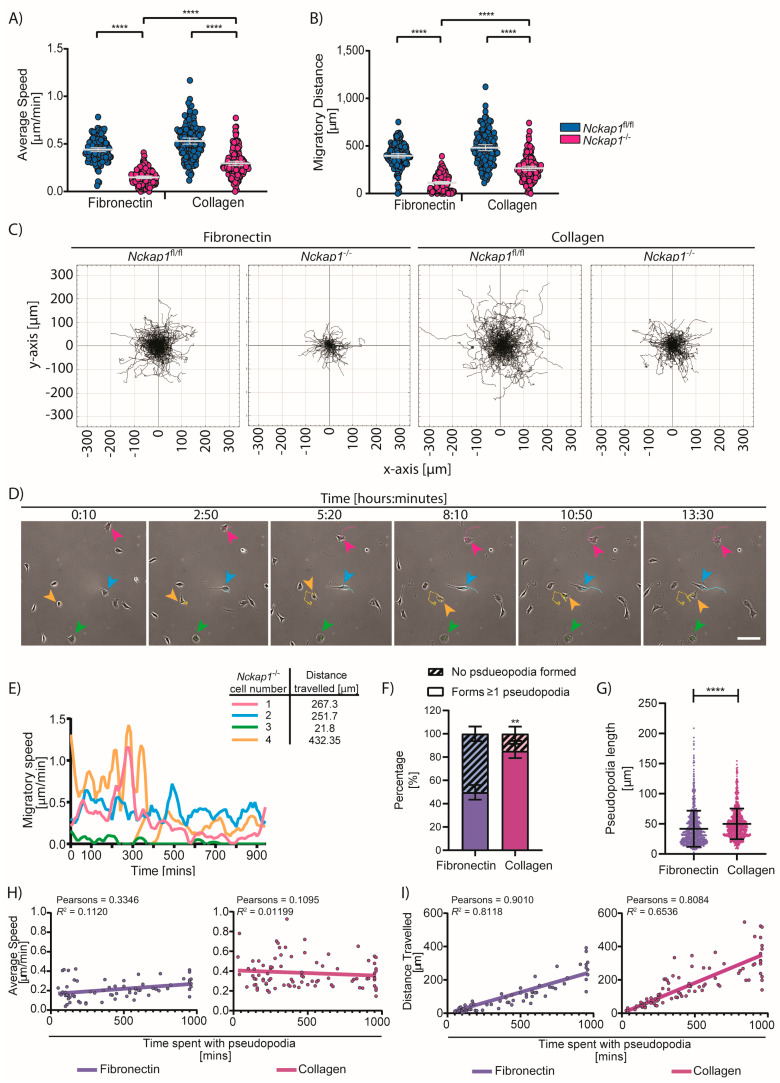
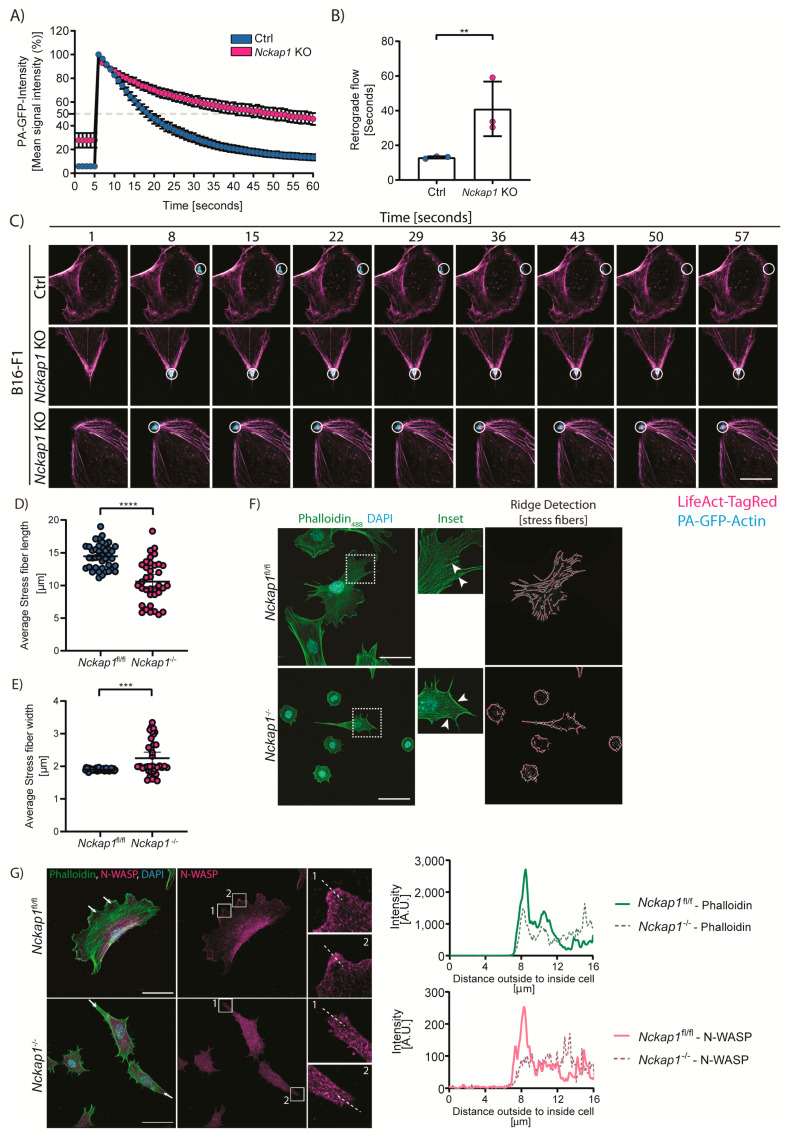
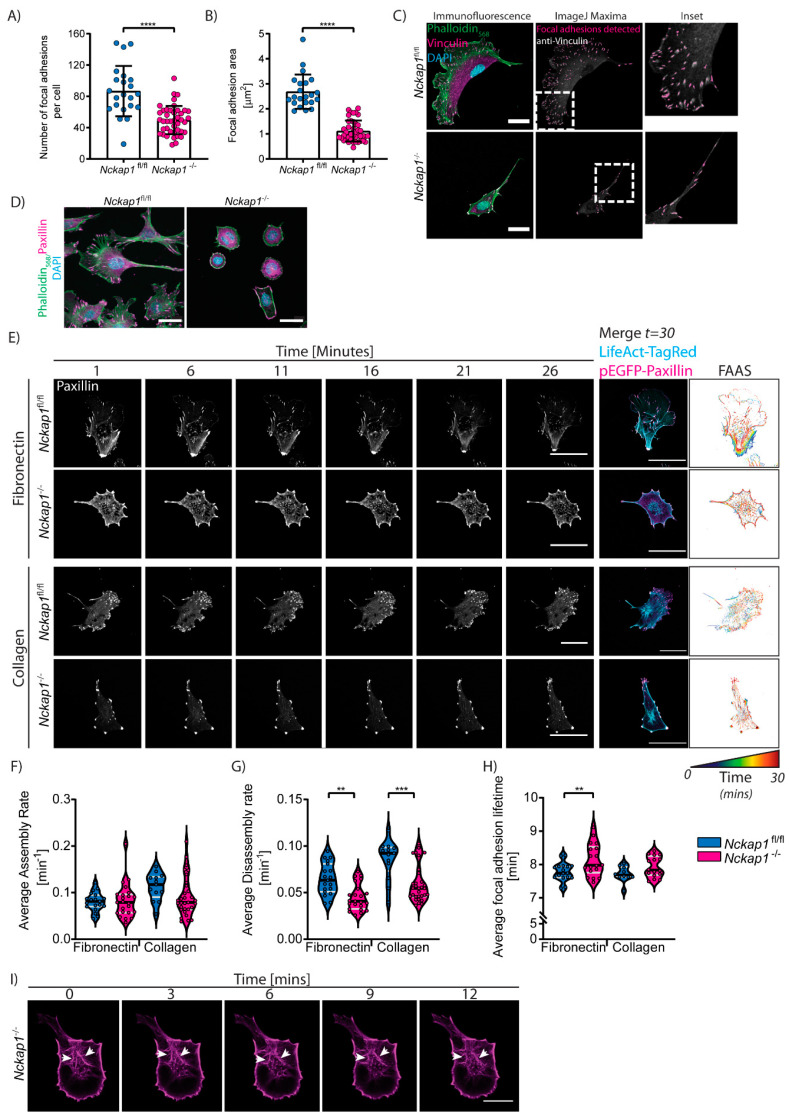
Cells migrating over 2D substrates are required to polymerise actin at the leading edge to form lamellipodia protrusions and nascent adhesions to anchor the protrusion to the substrate. The major actin nucleator in lamellipodia formation is the Arp2/3 complex, which is activated by the WAVE regulatory complex (WRC). Using inducible floxed mouse embryonic fibroblasts (MEFs), we confirm that the WRC is required for lamellipodia formation, and importantly, for generating the retrograde flow of actin from the leading cell edge. The loss of NCKAP1 also affects cell spreading and focal adhesion dynamics. In the absence of lamellipodium, cells can become elongated and move with a single thin pseudopod, which appears devoid of N-WASP. This phenotype was more prevalent on collagen than fibronectin, where we observed an increase in migratory speed. Thus, 2D cell migration on collagen is less dependent on branched actin.
细胞在二维基质上迁移时,需要在前沿聚合肌动蛋白以形成片状伪足突起和新生黏附物,将突起锚定在基质上。片状伪足形成中的主要肌动蛋白成核因子是 Arp2/3 复合物,它被 WAVE 调节复合物 (WRC) 激活。使用可诱导的 floxed 小鼠胚胎成纤维细胞 (MEF),我们证实 WRC 是形成片状伪足所必需的,并且对于从前沿细胞边缘产生肌动蛋白的逆行流也很重要。NCKAP1 的缺失也会影响细胞铺展和焦点黏附动力学。在没有片状伪足的情况下,细胞可能会变得细长,并通过单个薄的伪足移动,这个伪足似乎没有 N-WASP。这种表型在胶原上比纤维连接蛋白上更为普遍,我们观察到迁移速度增加。因此,胶原上的 2D 细胞迁移对分支肌动蛋白的依赖性较低。