"Disease and Hormones of the Nervous System", U1195 Inserm-Université Paris Saclay, 80 rue du Général Leclerc, 94276 Kremlin-Bicêtre, France.
Int J Mol Sci. 2020 Jul 7;21(13):4812. doi: 10.3390/ijms21134812.
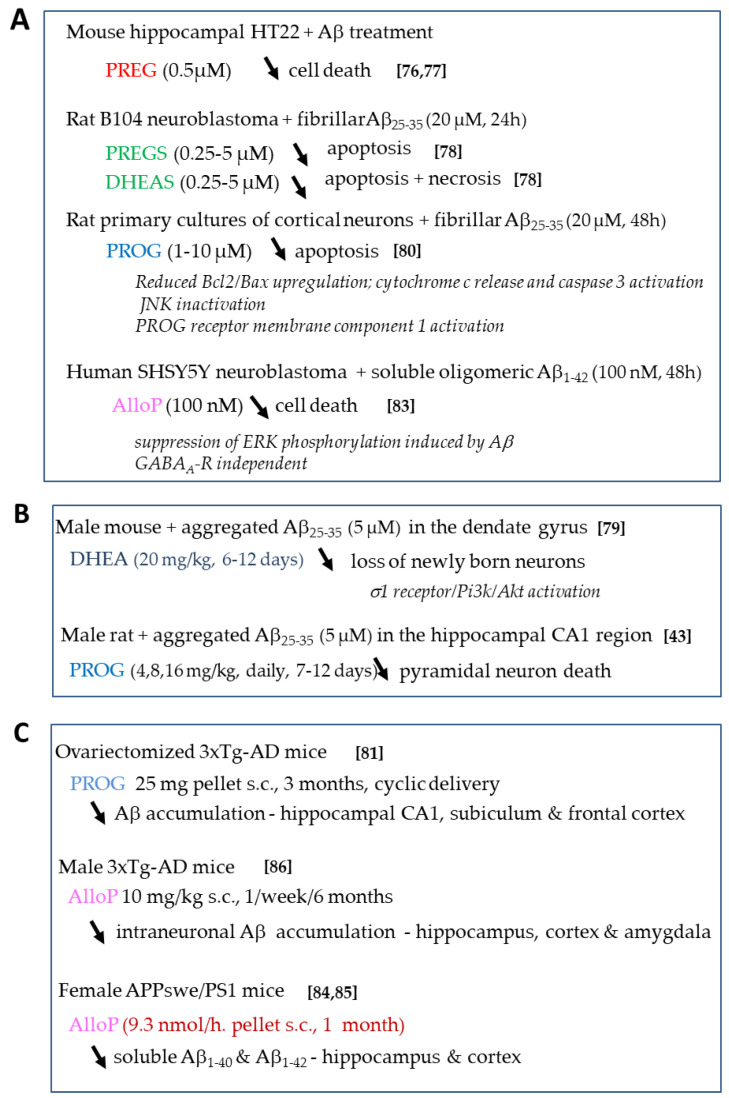
Alzheimer's disease (AD) is a multifactorial age-related neurodegenerative disease that today has no effective treatment to prevent or slow its progression. Neuroactive steroids, including neurosteroids and sex steroids, have attracted attention as potential suitable candidates to alleviate AD pathology. Accumulating evidence shows that they exhibit pleiotropic neuroprotective properties that are relevant for AD. This review focuses on the relationship between selected neuroactive steroids and the main aspects of AD disease, pointing out contributions and gaps with reference to sex differences. We take into account the regulation of brain steroid concentrations associated with human AD pathology. Consideration is given to preclinical studies in AD models providing current knowledge on the neuroprotection offered by neuroactive (neuro)steroids on major AD pathogenic factors, such as amyloid-β (Aβ) and tau pathology, mitochondrial impairment, neuroinflammation, neurogenesis and memory loss. Stimulating endogenous steroid production opens a new steroid-based strategy to potentially overcome AD pathology. This article is part of a Special Issue entitled Steroids and the Nervous System.
阿尔茨海默病(AD)是一种与年龄相关的多因素神经退行性疾病,目前尚无有效的治疗方法来预防或减缓其进展。神经活性甾体,包括神经甾体和性激素,作为潜在的合适候选物,因其具有缓解 AD 病理的多效神经保护特性而受到关注。本综述重点关注了选定的神经活性甾体与 AD 疾病主要方面之间的关系,指出了与性别差异有关的贡献和差距。我们考虑了与人类 AD 病理相关的大脑甾体浓度的调节。考虑到 AD 模型中的临床前研究,提供了关于神经活性(神经)甾体对主要 AD 致病因素(如淀粉样蛋白-β(Aβ)和 tau 病理、线粒体损伤、神经炎症、神经发生和记忆丧失)提供的神经保护作用的最新知识。刺激内源性甾体的产生为潜在地克服 AD 病理提供了一种新的基于甾体的策略。本文是题为“甾体和神经系统”的特刊的一部分。