Trauma Surgery, Department of Surgery, Hamad General Hospital, Doha, Qatar.
Clinical Research, Trauma & Vascular Surgery, Department of Surgery, Hamad General Hospital, Doha, Qatar.
J Orthop Surg Res. 2020 Jul 9;15(1):249. doi: 10.1186/s13018-020-01772-w.
Traumatic pelvic fracture (TPF) is a significant injury that results from high energy impact and has a high morbidity and mortality.
We aimed to describe the epidemiology, incidence, patterns, management, and outcomes of TPF in multinational level 1 trauma centers.
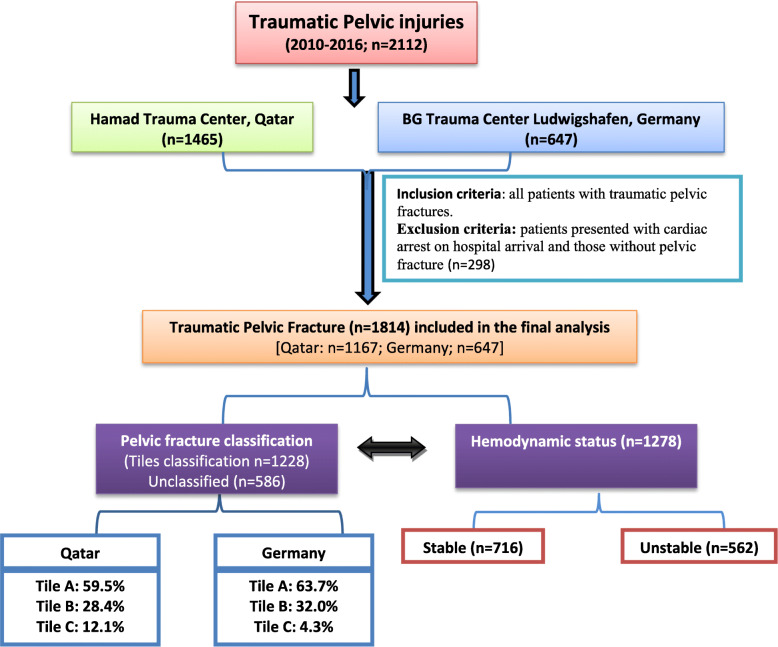
We conducted a retrospective analysis of all patients with TPF between 2010 and 2016 at two trauma centers in Qatar and Germany.
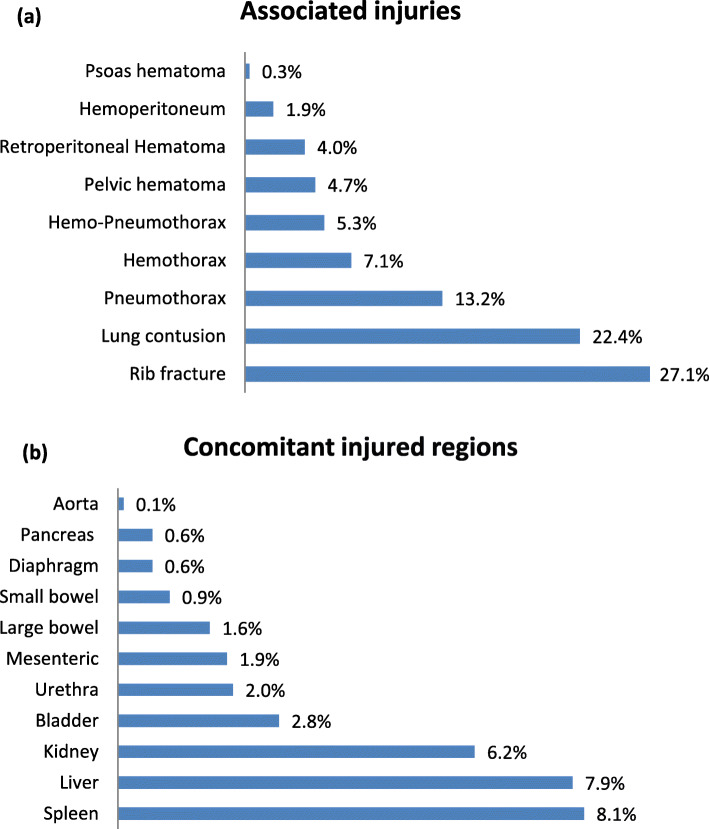
A total of 2112 patients presented with traumatic pelvic injuries, of which 1814 (85.9%) sustained TPF, males dominated (76.5%) with a mean age of 41 ± 21 years. In unstable pelvic fracture, the frequent mechanism of injury was motor vehicle crash (41%) followed by falls (35%) and pedestrian hit by vehicle (24%). Apart from both extremities, the chest (37.3%) was the most commonly associated injured region. The mean injury severity score (ISS) of 16.5 ± 13.3. Hemodynamic instability was observed in 44%. Blood transfusion was needed in one third while massive transfusion and intensive care admission were required in a tenth and a quarter of cases, respectively. Tile classification was possible in 1228 patients (type A in 60%, B in 30%, and C in 10%). Patients with type C fractures had higher rates of associated injuries, higher ISS, greater pelvis abbreviated injury score (AIS), massive transfusion protocol activation, prolonged hospital stay, complications, and mortality (p value < 0.001). Two-thirds of patients were managed conservatively while a third needed surgical fixation. The median length of hospital and intensive care stays were 15 and 5 days, respectively. The overall mortality rate was 4.7% (86 patients).
TPF is a common injury among polytrauma patients. It needs a careful, systematic management approach to address the associated complexities and the polytrauma nature.
创伤性骨盆骨折(TPF)是一种由高能冲击引起的严重损伤,具有较高的发病率和死亡率。
我们旨在描述多国家 1 级创伤中心 TPF 的流行病学、发生率、模式、处理和结局。
我们对 2010 年至 2016 年在卡塔尔和德国的 2 个创伤中心接受 TPF 的所有患者进行了回顾性分析。
共有 2112 名患者因创伤性骨盆损伤就诊,其中 1814 名(85.9%)患有 TPF,男性为主(76.5%),平均年龄 41 ± 21 岁。在不稳定骨盆骨折中,常见的损伤机制是机动车事故(41%),其次是跌倒(35%)和行人被车辆撞击(24%)。除了四肢外,胸部(37.3%)是最常见的相关损伤部位。平均损伤严重程度评分(ISS)为 16.5 ± 13.3。有 44%的患者出现血流动力学不稳定。三分之一的患者需要输血,十分之一和四分之一的患者需要大量输血和入住重症监护病房。1228 名患者可进行 Tile 分类(A型占 60%,B 型占 30%,C 型占 10%)。C 型骨折患者的合并伤发生率、ISS、骨盆缩短损伤评分(AIS)、大量输血方案激活、住院时间延长、并发症和死亡率均较高(p 值<0.001)。三分之二的患者接受保守治疗,三分之一的患者需要手术固定。中位住院和重症监护病房住院时间分别为 15 天和 5 天。总死亡率为 4.7%(86 例)。
TPF 是多发创伤患者的常见损伤。需要采用仔细、系统的处理方法来处理相关复杂性和多发创伤性质。