Department of Pediatrics, Herman B Wells Center for Pediatric Research, Indiana University School of Medicine, 1044 W Walnut Street, R4 272, Indianapolis, IN, 46202, USA.
Department of Medical and Molecular Genetics, Indiana University School of Medicine, Indianapolis, IN, 46202, USA.
Genome Biol. 2020 Jul 9;21(1):169. doi: 10.1186/s13059-020-02082-4.
Early human heart and brain development simultaneously occur during embryogenesis. Notably, in human newborns, congenital heart defects strongly associate with neurodevelopmental abnormalities, suggesting a common gene or complex underlying both cardiogenesis and neurogenesis. However, due to lack of in vivo studies, the molecular mechanisms that govern both early human heart and brain development remain elusive.
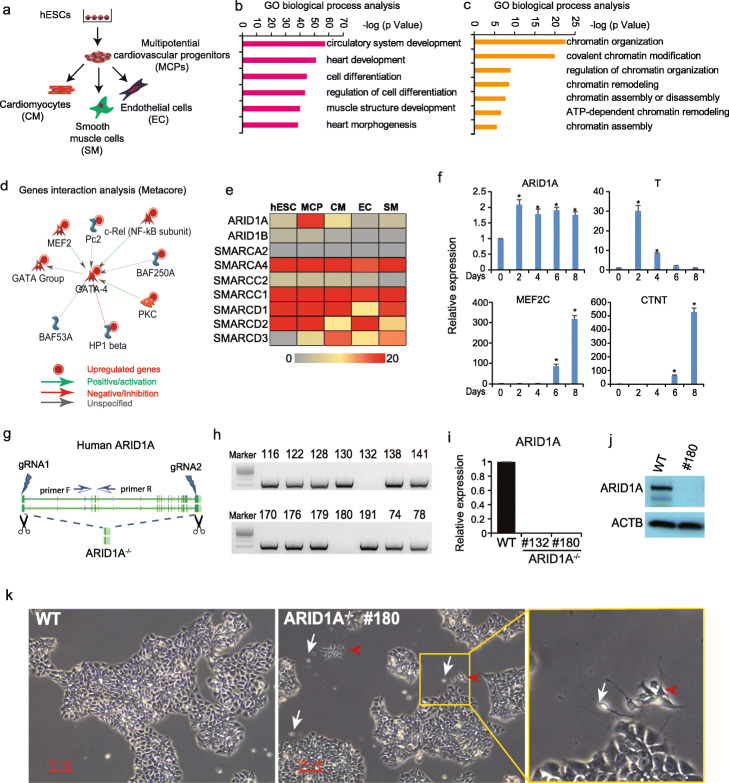
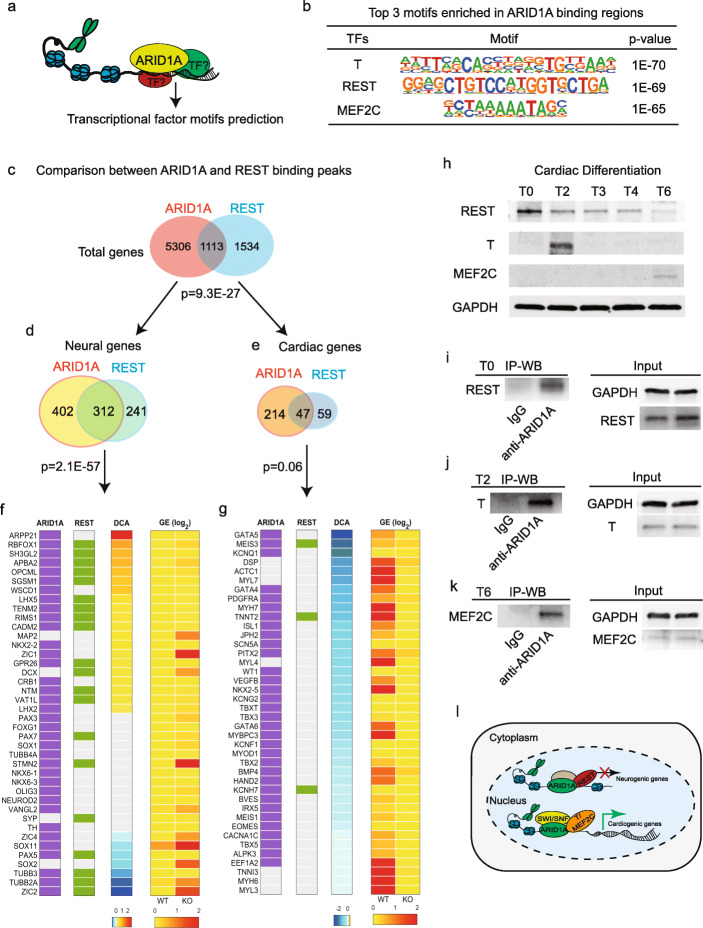
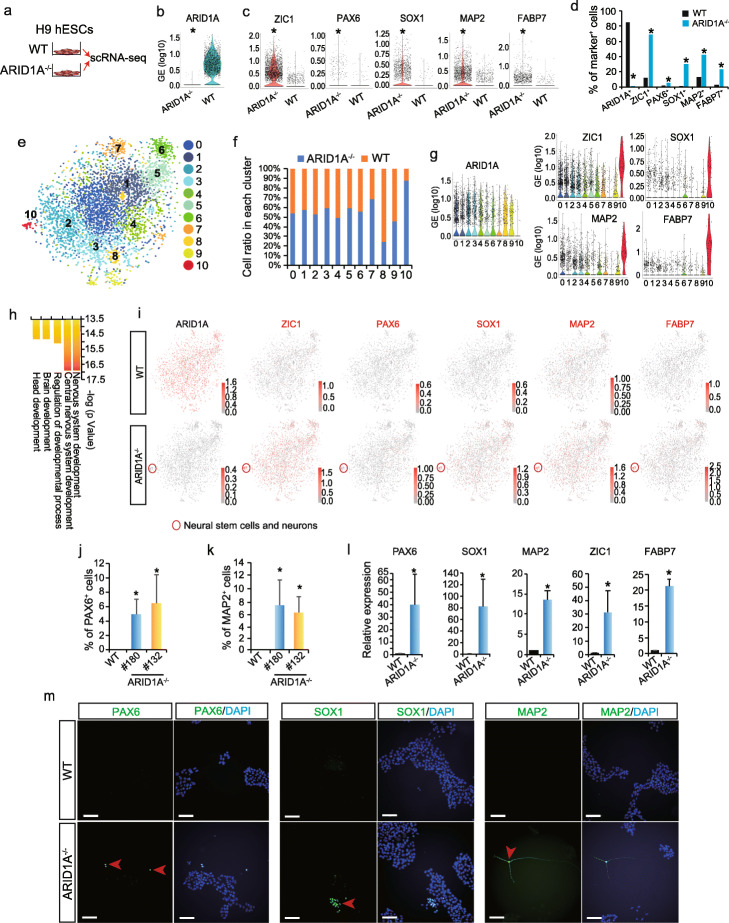
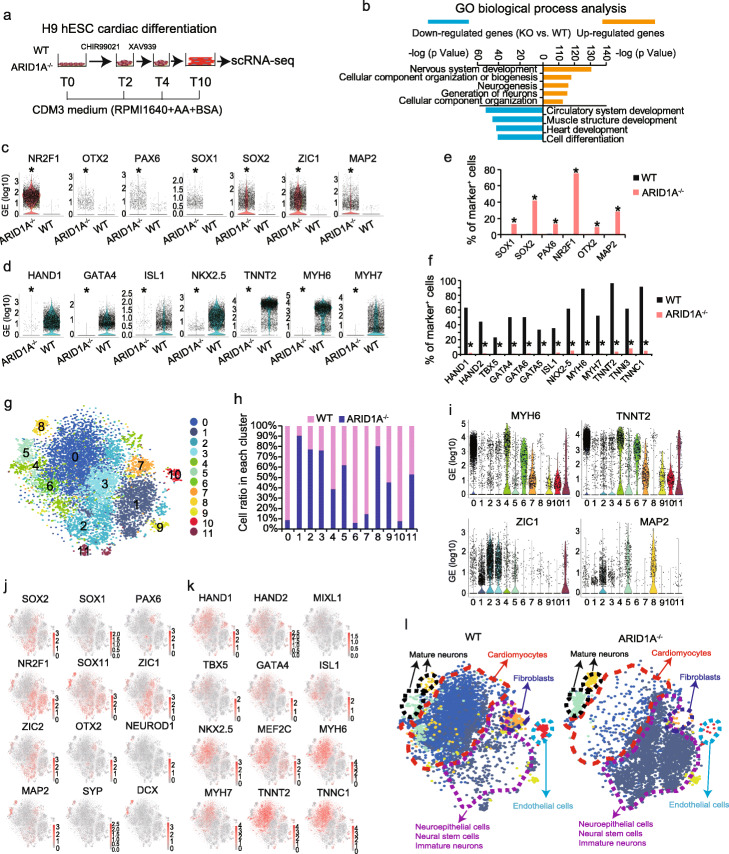
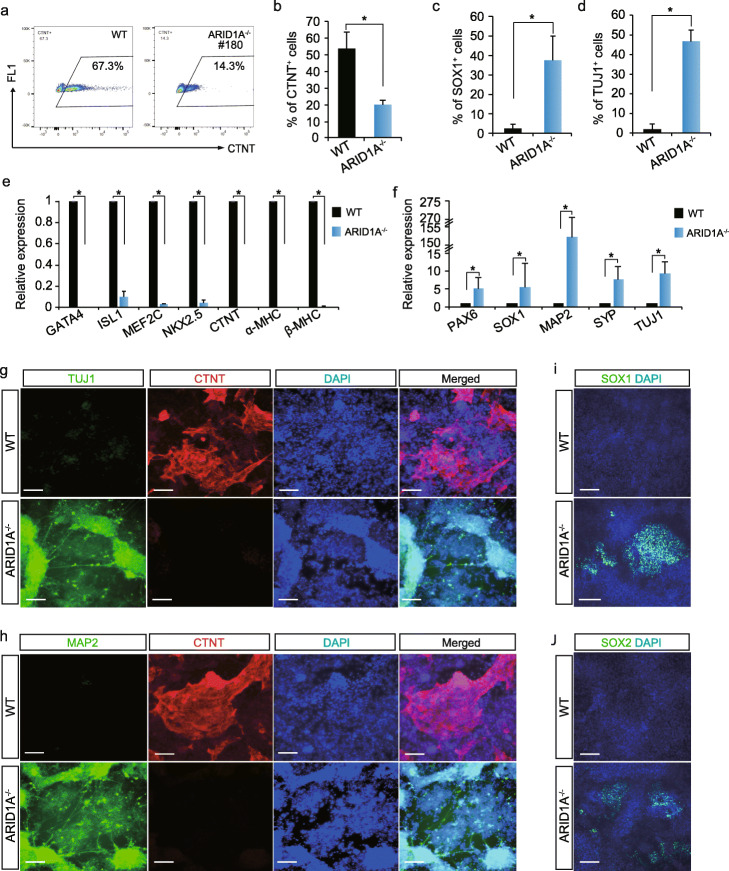
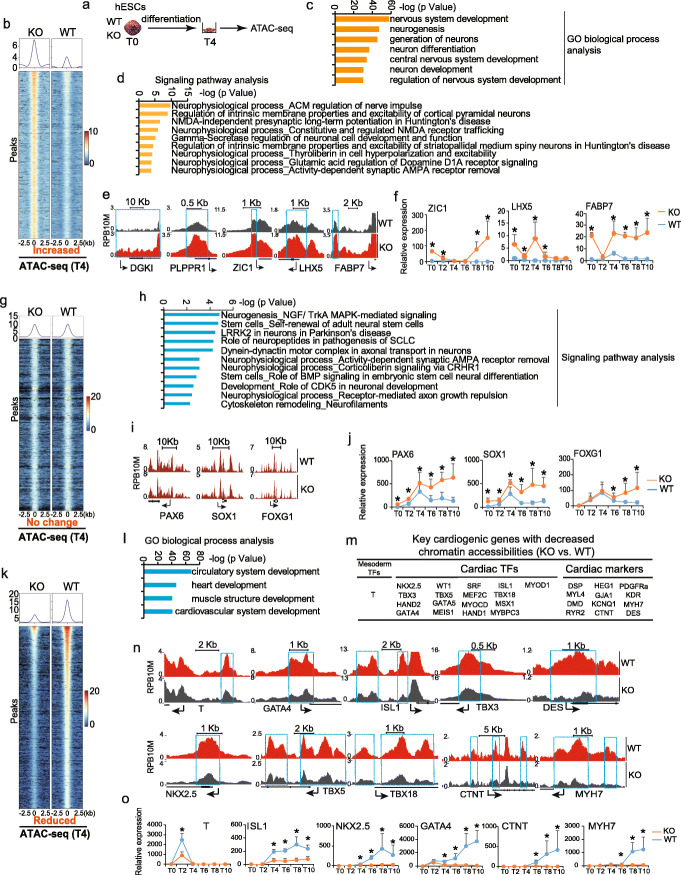
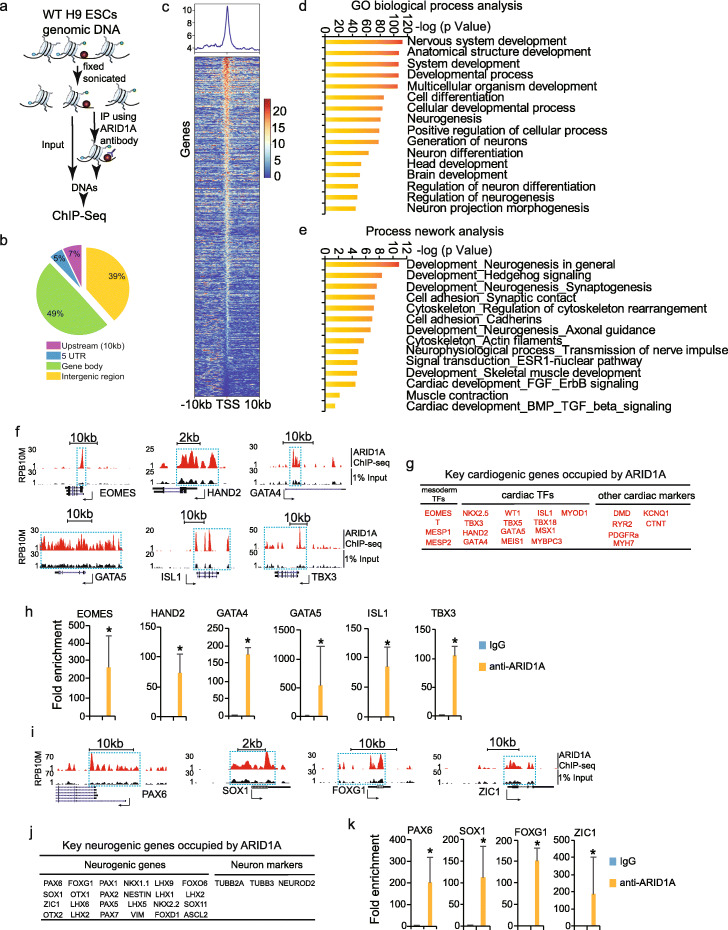
Here, we report ARID1A, a DNA-binding subunit of the SWI/SNF epigenetic complex, controls both neurogenesis and cardiogenesis from human embryonic stem cells (hESCs) through distinct mechanisms. Knockout-of-ARID1A (ARID1A) leads to spontaneous differentiation of neural cells together with globally enhanced expression of neurogenic genes in undifferentiated hESCs. Additionally, when compared with WT hESCs, cardiac differentiation from ARID1A hESCs is prominently suppressed, whereas neural differentiation is significantly promoted. Whole genome-wide scRNA-seq, ATAC-seq, and ChIP-seq analyses reveal that ARID1A is required to open chromatin accessibility on promoters of essential cardiogenic genes, and temporally associated with key cardiogenic transcriptional factors T and MEF2C during early cardiac development. However, during early neural development, transcription of most essential neurogenic genes is dependent on ARID1A, which can interact with a known neural restrictive silencer factor REST/NRSF.
We uncover the opposite roles by ARID1A to govern both early cardiac and neural development from pluripotent stem cells. Global chromatin accessibility on cardiogenic genes is dependent on ARID1A, whereas transcriptional activity of neurogenic genes is under control by ARID1A, possibly through ARID1A-REST/NRSF interaction.
人类心脏和大脑的早期发育在胚胎发生过程中同时发生。值得注意的是,在人类新生儿中,先天性心脏缺陷与神经发育异常强烈相关,这表明心脏发生和神经发生的背后存在共同的基因或复杂机制。然而,由于缺乏体内研究,调控人类心脏和大脑早期发育的分子机制仍然难以捉摸。
在这里,我们报道 ARID1A,一种 SWI/SNF 表观遗传复合物的 DNA 结合亚基,通过不同的机制控制人类胚胎干细胞(hESC)的神经发生和心脏发生。ARID1A 的敲除导致神经细胞的自发分化,同时未分化的 hESC 中神经发生基因的整体表达增强。此外,与 WT hESC 相比,ARID1A hESC 的心脏分化明显受到抑制,而神经分化则显著增强。全基因组单细胞 RNA-seq、ATAC-seq 和 ChIP-seq 分析表明,ARID1A 是必需的,它可以打开心脏发生基因启动子上的染色质可及性,并与早期心脏发育过程中的关键心脏发生转录因子 T 和 MEF2C 相关联。然而,在早期神经发育过程中,大多数必需的神经发生基因的转录依赖于 ARID1A,它可以与已知的神经限制沉默因子 REST/NRSF 相互作用。
我们揭示了 ARID1A 在多能干细胞中对早期心脏和神经发育的相反作用。心脏发生基因的全基因组染色质可及性依赖于 ARID1A,而神经发生基因的转录活性受 ARID1A 的控制,可能通过 ARID1A-REST/NRSF 相互作用。