Stoke Therapeutics, Inc., Bedford, MA, USA.
Nat Commun. 2020 Jul 9;11(1):3501. doi: 10.1038/s41467-020-17093-9.
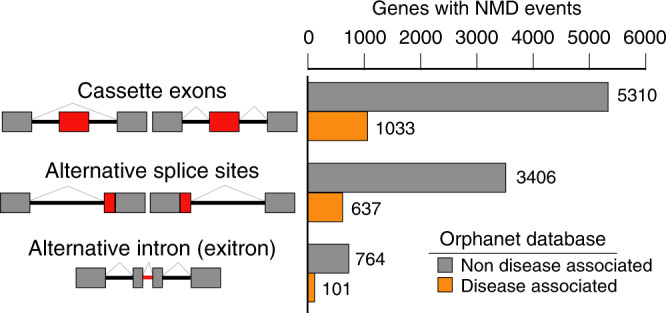
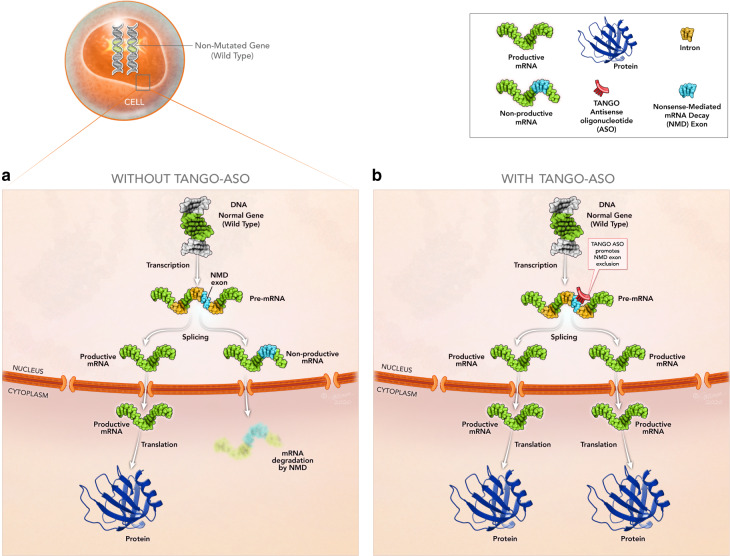
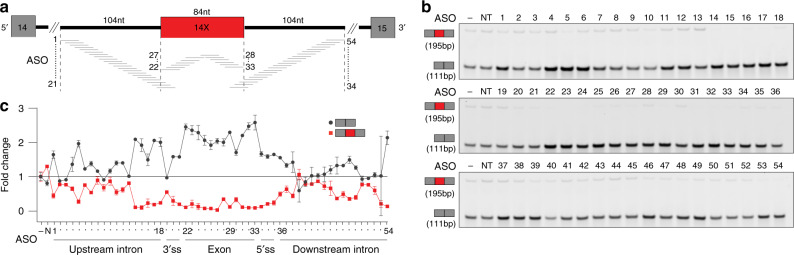
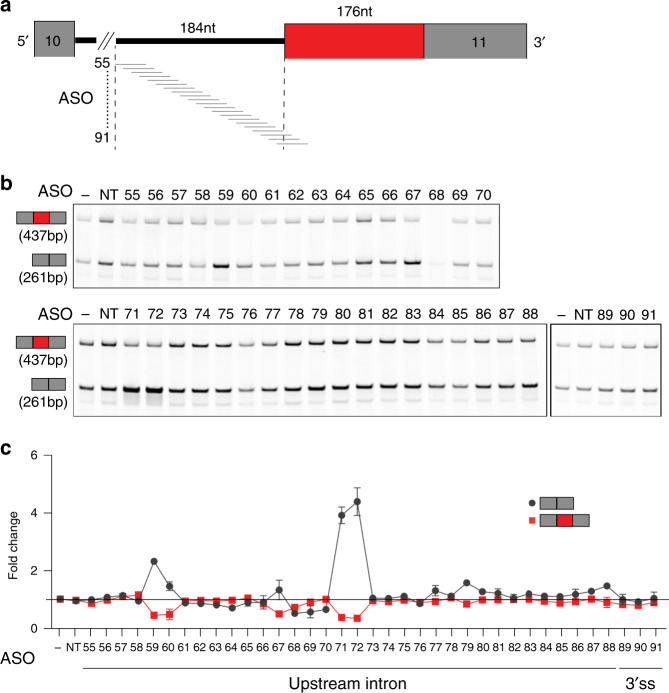
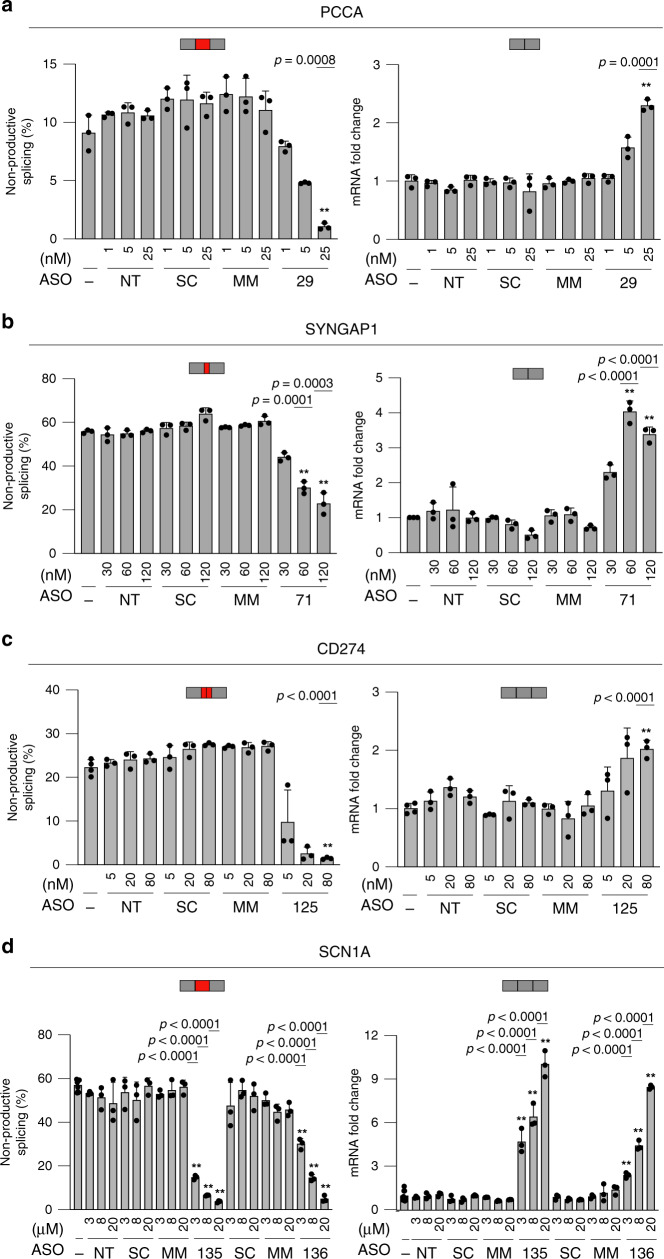
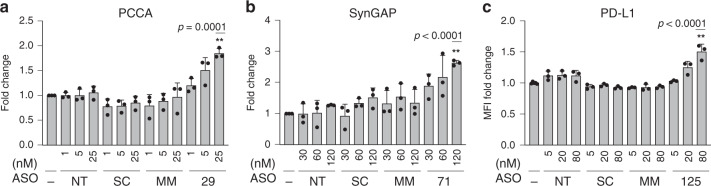
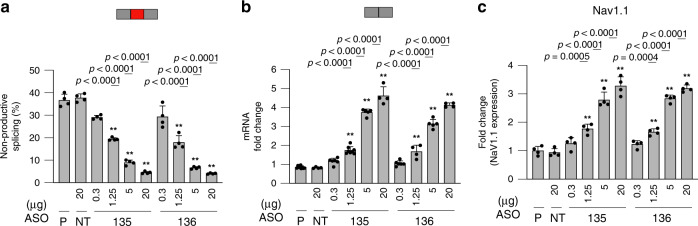
While most monogenic diseases are caused by loss or reduction of protein function, the need for technologies that can selectively increase levels of protein in native tissues remains. Here we demonstrate that antisense-mediated modulation of pre-mRNA splicing can increase endogenous expression of full-length protein by preventing naturally occurring non-productive alternative splicing and promoting generation of productive mRNA. Bioinformatics analysis of RNA sequencing data identifies non-productive splicing events in 7,757 protein-coding human genes, of which 1,246 are disease-associated. Antisense oligonucleotides targeting multiple types of non-productive splicing events lead to increases in productive mRNA and protein in a dose-dependent manner in vitro. Moreover, intracerebroventricular injection of two antisense oligonucleotides in wild-type mice leads to a dose-dependent increase in productive mRNA and protein in the brain. The targeting of natural non-productive alternative splicing to upregulate expression from wild-type or hypomorphic alleles provides a unique approach to treating genetic diseases.
虽然大多数单基因疾病是由蛋白质功能的丧失或减少引起的,但仍需要能够选择性地增加天然组织中蛋白质水平的技术。在这里,我们证明反义介导的前体 mRNA 剪接调控可以通过防止自然发生的非生产性可变剪接和促进生产性 mRNA 的产生来增加全长蛋白质的内源性表达。对 RNA 测序数据的生物信息学分析确定了 7757 个人类蛋白编码基因中的非生产性剪接事件,其中 1246 个与疾病相关。针对多种非生产性剪接事件的反义寡核苷酸在体外以剂量依赖性方式导致生产性 mRNA 和蛋白质的增加。此外,在野生型小鼠中脑室内注射两种反义寡核苷酸导致大脑中生产性 mRNA 和蛋白质的剂量依赖性增加。针对天然非生产性可变剪接以上调野生型或低功能等位基因的表达提供了一种治疗遗传疾病的独特方法。