Department of Pathology and Pathophysiology, and Department of Surgical Oncology (breast center) of the Second Affiliated Hospital, Zhejiang University School of Medicine, Hangzhou, China.
Cancer Institute of Integrative Medicine, Zhejiang Academy of Traditional Chinese Medicine, Tongde Hospital of Zhejiang Province, Hangzhou, China.
Cell Death Dis. 2020 Jul 9;11(7):520. doi: 10.1038/s41419-020-2725-4.
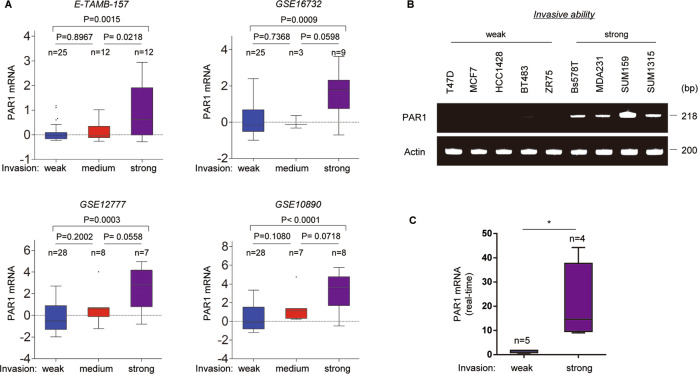
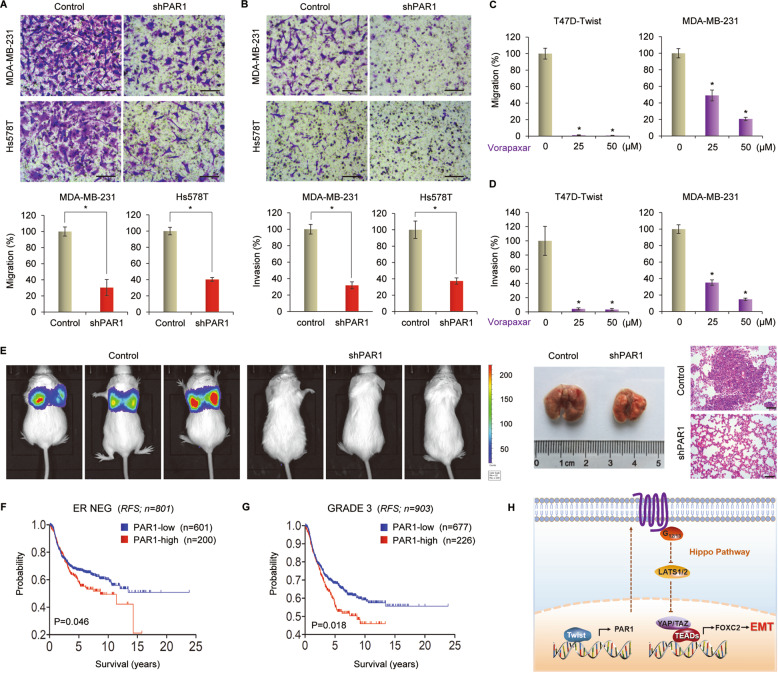
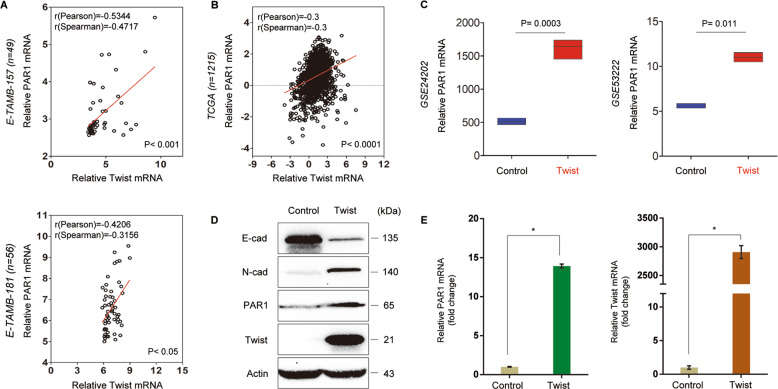
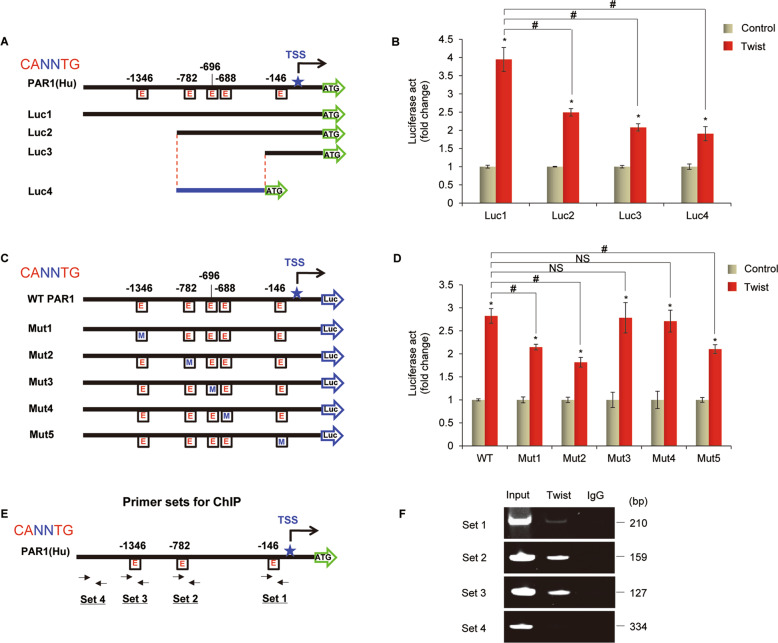
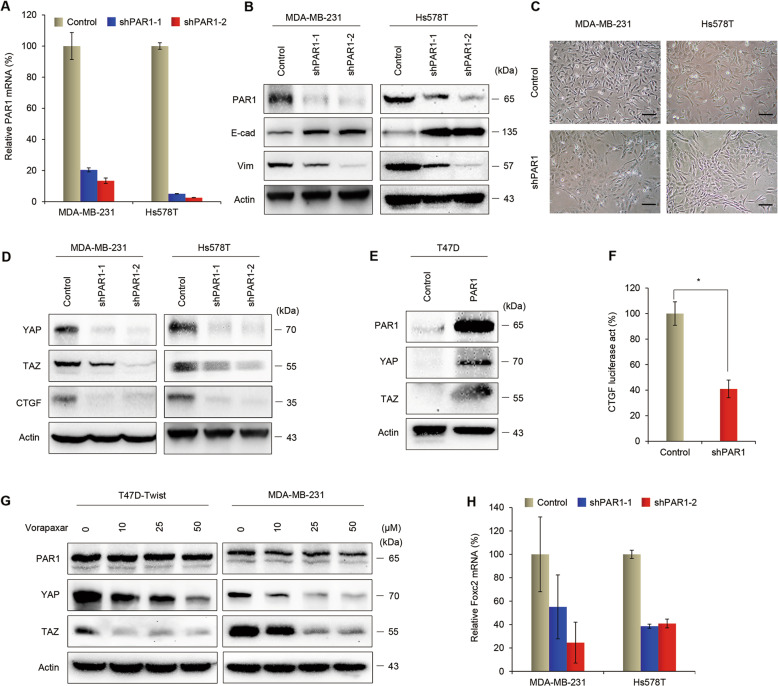
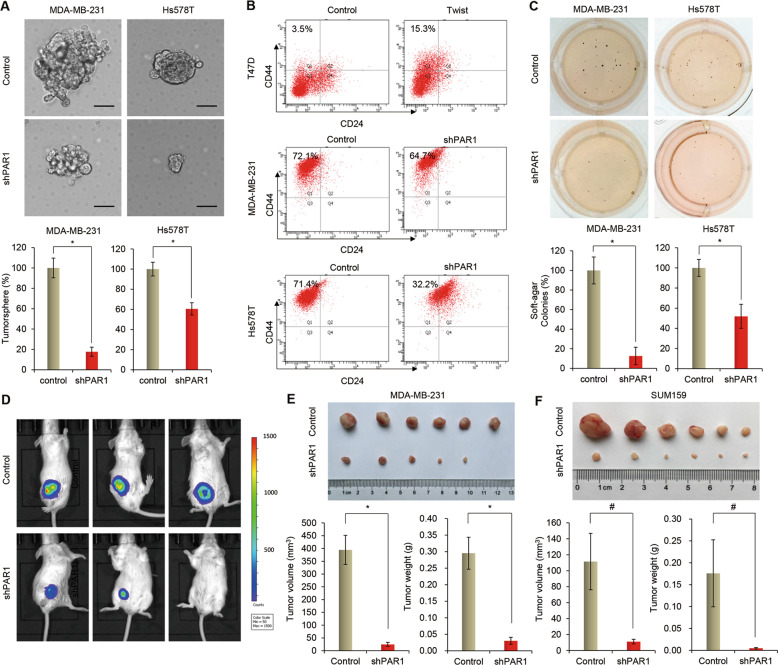
Breast cancer is considered to be the most prevalent cancer in women worldwide, and metastasis is the primary cause of death. Protease-activated receptor 1 (PAR1) is a GPCR family member involved in the invasive and metastatic processes of cancer cells. However, the functions and underlying mechanisms of PAR1 in breast cancer remain unclear. In this study, we found that PAR1 is highly expressed in high invasive breast cancer cells, and predicts poor prognosis in ER-negative and high-grade breast cancer patients. Mechanistically, Twist transcriptionally induces PAR1 expression, leading to inhibition of Hippo pathway and activation of YAP/TAZ; Inhibition of PAR1 suppresses YAP/TAZ-induced epithelial-mesenchymal transition (EMT), invasion, migration, cancer stem cell (CSC)-like properties, tumor growth and metastasis of breast cancer cells in vitro and in vivo. These findings suggest that PAR1 acts as a direct transcriptionally target of Twist, can promote EMT, tumorigenicity and metastasis by controlling the Hippo pathway; this may lead to a potential therapeutic target for treating invasive breast cancer.
乳腺癌被认为是全球女性最常见的癌症,转移是导致死亡的主要原因。蛋白酶激活受体 1(PAR1)是 G 蛋白偶联受体家族成员,参与癌细胞的侵袭和转移过程。然而,PAR1 在乳腺癌中的功能和潜在机制尚不清楚。在本研究中,我们发现 PAR1 在高侵袭性乳腺癌细胞中高度表达,并预测 ER 阴性和高级别乳腺癌患者预后不良。在机制上,Twist 转录诱导 PAR1 的表达,导致 Hippo 通路的抑制和 YAP/TAZ 的激活;PAR1 的抑制抑制了 YAP/TAZ 诱导的上皮-间充质转化(EMT)、侵袭、迁移、乳腺癌细胞的癌症干细胞(CSC)样特性、肿瘤生长和转移,无论是在体外还是在体内。这些发现表明 PAR1 作为 Twist 的直接转录靶标,通过控制 Hippo 通路,可促进 EMT、致瘤性和转移;这可能为治疗侵袭性乳腺癌提供一个潜在的治疗靶点。