Department of Cardiovascular Surgery, National Defense Medical College, 3-2 Namiki, Tokorozawa-shi, Saitama, 359-8513, Japan.
Department of Physiology, National Defense Medical College, Tokorozawa, Japan.
Sci Rep. 2020 Jul 9;10(1):11308. doi: 10.1038/s41598-020-68307-5.
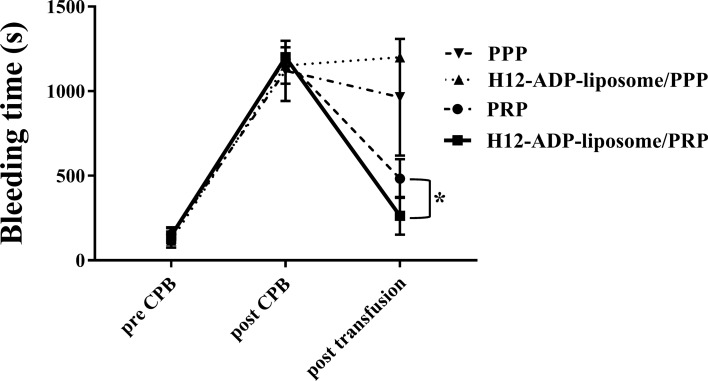
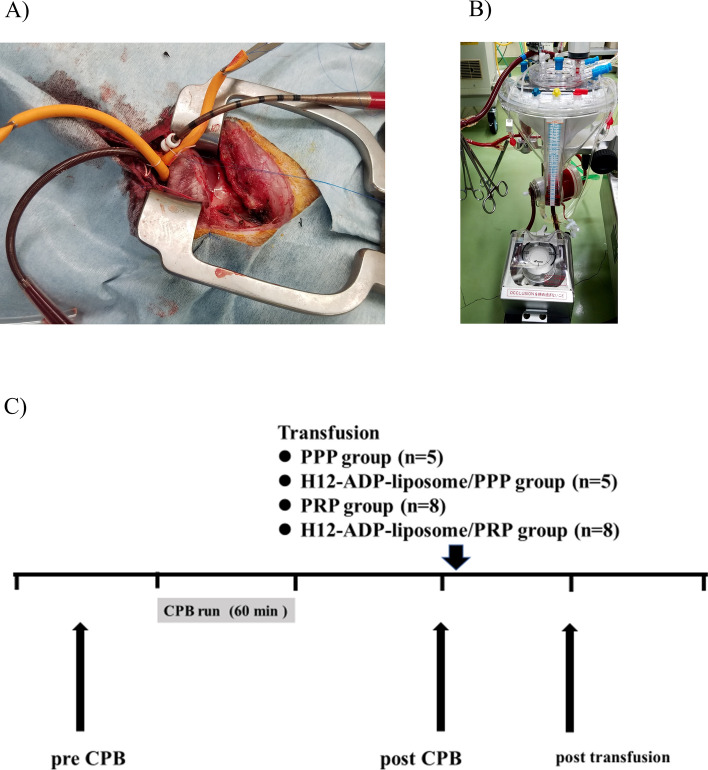
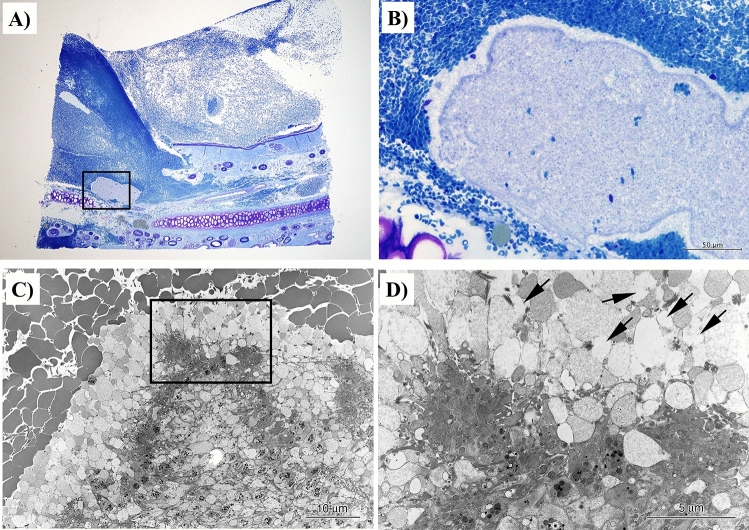
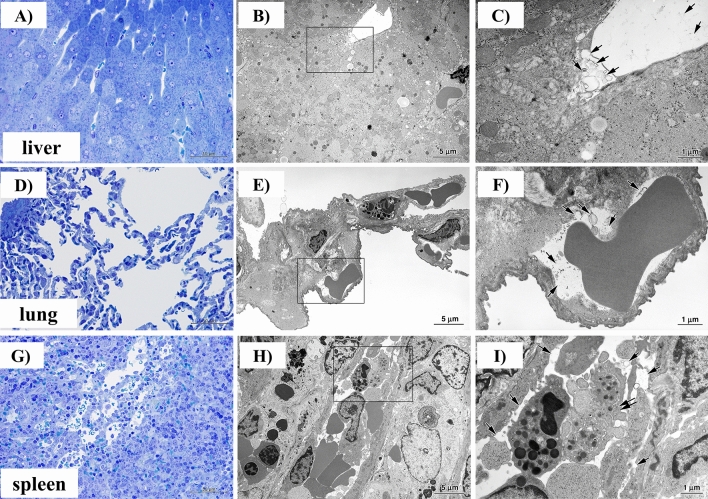
Fibrinogen γ-chain peptide-coated, adenosine 5'-diphosphate (ADP)-encapsulated liposomes (H12-ADP-liposomes) are a potent haemostatic adjuvant to promote platelet thrombi. These liposomes are lipid particles coated with specific binding sites for platelet GPIIb/IIIa and encapsulating ADP. They work at bleeding sites, facilitating haemostasis by promoting aggregation of activated platelets and releasing ADP to strongly activate platelets. In this study, we investigated the therapeutic potential of H12-ADP-liposomes on post-cardiopulmonary bypass (CPB) coagulopathy in a preclinical setting. We created a post-CPB coagulopathy model using male New Zealand White rabbits (body weight, 3 kg). One hour after CPB, subject rabbits were intravenously administered H12-ADP-liposomes with platelet-rich plasma (PRP) collected from donor rabbits (H12-ADP-liposome/PRP group, n = 8) or PRP alone (PRP group, n = 8). Ear bleeding time was greatly reduced for the H12-ADP-liposome/PRP group (263 ± 111 s) compared with the PRP group (441 ± 108 s, p < 0.001). Electron microscopy showed platelet thrombus containing liposomes at the bleeding site in the H12-ADP-liposome/PRP group. However, such liposome-involved platelet thrombi were not observed in the end organs after H12-ADP-liposome administration. These findings suggest that H12-ADP-liposomes could help effectively and safely consolidate platelet haemostasis in post-CPB coagulopathy and may have potential for reducing bleeding complications after cardiovascular surgery with CPB.
纤维蛋白原γ-链肽包被的、腺苷 5'-二磷酸(ADP)包封的脂质体(H12-ADP-脂质体)是一种有效的止血佐剂,可促进血小板血栓形成。这些脂质体是涂有特定结合位点的脂质颗粒,用于血小板 GPIIb/IIIa,并包封 ADP。它们在出血部位起作用,通过促进激活的血小板聚集并释放 ADP 来强烈激活血小板,从而促进止血。在这项研究中,我们在临床前环境中研究了 H12-ADP-脂质体对体外循环(CPB)后凝血障碍的治疗潜力。我们使用雄性新西兰白兔(体重 3 公斤)创建了 CPB 后凝血障碍模型。CPB 后 1 小时,向受试兔子静脉内给予 H12-ADP-脂质体与从供体兔子收集的富含血小板的血浆(PRP)(H12-ADP-脂质体/PRP 组,n=8)或单独的 PRP(PRP 组,n=8)。H12-ADP-脂质体/PRP 组的耳出血时间大大缩短(263±111 s),而 PRP 组(441±108 s,p<0.001)。电子显微镜显示 H12-ADP-脂质体/PRP 组出血部位有含有脂质体的血小板血栓。然而,在给予 H12-ADP-脂质体后,在终末器官中未观察到这种涉及脂质体的血小板血栓。这些发现表明,H12-ADP-脂质体可以有效地、安全地巩固 CPB 后凝血障碍中的血小板止血作用,并且可能有助于减少心血管手术中 CPB 后出血并发症。