Chen Tongtong, Ma Xudong, Zhou Shuai, Wang Hanqi, Pan Yaling, Chen Liuping, Lv Haiying, Lu Yong
Department of Radiology, Ruijin Hospital/Lu Wan Branch, School of Medicine, Shanghai Jiaotong University, Shanghai, China.
National Health and Family Planning Commission of the People's Republic of China, Beijing, China.
Ann Transl Med. 2020 Jun;8(12):749. doi: 10.21037/atm-20-4329.
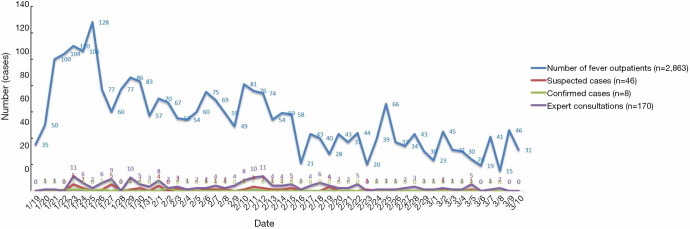
Since the outbreak of COVID-19 in January, 2020, the fever of unknown origin (FUO) emergency department has become the first station for disease prevention and identification in hospitals. Establishing a standardized FUO emergency department within a short period of time has become the key to preventing and controlling COVID-19 in densely populated Chinese cities.
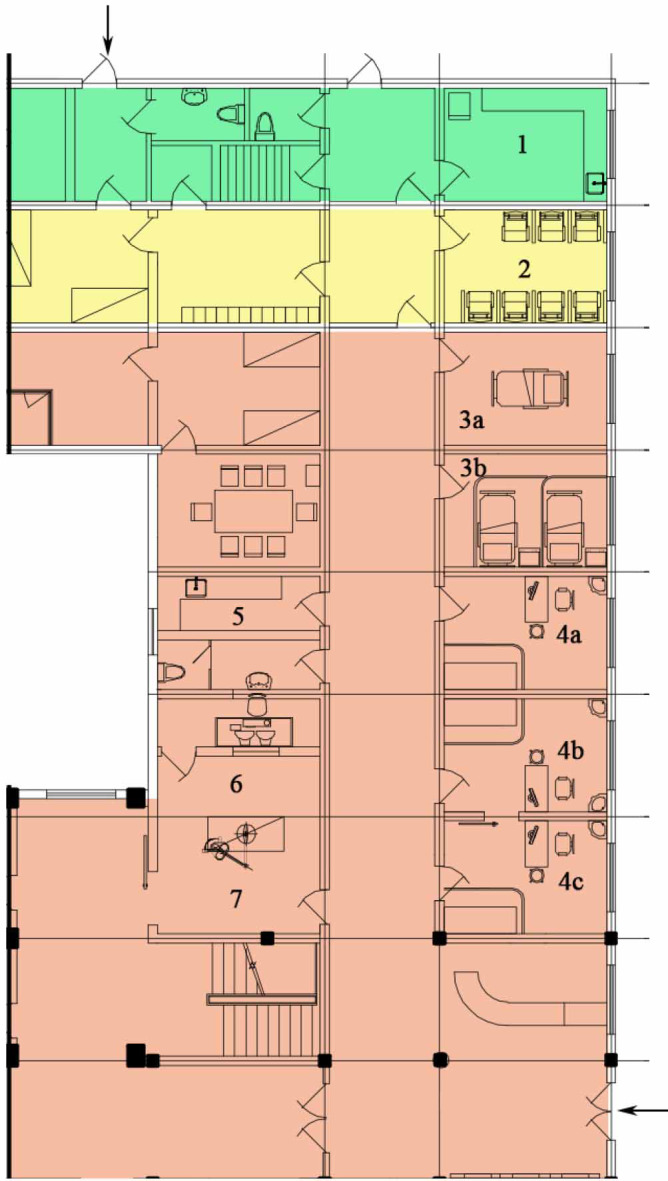
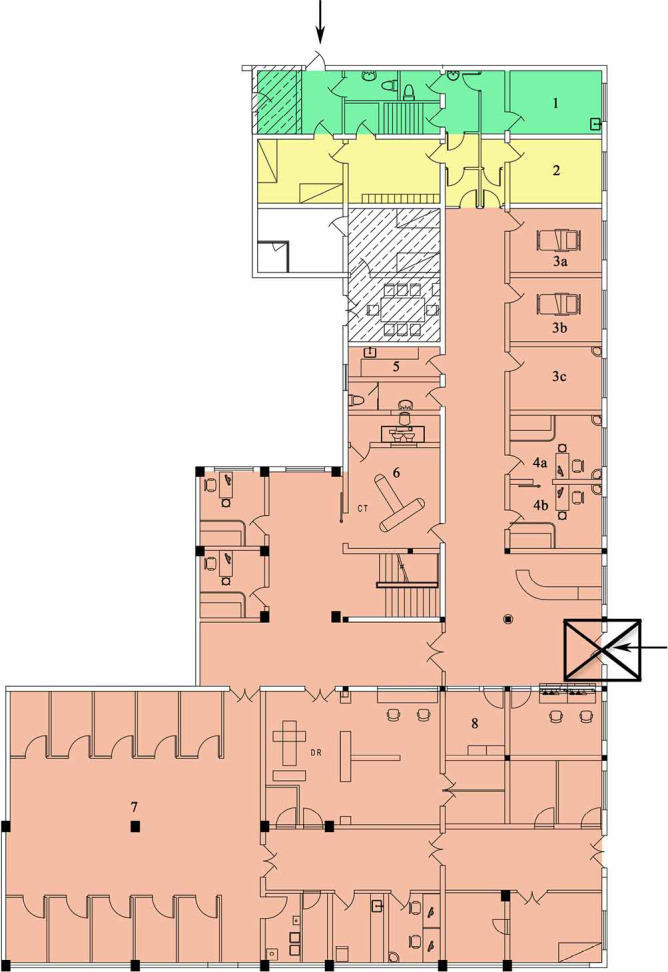
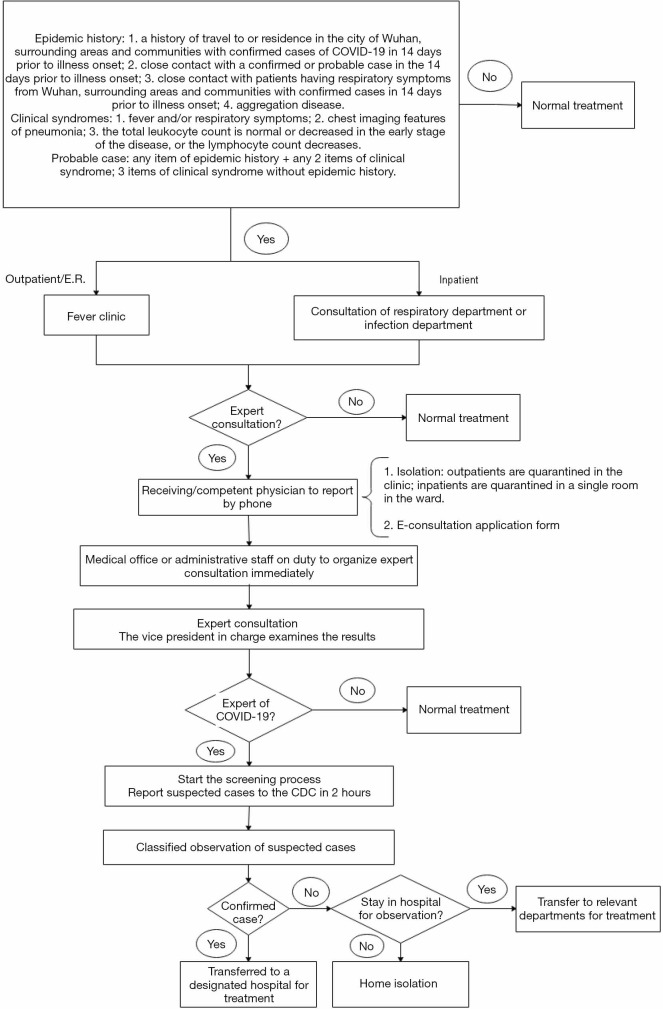
Based on the lean management model, the research group established a process of less-link visits, which sees reduced contact between patients and physicians during diagnosis and treatment, and zero-contact consultation through lean workflow and value stream analysis. Three steps were implemented to improve the operations of the FUO emergency department: the rapid establishment of an isolation zone, the refinement of duty and protection configuration, and the use of Internet and technology to establish a full-process follow-up consultation system.
(I) Tests related to COVID-19 screening are all completed in the FUO emergency department; (II) 12 new isolated observation rooms have been built; (III) hospital visiting time, waiting time for consultation, and the time from pre-examination to virus screening has been shortened from 18 to 8 hours, from 2 hours to 10 minutes, and from 34 to 3 hours, respectively; (IV) the transfer distance has been shortened from 450 to 20 m, and the observation time has been shortened from 72 to 26 hours. The median waiting time for image examination has been reduced from 40 to 3 minutes, and the moving distance has been shortened from 800 to 10 m; (V) the diagnosis and treatment process is facilitated by 5G, achieving zero contact between doctors and patients.
Through the implantation of information technology, the local transformation of the site, the rational allocation of medical teams and the planned distribution of protective equipment, in a short period of time, individual medical institutions can set up a safe FUO emergency department to provide 24-hour screening and detention services. Establishing an FUO emergency department with lean management and realizing the management approach of combining daily operation with prevention and control could help China and other countries to handle the outbreak of fulminant infectious diseases.
自2020年1月新型冠状病毒肺炎疫情爆发以来,不明原因发热(FUO)急诊科成为医院疾病防控和甄别首站。短时间内建立标准化FUO急诊科成为中国人口密集城市防控新型冠状病毒肺炎的关键。
研究团队基于精益管理模式,建立少环节就诊流程,通过精益工作流程和价值流分析,减少患者与医生在诊疗过程中的接触,并实现零接触会诊。实施三步举措改善FUO急诊科运营:快速设立隔离区、细化职责与防护配置、利用互联网和技术建立全流程随访会诊系统。
(I)与新型冠状病毒肺炎筛查相关检测均在FUO急诊科完成;(II)新建12间隔离观察室;(III)医院就诊时间、会诊等待时间以及预检至病毒筛查时间分别从18小时缩短至8小时、从2小时缩短至10分钟、从34小时缩短至3小时;(IV)转运距离从450米缩短至20米,观察时间从72小时缩短至26小时。影像检查中位等待时间从40分钟减少至3分钟,移动距离从800米缩短至10米;(V)5G助力诊疗流程,实现医患零接触。
通过信息技术植入、场地局部改造、医疗团队合理调配以及防护设备规划性分发,个体医疗机构可在短时间内设立安全的FUO急诊科,提供24小时筛查留观服务。运用精益管理建立FUO急诊科,实现日常运营与防控相结合的管理方式,有助于中国及其他国家应对烈性传染病爆发。