Department of Geography, Delhi School of Economics, University of Delhi, Delhi, India.
Disaster Prevention Research Institute, Innovative Disaster Prevention Technology and Policy Research Laboratory, Kyoto University, Gokasho, Uji City, Kyoto, Japan.
PLoS One. 2020 Jul 10;15(7):e0235041. doi: 10.1371/journal.pone.0235041. eCollection 2020.
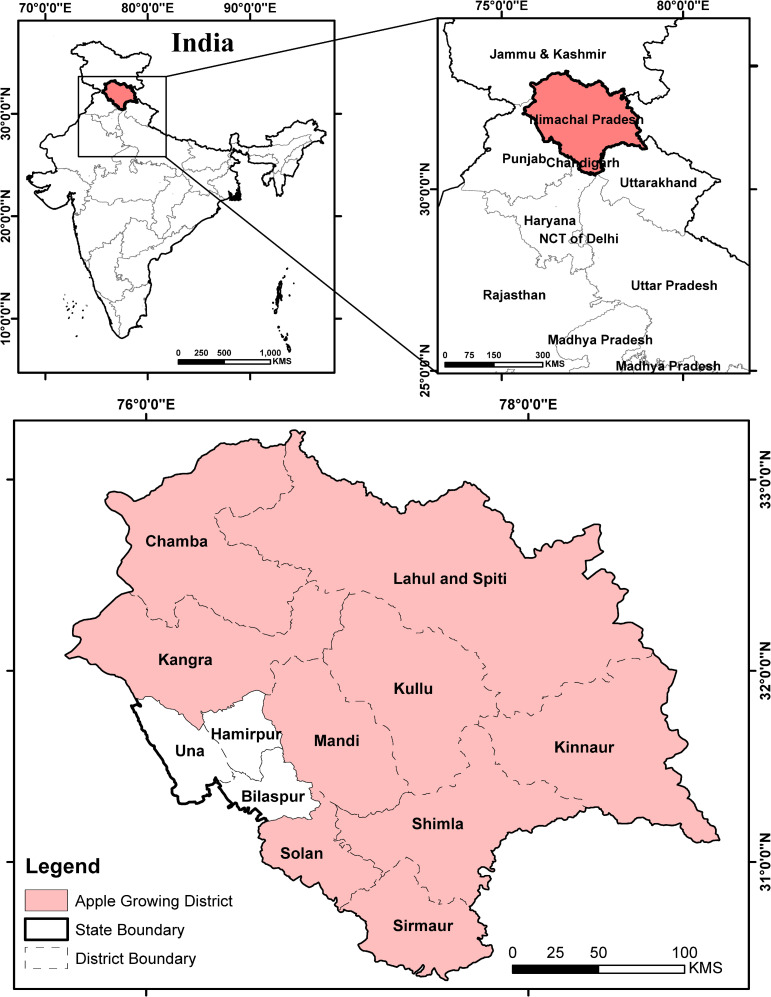
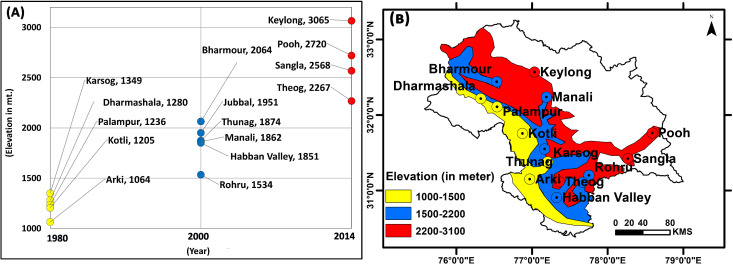
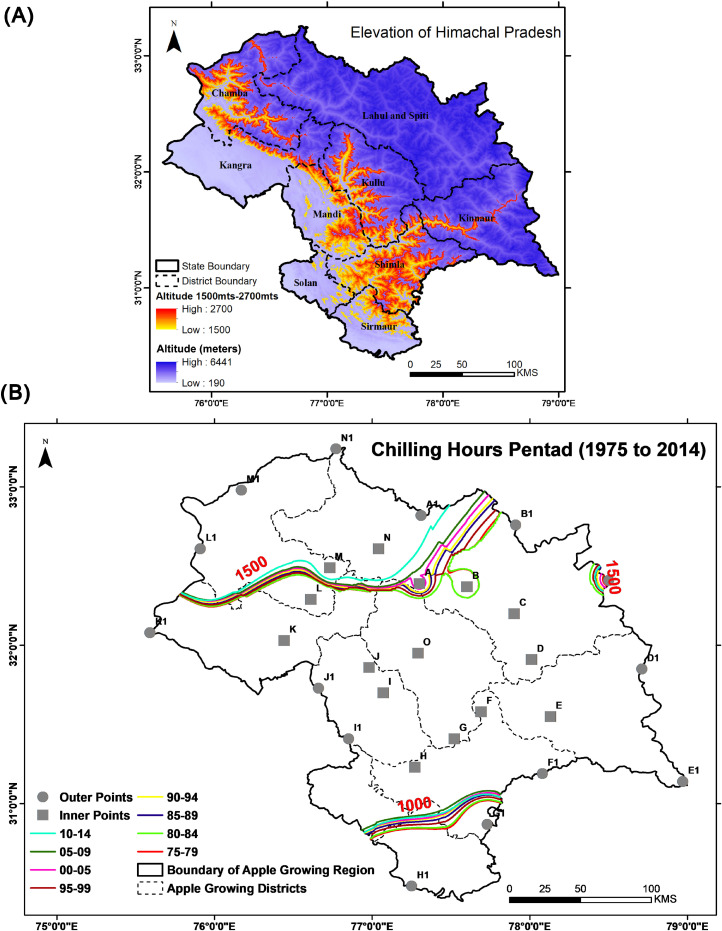
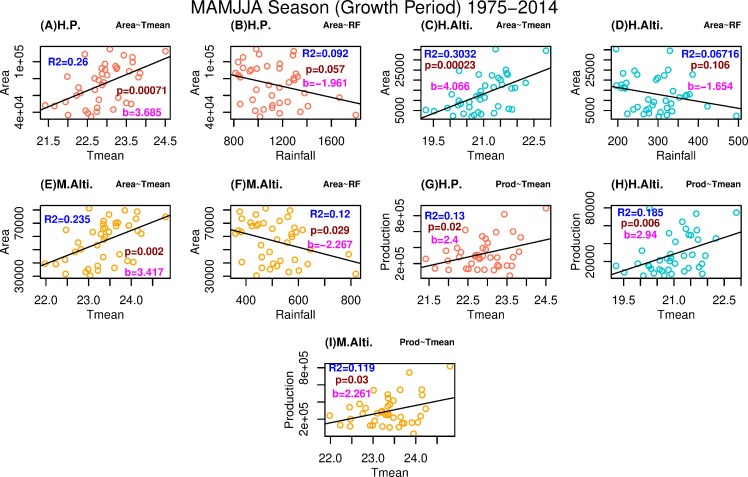
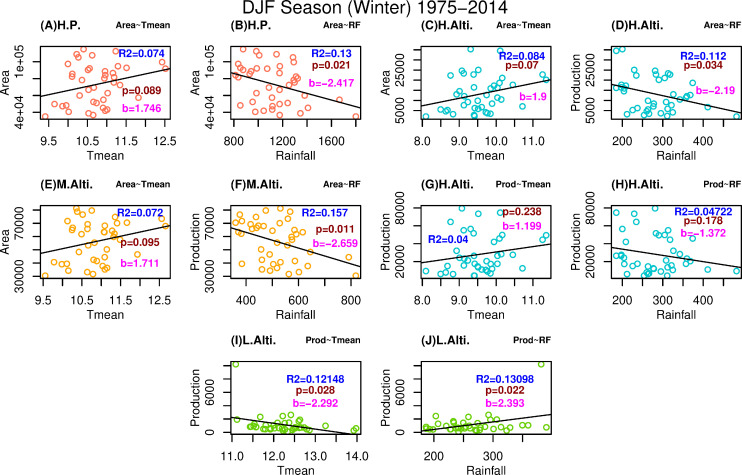
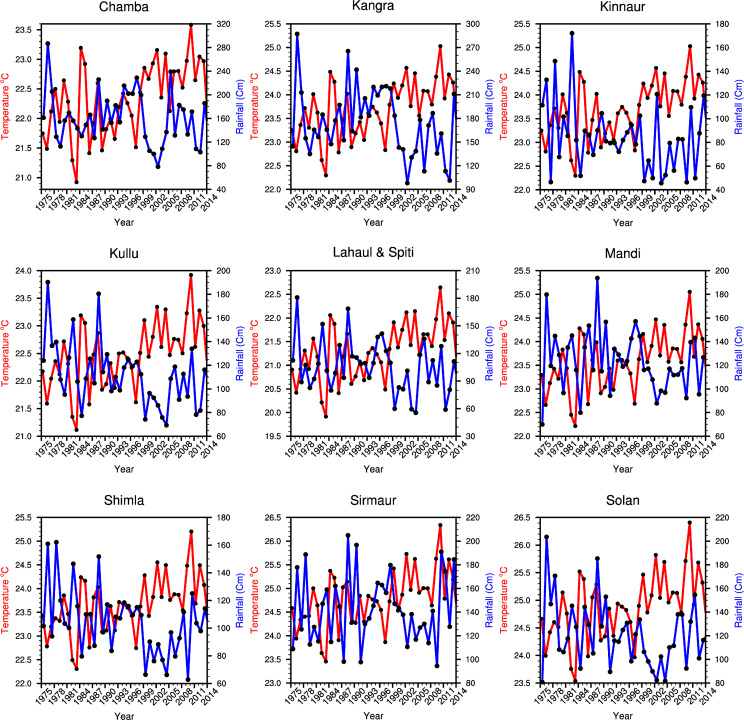
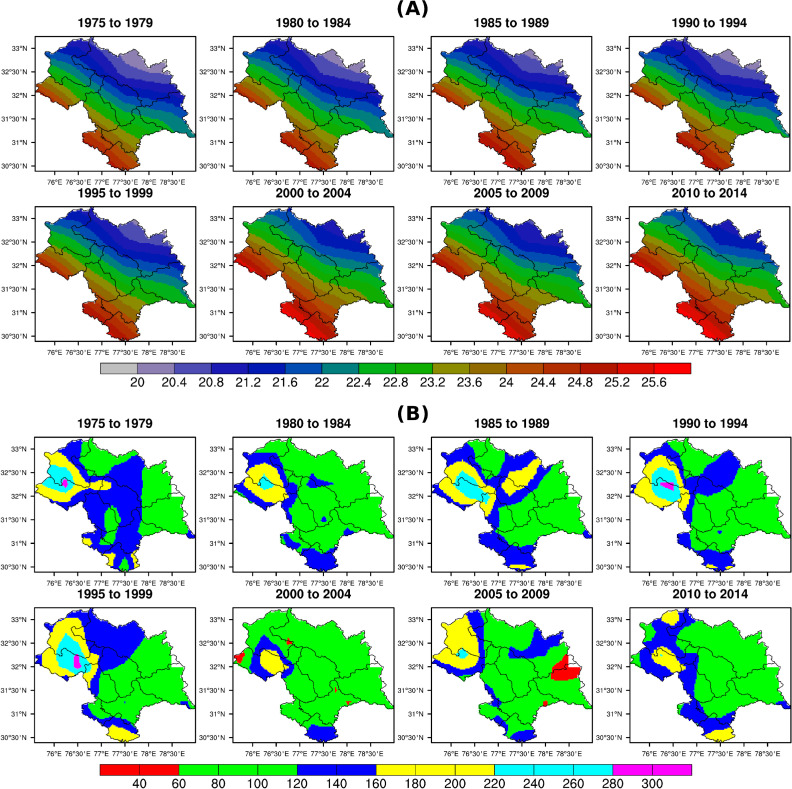
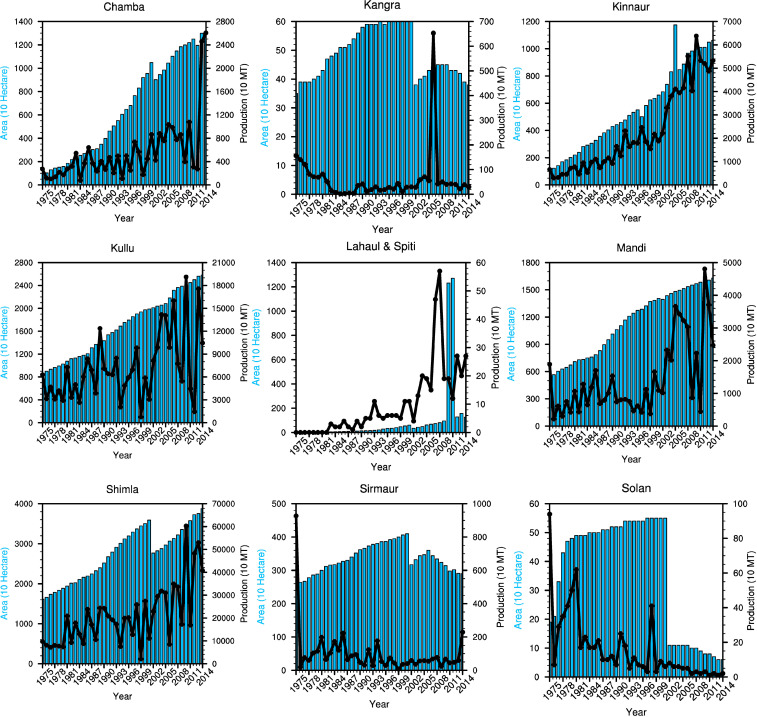
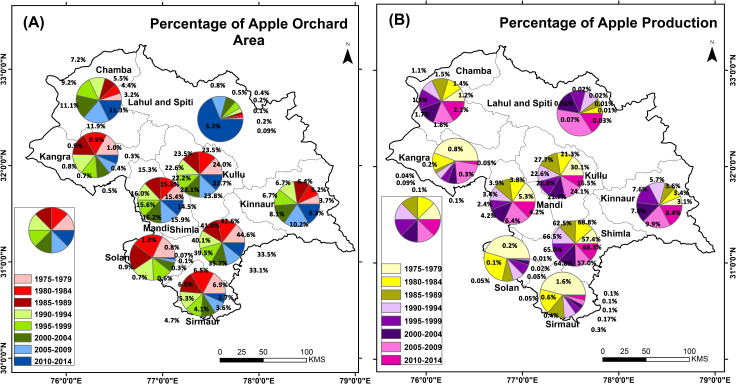
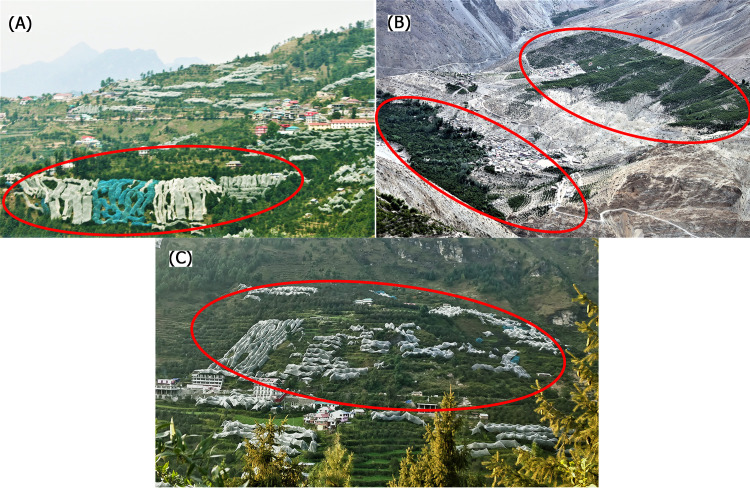
Apple cultivation is one of the most important sources of livelihood in Indian side of the Himalayas. The present study focuses on the apple orchards of Himachal Pradesh, a state within the Himalayan Mountains, a major apple producers of India. In the study, it is found that the optimum apple growing conditions in the region have been consistently shifting and farmers are shifting their orchards to the higher altitudes. For example, orchards have shifted to 1500-2500 meters in the 2000s compared to the cultivated elevation of 1200-1500 meters during 1980s. As of 2014, apples are being cultivated at an elevation of more than 3500 meters, for example, the newly developed orchards of Leo village in upper Kinnaur and Keylong area of Lahul and Spiti districts. Chilling hours for different districts are calculated. The trend of temperature during the growth period, winter session and annual rainfall have been analysed using Mann-Kendall and Sen's slope test. Data catalogued from different time periods indicates that the northward shift (towards higher altitude) is due to changes in chilling hours, total annual rainfall and mean surface temperature during the apple growing season. The mean surface temperature in all the districts has increased by almost 0.5°C during last 2000-2014. These changes are directly related to global warming. While the changing climate is reducing the apple production in low altitudinal regions of the state, it is creating new opportunities for apple cultivation in higher altitudes as conditions are getting more favourable for apple growth in those higher regions. The associated socio-economic changes are posing new societal issues for the local farmers.
苹果种植是喜马拉雅山西部印度一侧最重要的生计来源之一。本研究聚焦于印度喜马拉雅山脉的喜马偕尔邦的苹果园,该邦是印度的主要苹果产地。研究发现,该地区的苹果最佳生长条件一直在持续变化,果农们正在将果园转移到更高的海拔地区。例如,在 2000 年代,果园已经转移到 1500-2500 米的海拔高度,而在 1980 年代,种植的海拔高度为 1200-1500 米。截至 2014 年,苹果已经在海拔 3500 米以上的地区种植,例如,上金瑙尔的 Leo 村和拉胡尔和斯皮提地区的基隆地区新开发的果园。计算了不同地区的需冷量。使用 Mann-Kendall 和 Sen 斜率检验分析了生长期、冬季和年降雨量的温度趋势。从不同时期记录的数据表明,向更高海拔(向北)的转移是由于苹果生长季节的需冷量、总年降雨量和平均地表温度的变化。所有地区的平均地表温度在过去 2000-2014 年期间增加了近 0.5°C。这些变化直接与全球变暖有关。虽然气候变化正在减少该州低海拔地区的苹果产量,但它为高海拔地区的苹果种植创造了新的机会,因为在这些更高地区,苹果生长的条件变得更加有利。相关的社会经济变化给当地农民带来了新的社会问题。