Department of Mathematics, School of Science, Beijing Jiaotong University, Beijing, 100044, China.
Department of Population and Quantitative Health Sciences, Case Western Reserve University, Cleveland, OH, 44106, USA.
BMC Genomics. 2020 Jul 11;21(1):476. doi: 10.1186/s12864-020-06874-7.
Fitness epistasis, the interaction effect of genes at different loci on fitness, makes an important contribution to adaptive evolution. Although fitness interaction evidence has been observed in model organisms, it is more difficult to detect and remains poorly understood in human populations as a result of limited statistical power and experimental constraints. Fitness epistasis is inferred from non-independence between unlinked loci. We previously observed ancestral block correlation between chromosomes 4 and 6 in African Americans. The same approach fails when examining ancestral blocks on the same chromosome due to the strong confounding effect observed in a recently admixed population.
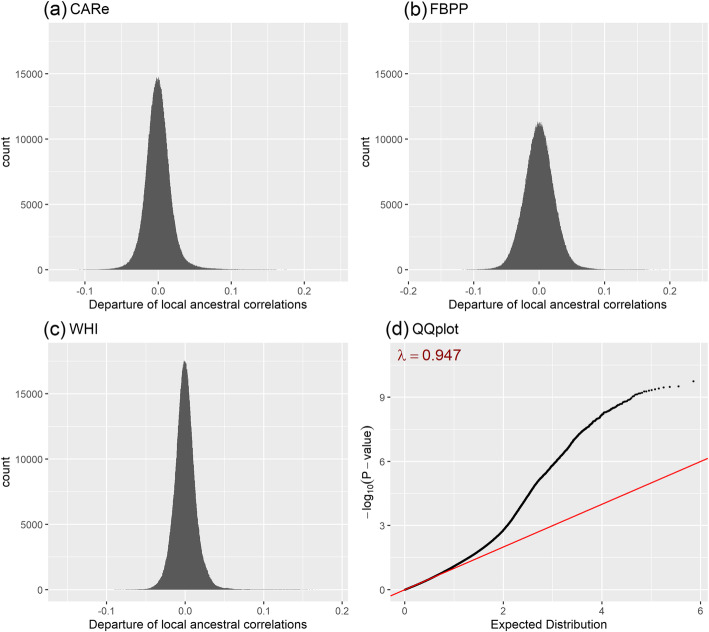
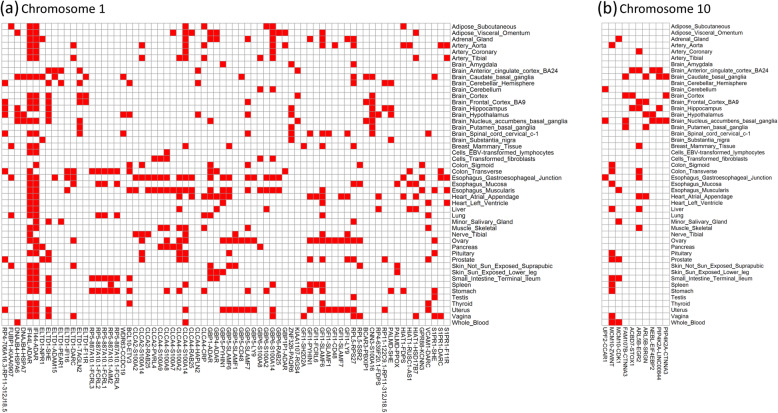
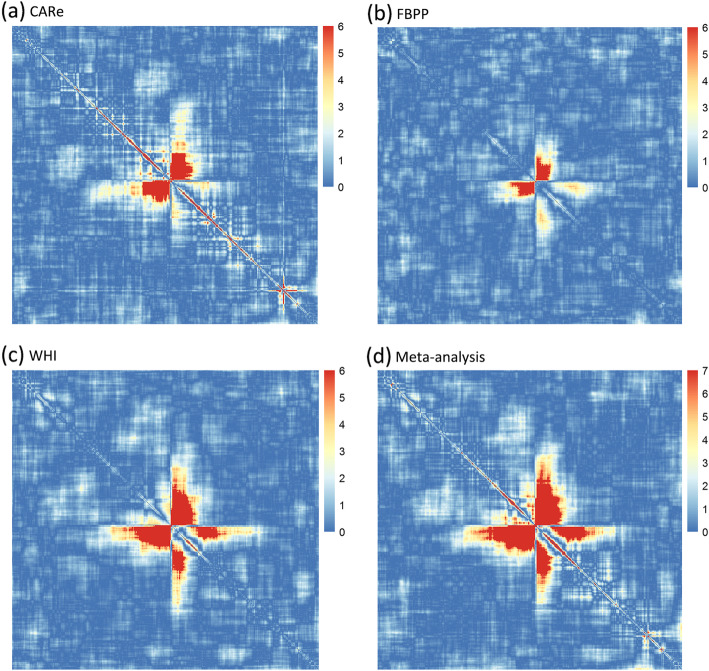
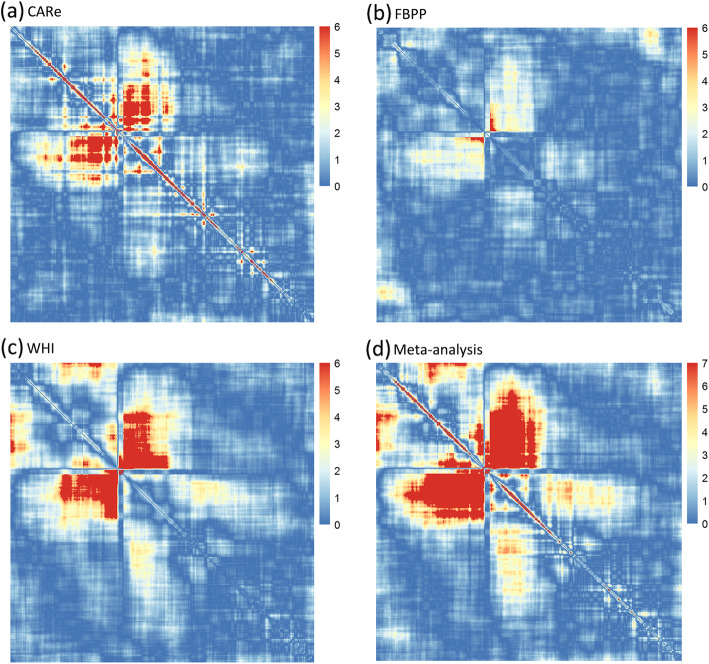
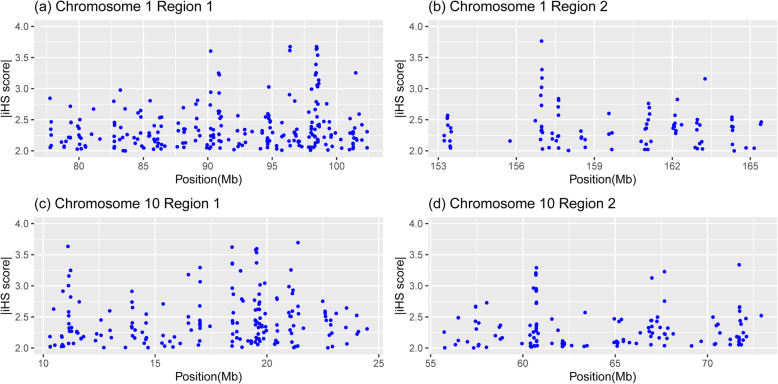
We developed a novel approach to eliminate the bias caused by admixture linkage disequilibrium when searching for fitness epistasis on the same chromosome. We applied this approach in 16,252 unrelated African Americans and identified significant ancestral correlations in two pairs of genomic regions (P-value< 8.11 × 10) on chromosomes 1 and 10. The ancestral correlations were not explained by population admixture. Historical African-European crossover events are reduced between pairs of epistatic regions. We observed multiple pairs of co-expressed genes shared by the two regions on each chromosome, including ADAR being co-expressed with IFI44 in almost all tissues and DARC being co-expressed with VCAM1, S1PR1 and ELTD1 in multiple tissues in the Genotype-Tissue Expression (GTEx) data. Moreover, the co-expressed gene pairs are associated with the same diseases/traits in the GWAS Catalog, such as white blood cell count, blood pressure, lung function, inflammatory bowel disease and educational attainment.
Our analyses revealed two instances of fitness epistasis on chromosomes 1 and 10, and the findings suggest a potential approach to improving our understanding of adaptive evolution.
适应进化中,不同基因座的基因之间的相互作用(即适应度的互作效应)起到了重要作用。虽然在模式生物中已经观察到了适应度相互作用的证据,但由于统计能力和实验限制的原因,在人类群体中,这种作用更难被发现,并且仍然知之甚少。适应度互作是通过非连锁基因座之间的非独立性推断出来的。我们之前观察到非洲裔美国人的第 4 号和第 6 号染色体之间存在祖先块相关。由于在一个最近混合的人群中观察到强烈的混杂效应,当检查同一染色体上的祖先块时,同样的方法会失败。
我们开发了一种新方法,用于消除在同一染色体上寻找适应度互作时因混合连锁不平衡而产生的偏差。我们在 16252 个无关的非洲裔美国人中应用了这种方法,并在 1 号和 10 号染色体上的两个基因组区域(P 值<8.11×10)中鉴定到了显著的祖先相关性。这些祖先相关性不能用群体混合来解释。历史上非洲和欧洲之间的交叉事件在互作区域之间减少了。我们观察到了两个区域之间的多个共同表达基因对,包括 ADAR 在几乎所有组织中与 IFI44 共表达,而 DARC 在 GTEx 数据中的多个组织中与 VCAM1、S1PR1 和 ELTD1 共表达。此外,共同表达的基因对在 GWAS 目录中与相同的疾病/特征相关,如白细胞计数、血压、肺功能、炎症性肠病和教育程度。
我们的分析揭示了 1 号和 10 号染色体上的两个适应度互作实例,这一发现为我们理解适应进化提供了一种潜在的方法。