Department of Nephrology, Kidney Hospital, The First Affiliated Hospital of Xi'an Jiaotong University, Xi'an, China.
Department of Blood Purification, Kidney Hospital, the First Affiliated Hospital of Xi'an Jiaotong University, Xi'an, China.
J Diabetes Investig. 2021 Mar;12(3):346-356. doi: 10.1111/jdi.13355. Epub 2020 Aug 17.
AIMS/INTRODUCTION: Type 2 diabetes mellitus has been a leading cause of chronic kidney disease (CKD), with a heterogeneous distribution worldwide. Optimal healthcare planning requires an understanding of how the burden of CKD as a result of type 2 diabetes mellitus has changed over time and geographic location, as well as the potential roles of sociodemographic, clinical and behavioral factors in these changes.
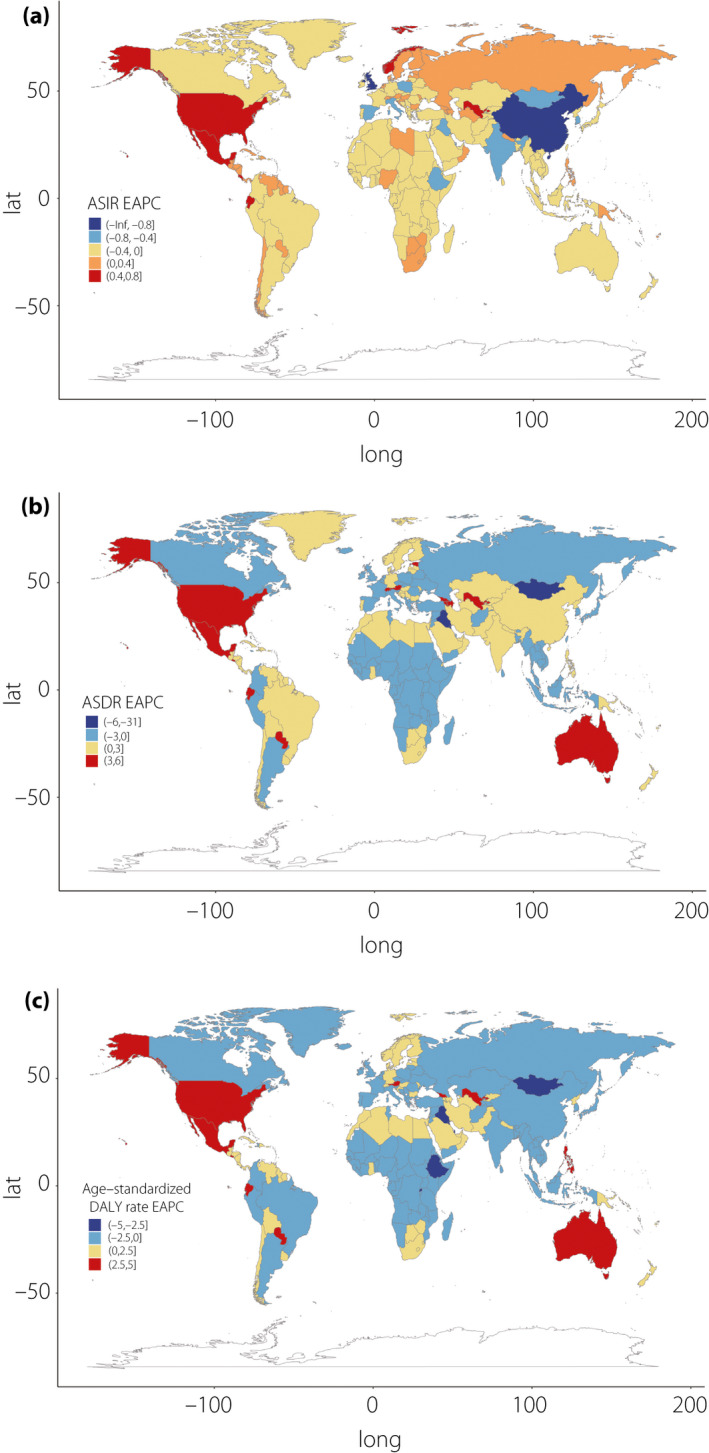
We used the Global Burden of Disease data from 1990 to 2017 at the global, regional and national levels to investigate changes in the incidence, death and disability-adjusted life years of CKD as a result of type 2 diabetes mellitus, incorporating both epidemiological research and risk factor monitoring.
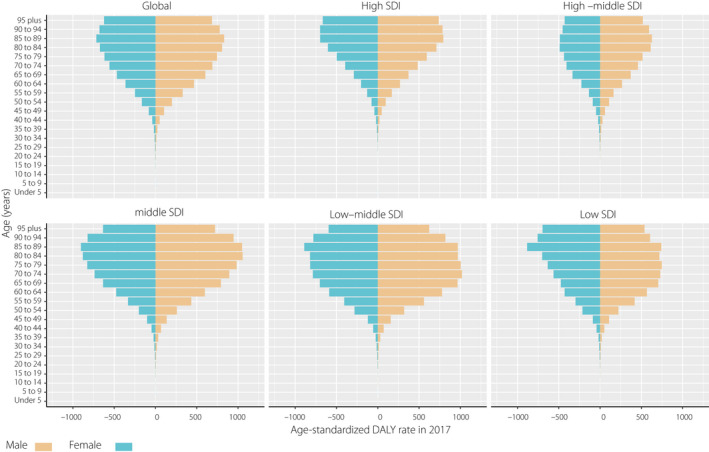
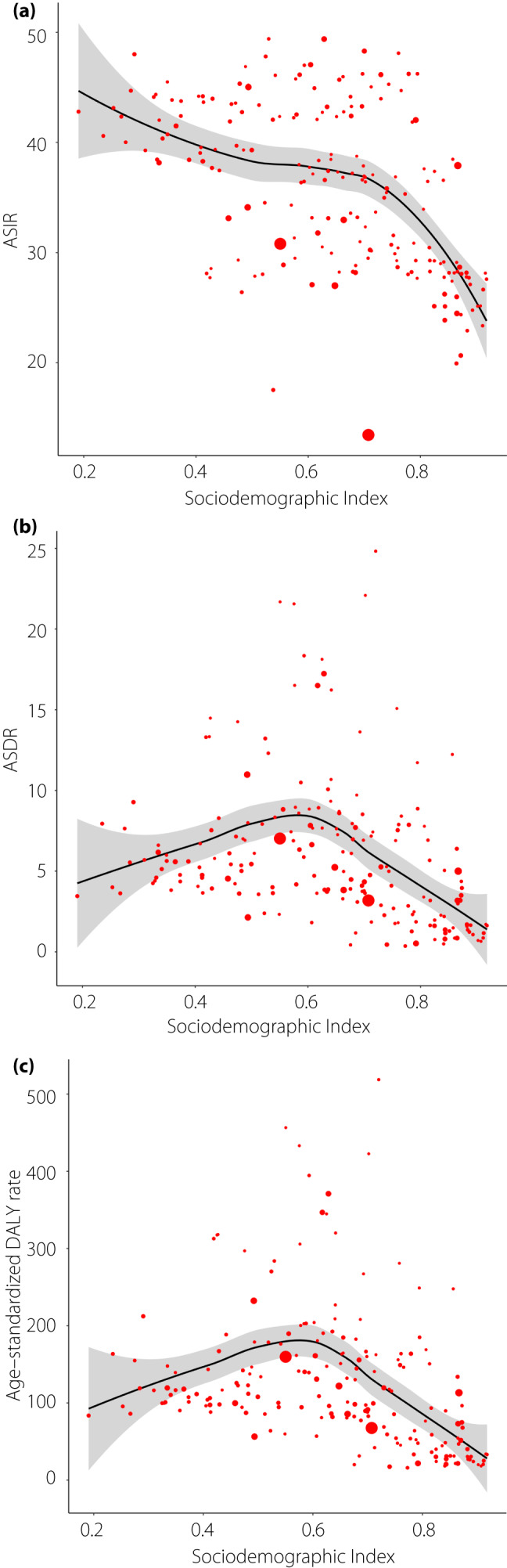
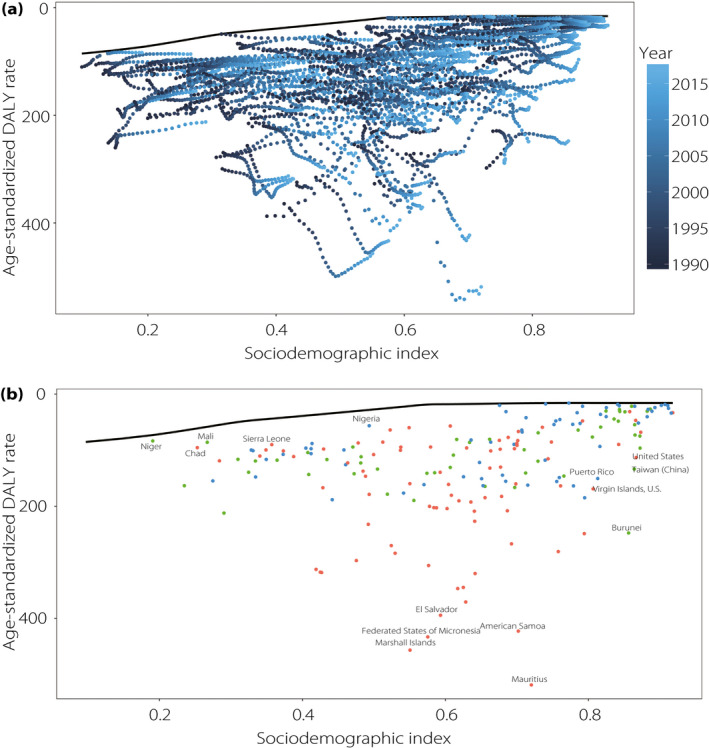
The incident cases of CKD as a result of type 2 diabetes mellitus worldwide in 2017 had increased by 74% compared with 1990; total disability-adjusted life years had increased by 113%, mainly attributable to population expansion and demographic transition. The Sociodemographic Index was significantly and negatively correlated with overall CKD as a result of type 2 diabetes mellitus burden. However, in 82 countries and territories, the burden was not alleviated in parallel with socioeconomic development.
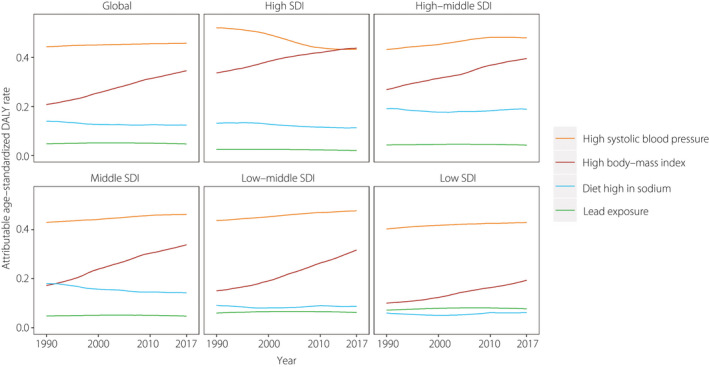
CKD as a result of type 2 diabetes mellitus has been the main contributor to the increasing burden of CKD over the past several decades. We suggest a more pragmatic approach focusing on early diagnosis, primary care and adequate follow up to reduce mortality and the long-term burden in low-to-middle Sociodemographic Index regions. Interventions should address high systolic blood pressure, as well as overweight and obesity problems, especially in high-income regions.
目的/引言:2 型糖尿病是慢性肾脏病(CKD)的主要病因,其在全球的分布存在差异。为了进行最佳的医疗保健规划,我们需要了解 2 型糖尿病导致的 CKD 负担随时间和地理位置的变化情况,以及社会人口学、临床和行为因素在这些变化中的潜在作用。
我们使用了全球疾病负担 1990 年至 2017 年的数据,在全球、区域和国家层面调查了 2 型糖尿病导致的 CKD 的发病率、死亡率和伤残调整生命年的变化情况,其中纳入了流行病学研究和风险因素监测。
与 1990 年相比,2017 年全球 2 型糖尿病导致的 CKD 新发病例增加了 74%;总伤残调整生命年增加了 113%,主要归因于人口扩张和人口结构转变。社会人口学指数与 2 型糖尿病导致的 CKD 总负担呈显著负相关。然而,在 82 个国家和地区,2 型糖尿病导致的 CKD 负担并没有随着社会经济发展而得到缓解。
过去几十年,2 型糖尿病导致的 CKD 一直是 CKD 负担增加的主要原因。我们建议采取更务实的方法,重点关注早期诊断、初级保健和充分随访,以降低中低收入社会人口学指数地区的死亡率和长期负担。干预措施应解决高血压和超重肥胖问题,特别是在高收入地区。