Production Animal Health, Faculty of Veterinary Medicine, University of Calgary , Calgary, Canada.
Microbiology and Infectious Diseases, Cumming School of Medicine, University of Calgary , Calgary, Canada.
Gut Microbes. 2020 Nov 9;12(1):1785802. doi: 10.1080/19490976.2020.1785802. Epub 2020 Jul 13.
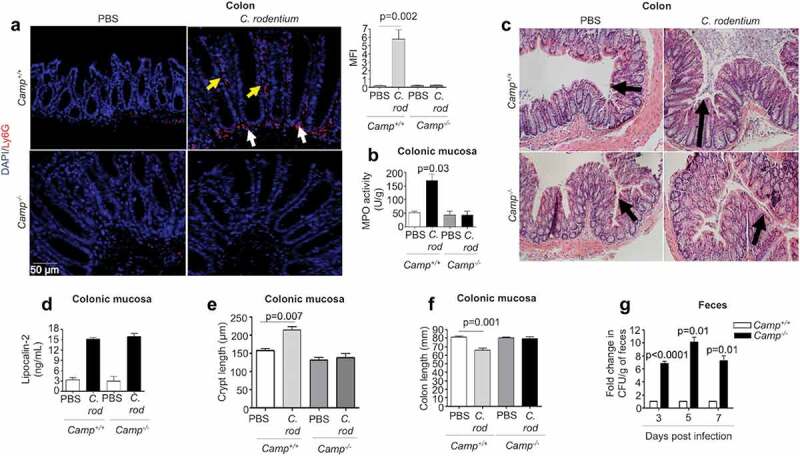
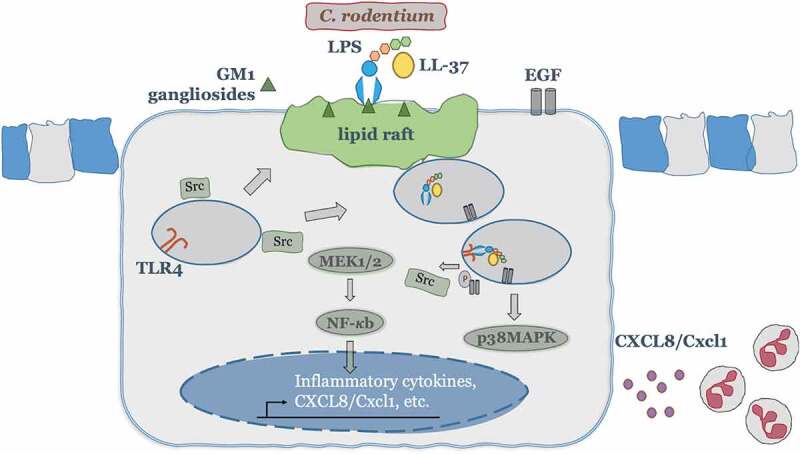
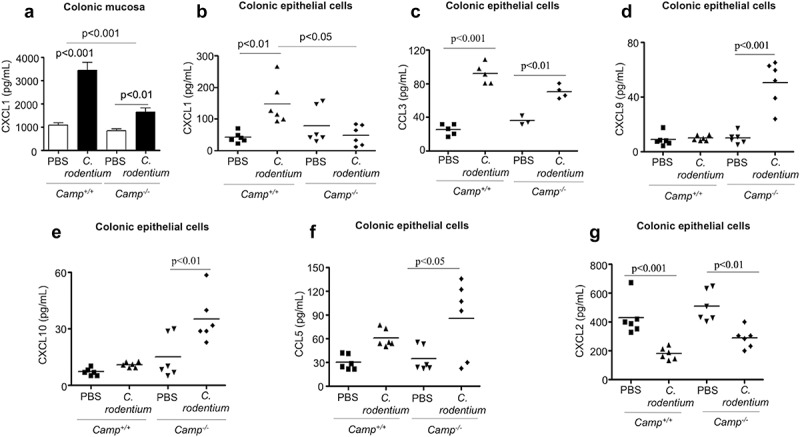
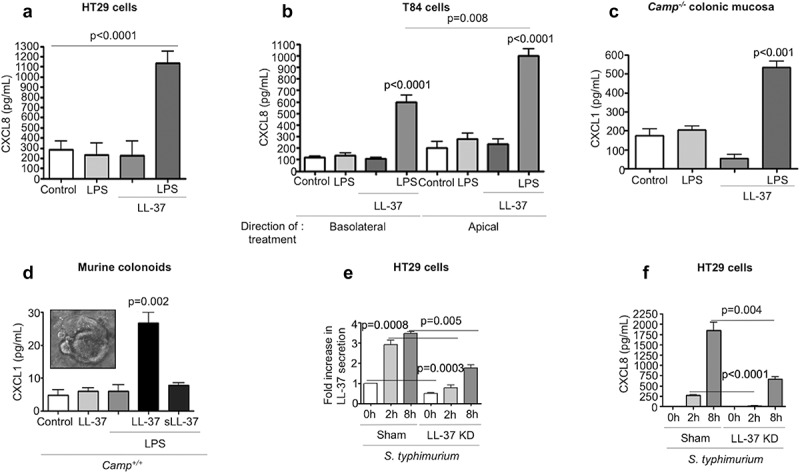
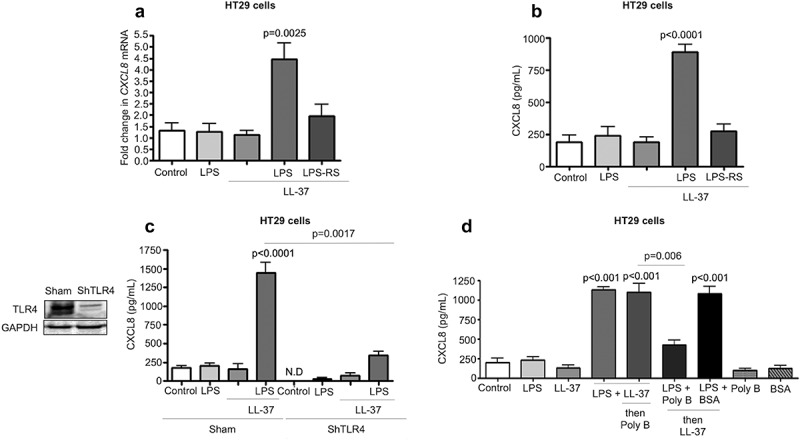
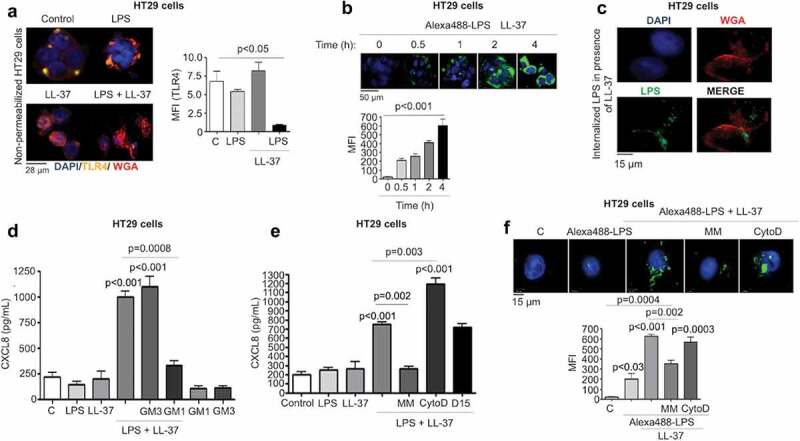
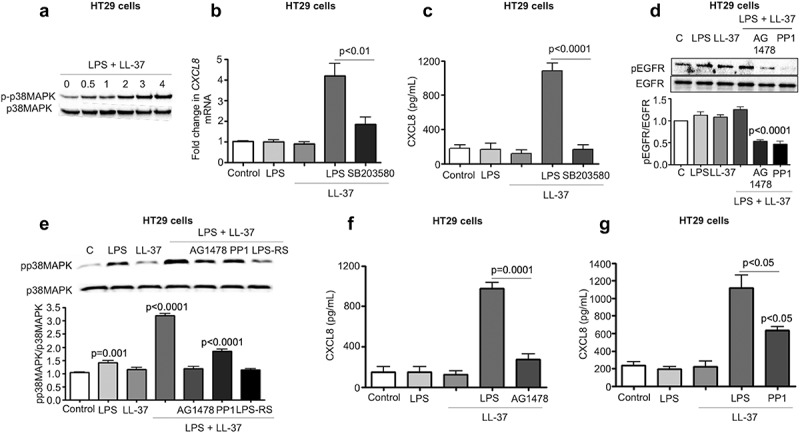
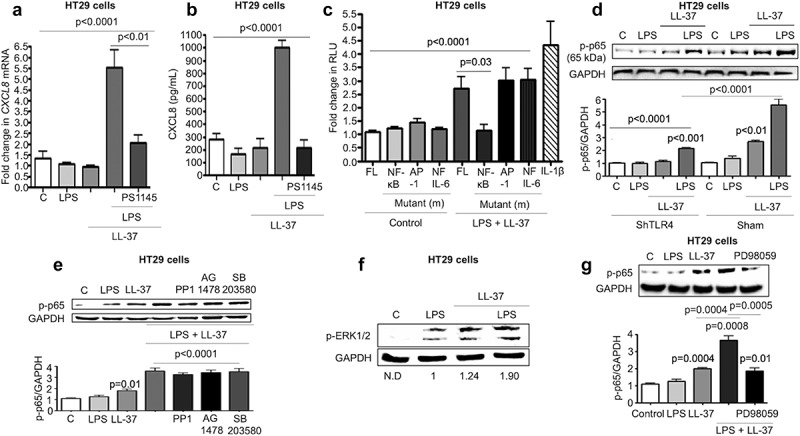
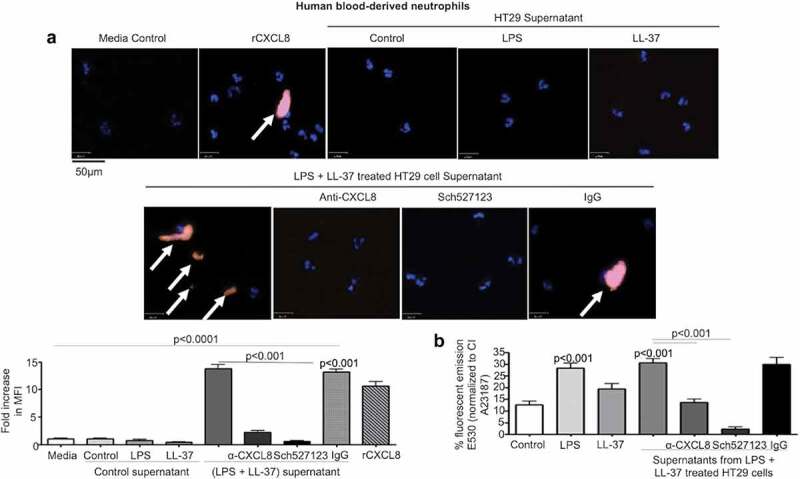
We hypothesized that the antimicrobial peptide cathelicidin has a physiological role in regulating gut inflammatory homeostasis. We determined that cathelicidin synergizes with LPS to facilitate its internalization and signaling via endosomic TLR4 in colonic epithelium, evoking synthesis of the human neutrophil chemoattractant, CXCL8 (or murine homolog, CXCL1). Interaction of cathelicidin with LPS in the control of CXCL8/CXCL1 synthesis was assessed in human colon epithelial cells, murine colonoids and cathelicidin-null mice ( ). Mechanistically, human cathelicidin (LL-37), as an extracellular complex with LPS, interacted with lipid raft-associated GM1 gangliosides to internalize and activate intracellular TLR4. Two signaling pathways converged on CXCL8/CXCL1 production: (1) a p38MAPK-dependent pathway regulated by Src-EGFR kinases; and, (2) a p38MAPK-independent, NF-κB-dependent pathway, regulated by MEK1/2-MAPK. Increased cathelicidin-dependent CXCL8 secretion in the colonic mucosa activated human blood-derived neutrophils. These cathelicidin effects occurred at concentrations well below those needed for microbicidal function. The important immunomodulatory role of cathelicidins was evident in cathelicidin-null/ mice, which had diminished colonic CXCL1 secretion, decreased neutrophil recruitment-activation and reduced bacterial clearance when challenged with the colitis-inducing murine pathogen, . We conclude that in addition to its known microbicidal action, cathelicidin has a unique pathogen-sensing role, facilitating LPS-mediated intestinal responses, including the production of CXCL8/CXCL1 that would contribute to an integrated tissue response to recruit neutrophils during colitis.
我们假设抗菌肽 cathelicidin 在调节肠道炎症内稳态方面具有生理作用。我们确定 cathelicidin 与 LPS 协同作用,通过结肠上皮细胞内体 TLR4 促进 LPS 的内化和信号转导,引发人中性粒细胞趋化因子 CXCL8(或鼠同源物 CXCL1)的合成。在人结肠上皮细胞、鼠结肠类器官和 cathelicidin 缺失小鼠中评估了 cathelicidin 与 LPS 在控制 CXCL8/CXCL1 合成中的相互作用()。在机制上,人 cathelicidin(LL-37)作为 LPS 的细胞外复合物,与质膜筏相关的 GM1 神经节苷脂相互作用,内化并激活细胞内 TLR4。两种信号通路汇聚到 CXCL8/CXCL1 的产生上:(1)Src-EGFR 激酶调节的 p38MAPK 依赖性途径;(2)p38MAPK 非依赖性、NF-κB 依赖性途径,受 MEK1/2-MAPK 调节。结肠黏膜中 cathelicidin 依赖性 CXCL8 分泌的增加激活了人血源性中性粒细胞。这些 cathelicidin 作用发生在远低于其杀菌功能所需的浓度下。cathelicidin 缺失/小鼠中 cathelicidin 的重要免疫调节作用显而易见,其结肠 CXCL1 分泌减少,中性粒细胞募集-激活减少,当受到结肠炎诱导的鼠病原体挑战时,细菌清除减少。我们得出结论,除了其已知的杀菌作用外,cathelicidin 还具有独特的病原体感应作用,促进 LPS 介导的肠道反应,包括 CXCL8/CXCL1 的产生,这将有助于在结肠炎期间募集中性粒细胞的组织综合反应。