Lakin Joshua R, Brannen Elise N, Tulsky James A, Paasche-Orlow Michael K, Lindvall Charlotta, Chang Yuchiao, Gundersen Daniel A, El-Jawahri Areej, Volandes Angelo
Department of Psychosocial Oncology and Palliative Care, Dana Farber Cancer Institute, Boston, Massachusetts, USA
Harvard Medical School, Boston, Massachusetts, USA.
BMJ Open. 2020 Jul 14;10(7):e040999. doi: 10.1136/bmjopen-2020-040999.
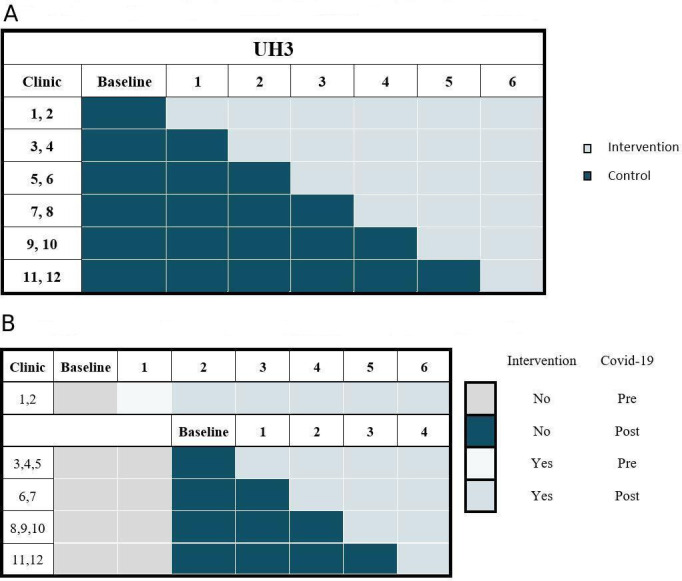
Advance care planning (ACP) is associated with improved health outcomes for patients with cancer, and its absence is associated with unfavourable outcomes for patients and their caregivers. However, older adults do not complete ACP at expected rates due to patient and clinician barriers. We present the original design, methods and rationale for a trial aimed at improving ACP for older patients with advanced cancer and the modified protocol in response to changes brought by the COVID-19 pandemic.
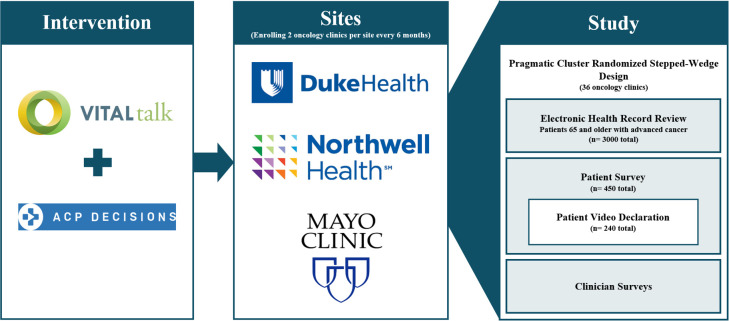
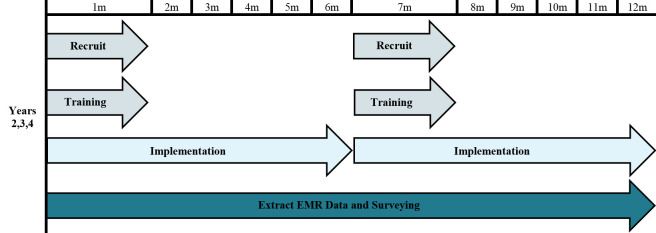
The Advance Care Planning: Promoting Effective and Aligned Communication in the Elderly study is a pragmatic, stepped-wedge cluster randomised trial examining a Comprehensive ACP Program. The programme combines two complementary evidence-based interventions: clinician communication skills training (VitalTalk) and patient video decision aids (ACP Decisions). We will implement the programme at 36 oncology clinics across three unique US health systems. Our primary outcome is the proportion of eligible patients with ACP documentation completed in the electronic health record. Our secondary outcomes include resuscitation preferences, palliative care consultations, death, hospice use and final cancer-directed therapy. From a subset of our patient population, we will collect surveys and video-based declarations of goals and preferences. We estimate 11 000 patients from the three sites will be enrolled in the study.
Regulatory and ethical aspects of this trial include Institutional Review Board (IRB) approval via single IRB of record mechanism at Dana-Farber Cancer Institute, Data Use Agreements among partners and a Data Safety and Monitoring Board. We plan to present findings at national meetings and publish the results.
NCT03609177; Pre-results.
预先护理计划(ACP)与改善癌症患者的健康结局相关,而缺乏该计划则与患者及其照护者的不良结局相关。然而,由于患者和临床医生方面的障碍,老年人并未按预期比例完成ACP。我们介绍一项旨在改善晚期癌症老年患者ACP的试验的原始设计、方法和基本原理,以及针对2019冠状病毒病大流行带来的变化所做的方案修改。
“预先护理计划:促进老年人有效和一致的沟通”研究是一项实用的阶梯楔形整群随机试验,旨在检验一项综合ACP计划。该计划结合了两项基于证据的互补干预措施:临床医生沟通技能培训(VitalTalk)和患者视频决策辅助工具(ACP Decisions)。我们将在美国三个独特的医疗系统的36家肿瘤诊所实施该计划。我们的主要结局是电子健康记录中完成ACP文件记录的符合条件患者的比例。次要结局包括复苏偏好、姑息治疗会诊、死亡、临终关怀使用情况以及最终的癌症导向治疗。我们将从一部分患者群体中收集有关目标和偏好的调查及视频声明。我们估计来自这三个地点的11000名患者将参与该研究。
该试验的监管和伦理方面包括通过达纳 - 法伯癌症研究所的单一记录机构审查委员会(IRB)批准、合作伙伴之间的数据使用协议以及数据安全与监测委员会。我们计划在全国性会议上展示研究结果并发表研究成果。
NCT03609177;预结果。