Department of Chemical and Systems Biology, Stanford University School of Medicine, Stanford, CA 94305-5174, USA.
Department of Chemical and Systems Biology, Stanford University School of Medicine, Stanford, CA 94305-5174, USA.
Cell Rep. 2020 Jul 14;32(2):107901. doi: 10.1016/j.celrep.2020.107901.
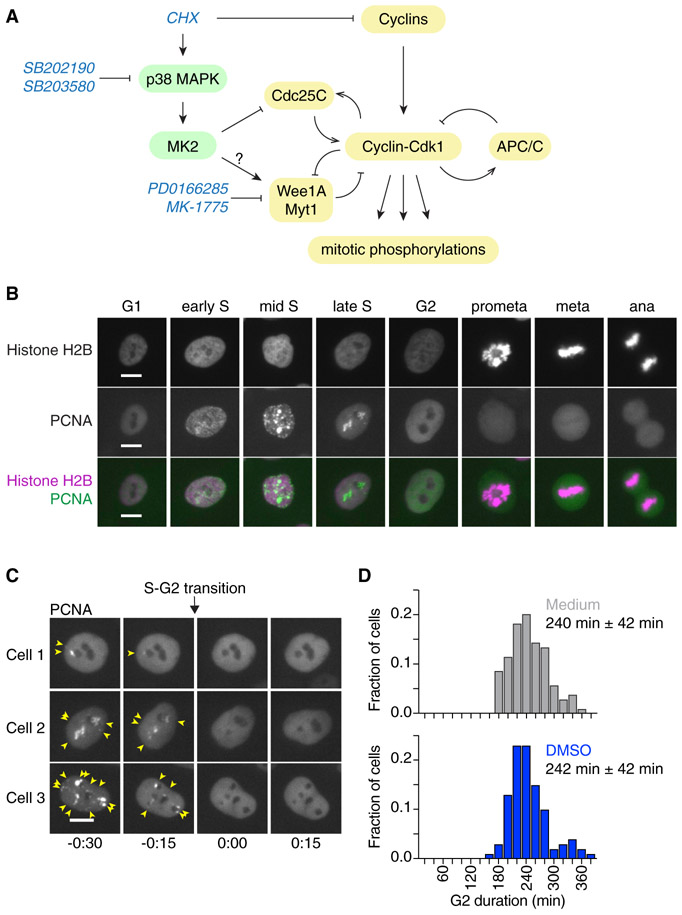
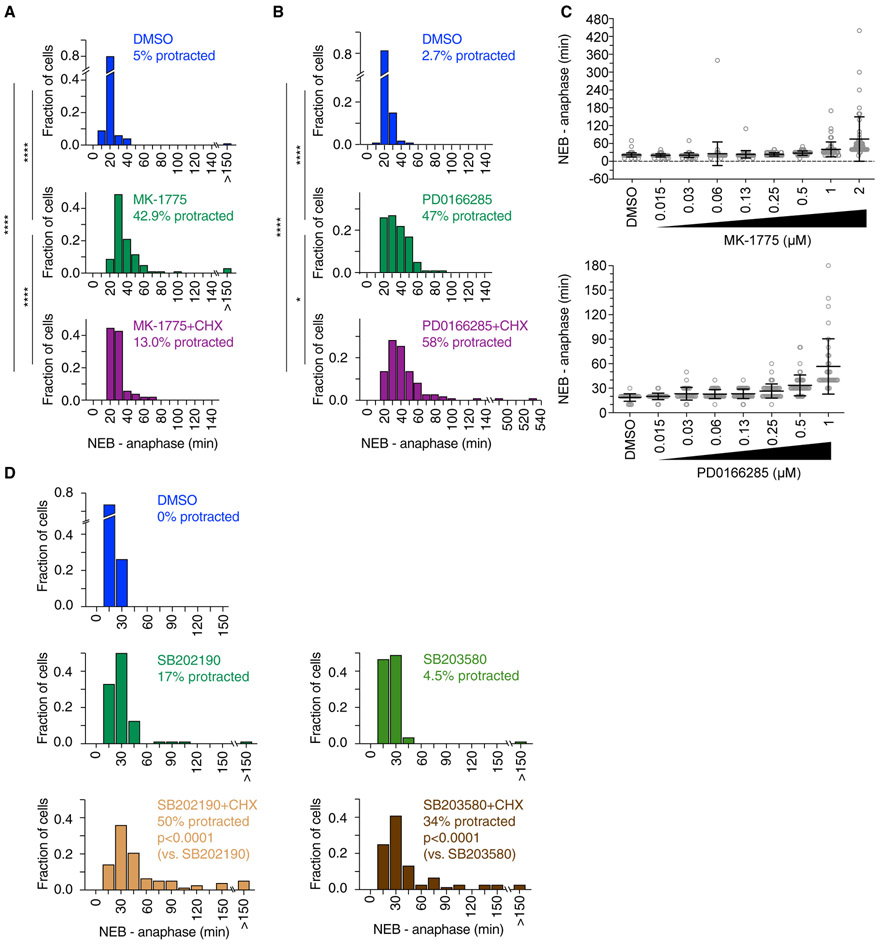
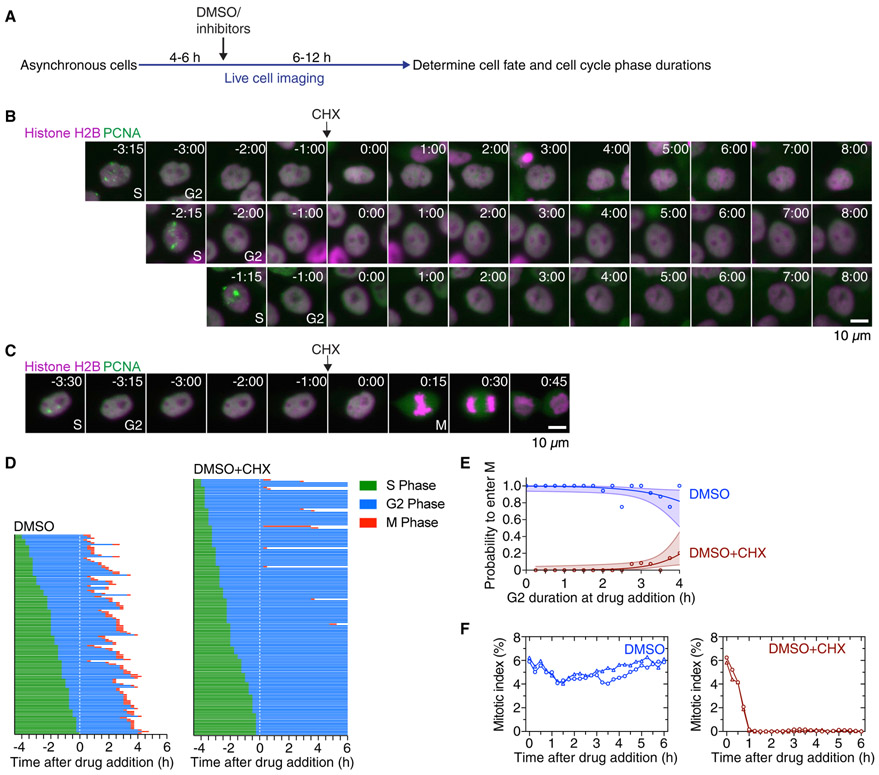
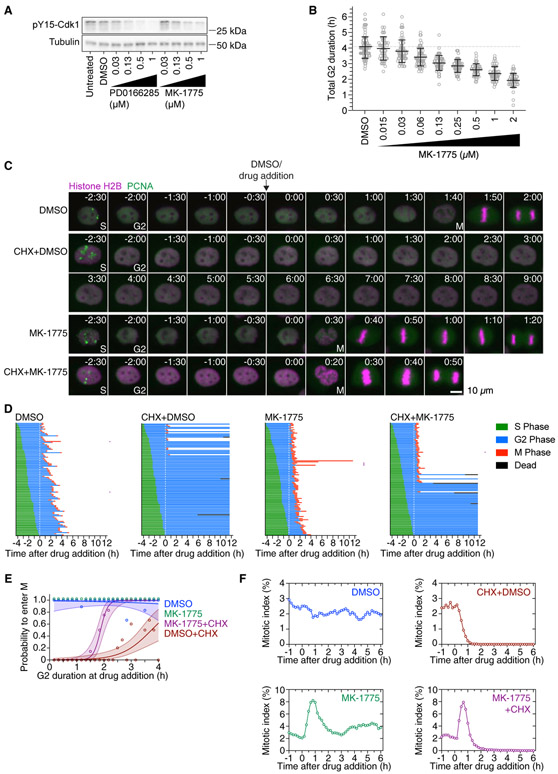
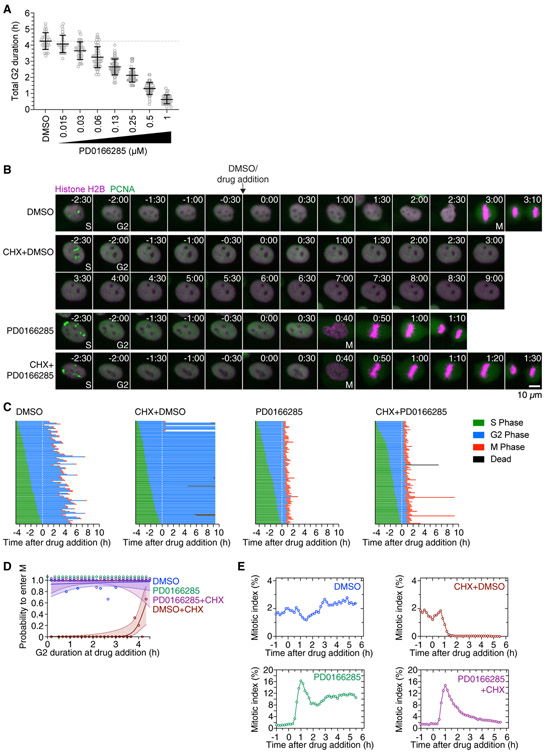
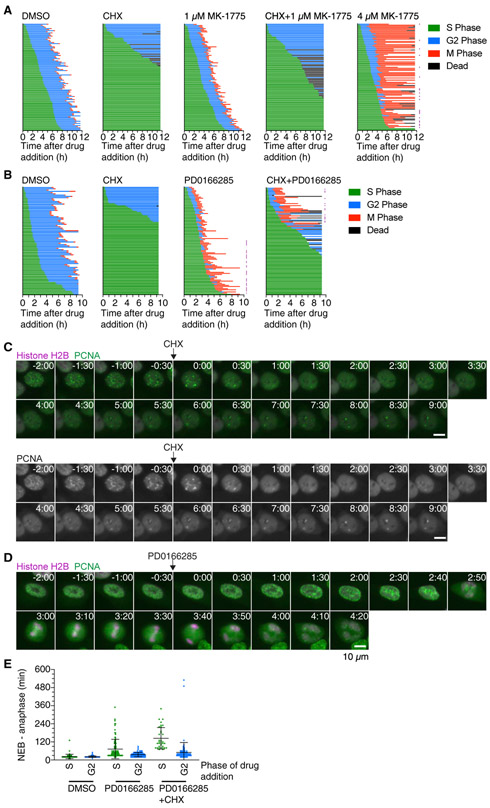
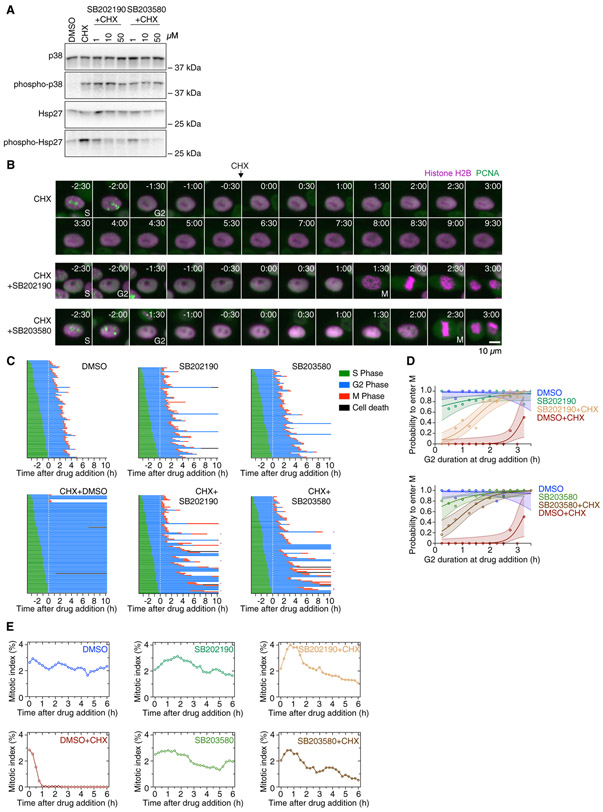
Protein synthesis inhibitors (e.g., cycloheximide) block mitotic entry, suggesting that cell cycle progression requires protein synthesis until right before mitosis. However, cycloheximide is also known to activate p38 mitogen-activated protein kinase (MAPK), which can delay mitotic entry through a G2/M checkpoint. Here, we ask whether checkpoint activation or a requirement for protein synthesis is responsible for the cycloheximide effect. We find that p38 inhibitors prevent cycloheximide-treated cells from arresting in G2 phase and that G2 duration is normal in approximately half of these cells. The Wee1 inhibitor MK-1775 and Wee1/Myt1 inhibitor PD0166285 also prevent cycloheximide from blocking mitotic entry, raising the possibility that Wee1 and/or Myt1 mediate the cycloheximide-induced G2 arrest. Thus, protein synthesis during G2 phase is not required for mitotic entry, at least when the p38 checkpoint pathway is abrogated. However, M phase progression is delayed in cycloheximide-plus-kinase-inhibitor-treated cells, emphasizing the different requirements of protein synthesis for timely entry and completion of mitosis.
蛋白质合成抑制剂(如环己亚胺)会阻止有丝分裂的进入,这表明细胞周期的进展需要蛋白质合成,直到有丝分裂前为止。然而,环己亚胺也已知能激活 p38 丝裂原活化蛋白激酶(MAPK),它可以通过 G2/M 检查点延迟有丝分裂的进入。在这里,我们想知道是检查点的激活还是蛋白质合成的需求导致了环己亚胺的作用。我们发现 p38 抑制剂阻止了环己亚胺处理的细胞在 G2 期停滞,并且这些细胞中大约有一半的 G2 期持续时间正常。Wee1 抑制剂 MK-1775 和 Wee1/Myt1 抑制剂 PD0166285 也阻止了环己亚胺阻止有丝分裂的进入,这表明 Wee1 和/或 Myt1 介导了环己亚胺诱导的 G2 期停滞。因此,至少在 p38 检查点途径被阻断时,G2 期的蛋白质合成对于有丝分裂的进入不是必需的。然而,在环己亚胺加激酶抑制剂处理的细胞中,M 期的进展被延迟,这强调了蛋白质合成对于有丝分裂的及时进入和完成的不同需求。