Hu Tingyun, Shi Bing
Department of Psychology, Sun Yat-sen University, Guangzhou, China.
Front Psychol. 2020 Jun 25;11:1258. doi: 10.3389/fpsyg.2020.01258. eCollection 2020.
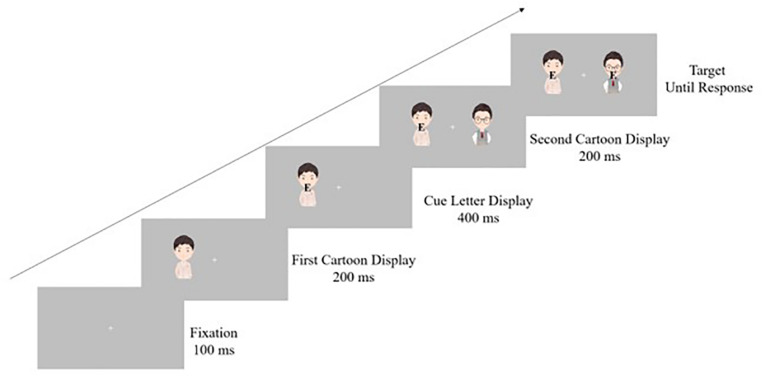
Sincerity and excitement are core brand personality dimensions, which capture the majority of consumers' personality perceptions associated with brands. Previous research has demonstrated that consumers are more willing to purchase sincere brands than exciting brands. The present research addresses the mechanism underlying this variability. A total of four studies were conducted. Study 1 adopted survey-based design and manipulated brand personality by two versions of fictitious coffee brands. Results showed that sincere (vs. exciting) brands elicited more proximal psychological distance and in turn led to higher purchase intention. With a similar procedure, a different sample, and a different product (vacuum cup), Study 2 replicated the pattern demonstrated in Study 1. Moreover, the impact of brand personality upon psychological distance was found to be more prominent among consumers with high (vs. low) levels of attachment anxiety. Because psychological distance is proposed and proved to be a critical variable for mediating the variability in purchase intention, we adopted cognitive computerized tasks in Studies 3-4 to test whether stimuli perceived as sincere and exciting will induce different responses relevant to the perceptions of psychological distance. Study 3 adopted a picture-word version of Stroop task to test whether the automatic activation of personality-priming words would carry various perceptions of psychological distance, and results showed that participants classified distance faster when a close (vs. far) spatial distance matched sincere words and when a far (vs. close) spatial distance matched exciting words. Study 4 adopted the interference task to examine whether visual attention would be affected by personality-priming images, and results indicated a stronger cueing effect and an articulated interference effect for sincere (vs. exciting) figures. This research advances the literature of brand personality by probing the important role of psychological distance and further elaborating on the variability of consumer behavior toward sincere and exciting brands.
真诚和活力是核心品牌个性维度,它们涵盖了大多数消费者对品牌的个性认知。先前的研究表明,消费者更愿意购买真诚型品牌而非活力型品牌。本研究探讨了这种差异背后的机制。总共进行了四项研究。研究1采用基于调查的设计,通过两个虚构咖啡品牌版本操纵品牌个性。结果表明,真诚型(相对于活力型)品牌引发了更多的近心理距离,进而导致更高的购买意愿。采用类似的程序、不同的样本和不同的产品(真空杯),研究2复制了研究1中展示的模式。此外,发现品牌个性对心理距离的影响在依恋焦虑程度高(相对于低)的消费者中更为显著。由于心理距离被提出并证明是调节购买意愿差异的关键变量,我们在研究3 - 4中采用认知计算机任务来测试被视为真诚和活力的刺激是否会引发与心理距离感知相关的不同反应。研究3采用了图片 - 单词版本的斯特鲁普任务来测试个性启动词的自动激活是否会携带不同的心理距离感知,结果表明,当近距离(相对于远距离)空间距离与真诚词汇匹配,以及远距离(相对于近距离)空间距离与活力词汇匹配时,参与者对距离的分类更快。研究4采用干扰任务来检查视觉注意力是否会受到个性启动图像的影响,结果表明真诚(相对于活力)形象具有更强的提示效应和明显的干扰效应。本研究通过探究心理距离的重要作用,并进一步阐述消费者对真诚和活力品牌行为的差异,推进了品牌个性的文献研究。