Long Meijuan, Shou Jianyao, Wang Jian, Hu Weizhen, Hannan Fakhir, Mwamba Theodore M, Farooq Muhammad A, Zhou Weijun, Islam Faisal
Institute of Crop Science, Zhejiang University, Hangzhou, China.
Zhuji Municipal Agro-Tech Extension Center, Zhuji, China.
Front Plant Sci. 2020 Jun 24;11:697. doi: 10.3389/fpls.2020.00697. eCollection 2020.
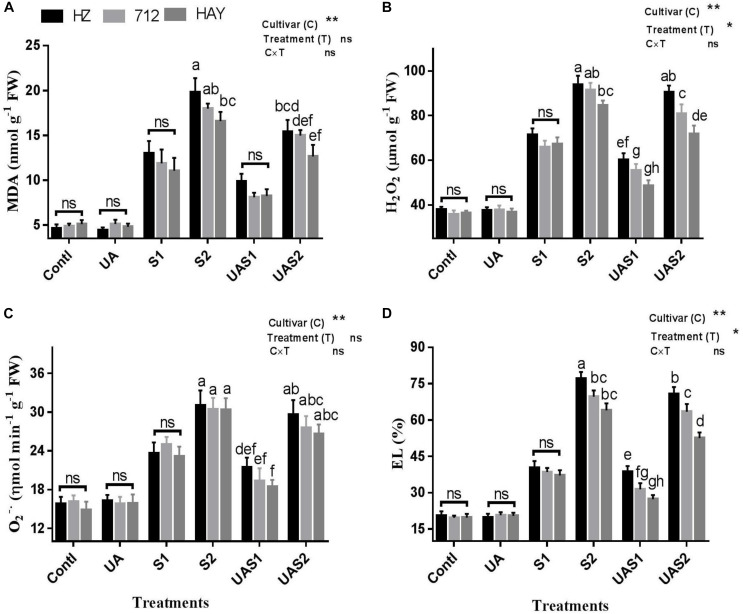
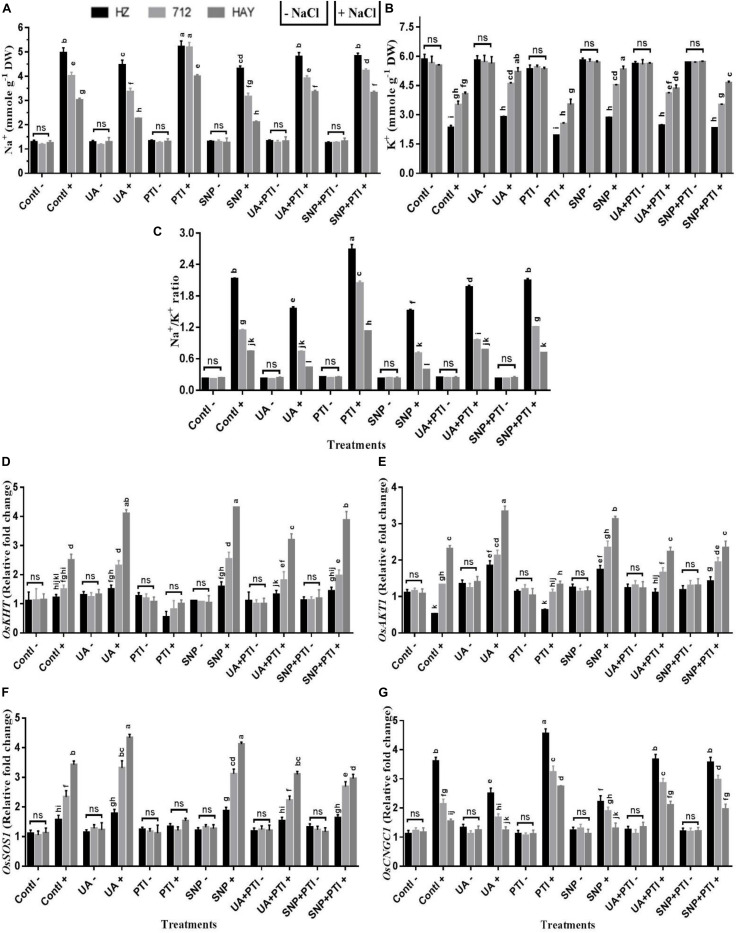
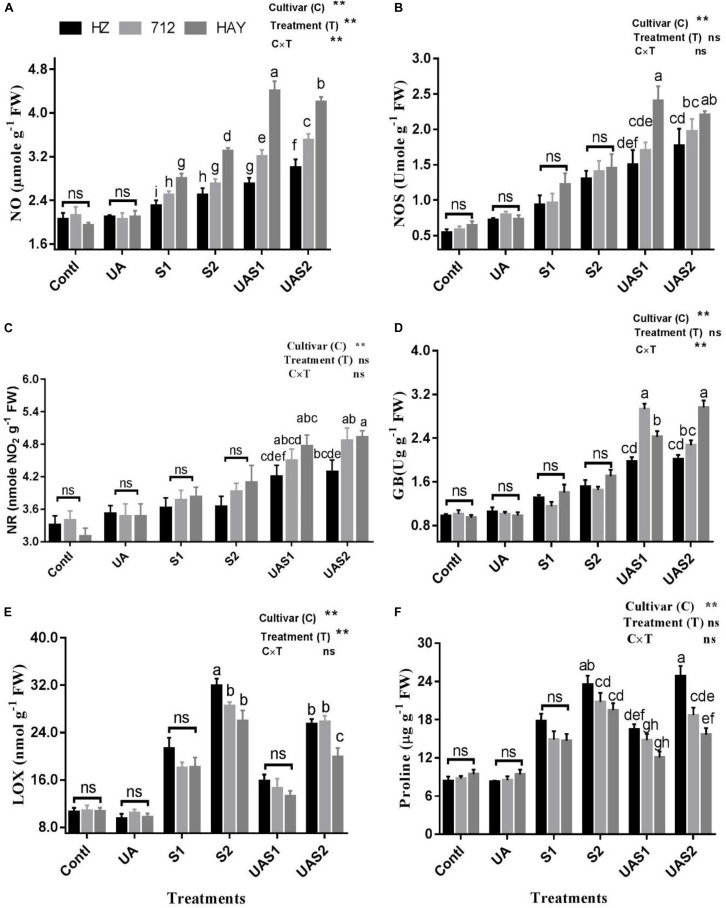
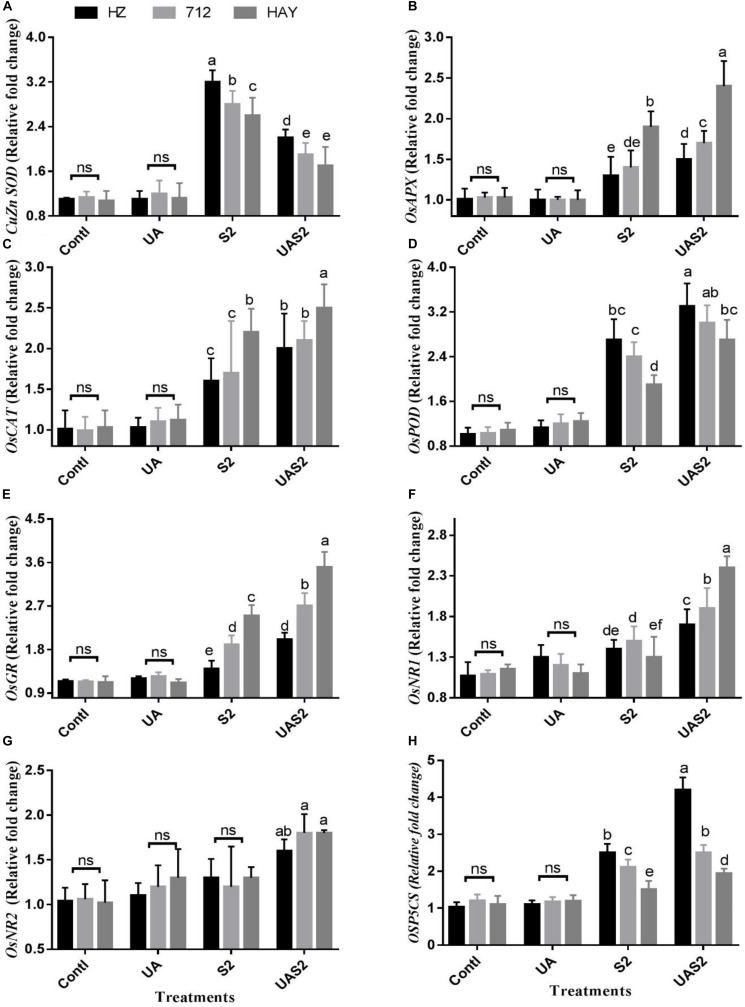
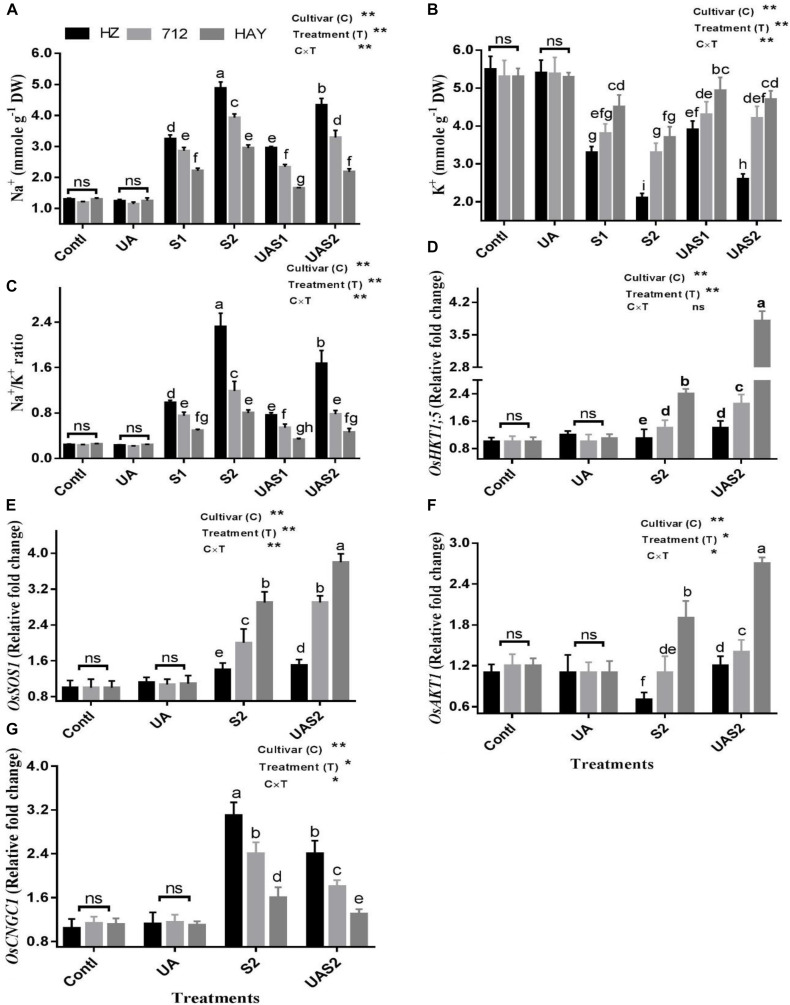
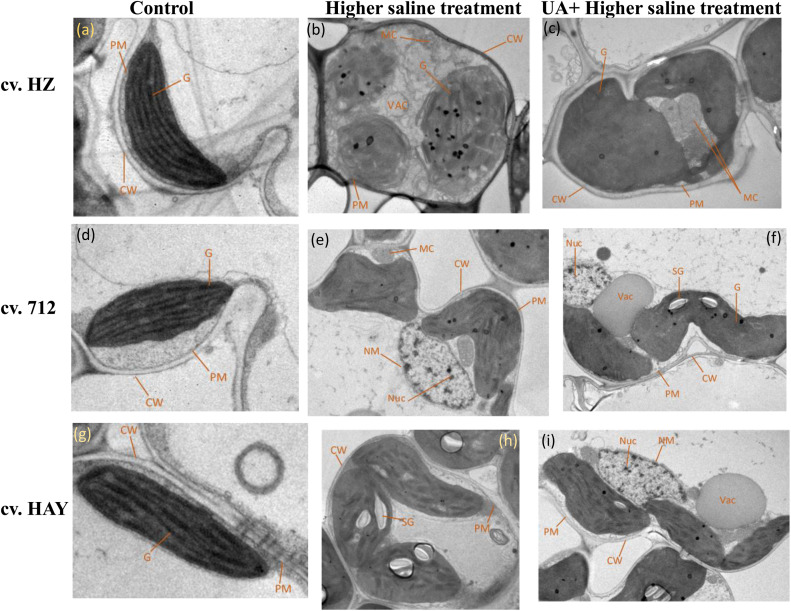
Crops frequently encounter abiotic stresses, and salinity is a prime factor that suppresses plant growth and crop productivity, globally. Ursolic acid (UA) is a potential signaling molecule that alters physiology and biochemical processes and activates the defense mechanism in numerous animal models; however, effects of UA in plants under stress conditions and the underlying mechanism of stress alleviation have not been explored yet. This study examined the effects of foliar application of UA (100 μM) to mitigate salt stress in three rice cultivars (HZ, 712, and HAY). A pot experiment was conducted in a climate-controlled greenhouse with different salt stress treatments. The results indicated that exposure to NaCl-induced salinity reduces growth of rice cultivars by damaging chlorophyll pigment and chloroplast, particularly at a higher stress level. Application of UA alleviated adverse effects of salinity by suppressing oxidative stress (HO, O) and stimulating activities of enzymatic and non-enzymatic antioxidants (APX, CAT, POD, GR, GSH, AsA, proline, glycinebutane), as well as protecting cell membrane integrity (MDA, LOX, EL). Furthermore, UA application brought about a significant increase in the concentration of leaf nitric oxide (NO) by modulating the expression of NR and NOS enzymes. It seems that UA application also influenced Na efflux and maintained a lower cytosolic Na/K ratio via concomitant upregulation of and in rice cultivars. The results of pharmacological tests have shown that supply of the NO scavenger (PTI) completely reversed the UA-induced salt tolerance in rice cultivars by quenching endogenous NO and triggering oxidative stress, Na uptake, and lipid peroxidation. The PTI application with UA and sodium nitroprusside (SNP) also caused growth retardation and a significant increase in Na uptake and oxidative stress in rice cultivars. This suggests that UA promoted salt tolerance of rice cultivars by triggering NO production and limiting toxic ion and reactive oxygen species (ROS) accumulation. These results revealed that both UA and NO are together required to develop a salt tolerance response in rice.
作物经常遭遇非生物胁迫,而盐度是全球范围内抑制植物生长和作物生产力的主要因素。熊果酸(UA)是一种潜在的信号分子,它能改变生理和生化过程,并在众多动物模型中激活防御机制;然而,UA在胁迫条件下对植物的影响以及缓解胁迫的潜在机制尚未得到探索。本研究考察了叶面喷施UA(100μM)对三个水稻品种(HZ、712和HAY)缓解盐胁迫的影响。在气候控制的温室中进行了不同盐胁迫处理的盆栽试验。结果表明,暴露于NaCl诱导的盐度会通过破坏叶绿素色素和叶绿体来降低水稻品种的生长,尤其是在较高胁迫水平下。喷施UA通过抑制氧化应激(HO、O)和刺激酶促和非酶促抗氧化剂(APX、CAT、POD、GR、GSH、AsA、脯氨酸、甘氨酸丁烷)的活性,以及保护细胞膜完整性(MDA、LOX、EL),减轻了盐度的不利影响。此外,喷施UA通过调节NR和NOS酶的表达,使叶片一氧化氮(NO)浓度显著增加。似乎喷施UA还影响了Na外流,并通过同时上调水稻品种中的 和 来维持较低的细胞质Na/K比。药理学试验结果表明,供应NO清除剂(PTI)通过淬灭内源性NO并引发氧化应激、Na吸收和脂质过氧化,完全逆转了UA诱导的水稻品种耐盐性。PTI与UA和硝普钠(SNP)一起施用也导致水稻品种生长迟缓以及Na吸收和氧化应激显著增加。这表明UA通过引发NO生成并限制有毒离子和活性氧(ROS)积累来促进水稻品种的耐盐性。这些结果表明,UA和NO共同作用才能使水稻产生耐盐反应。