Uhlenhopp Dustin J, Pagnotta Gregory, Sunkara Tagore
Department of Internal Medicine.
Department of Gastroenterology and Hepatology, MercyOne Des Moines Medical Center, Des Moines, IA, USA.
Clin Pract. 2020 Jun 29;10(2):1254. doi: 10.4081/cp.2020.1254. eCollection 2020 May 19.
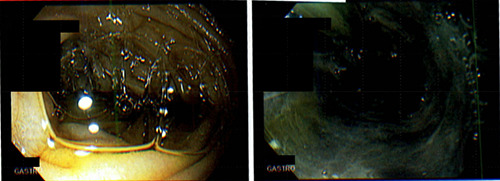
Acute esophageal necrosis, also known as black esophagus or acute necrotizing esophagitis is a rare condition with roughly 154 cases reported in the literature. This condition is classically diagnosed on its endoscopic findings of a circumferentially black esophagus that abruptly ends at the gastroesophageal junction and transitions to normal gastric mucosa. When present, acute esophageal necrosis potentially signifies a poor prognosis with an overall mortality up to 36%. This case report describes a critically ill patient with multiple comorbidities that was found to have acute esophageal necrosis the entire length of the esophagus secondary to ischemia/hypoperfusion that was caused by diabetic ketoacidosis. The patient had a prolonged hospitalization but was ultimately discharged in stable condition. We also review the literature of this rare esophageal condition.
急性食管坏死,也称为黑色食管或急性坏死性食管炎,是一种罕见疾病,文献中报道的病例约有154例。这种疾病的典型诊断依据是内镜检查发现食管呈环形黑色,在胃食管交界处突然终止并过渡到正常胃黏膜。一旦出现急性食管坏死,可能预示预后不良,总体死亡率高达36%。本病例报告描述了一名患有多种合并症的重症患者,该患者被发现因糖尿病酮症酸中毒导致的缺血/低灌注,食管全长出现急性食管坏死。患者住院时间延长,但最终病情稳定出院。我们还回顾了关于这种罕见食管疾病的文献。