Shi Weiwei, Zhang Shan, Ma Ding, Yan Dongliang, Zhang Guang, Cao Yin, Wang Zhongxia, Wu Junhua, Jiang Chunping
Department of Hepatobiliary Surgery, The Affiliated Drum Tower Hospital of Nanjing University Medical School, Nanjing, China.
Jiangsu Key Laboratory of Molecular Medicine, Medical School, Nanjing University, Nanjing, China.
Front Oncol. 2020 Jun 24;10:694. doi: 10.3389/fonc.2020.00694. eCollection 2020.
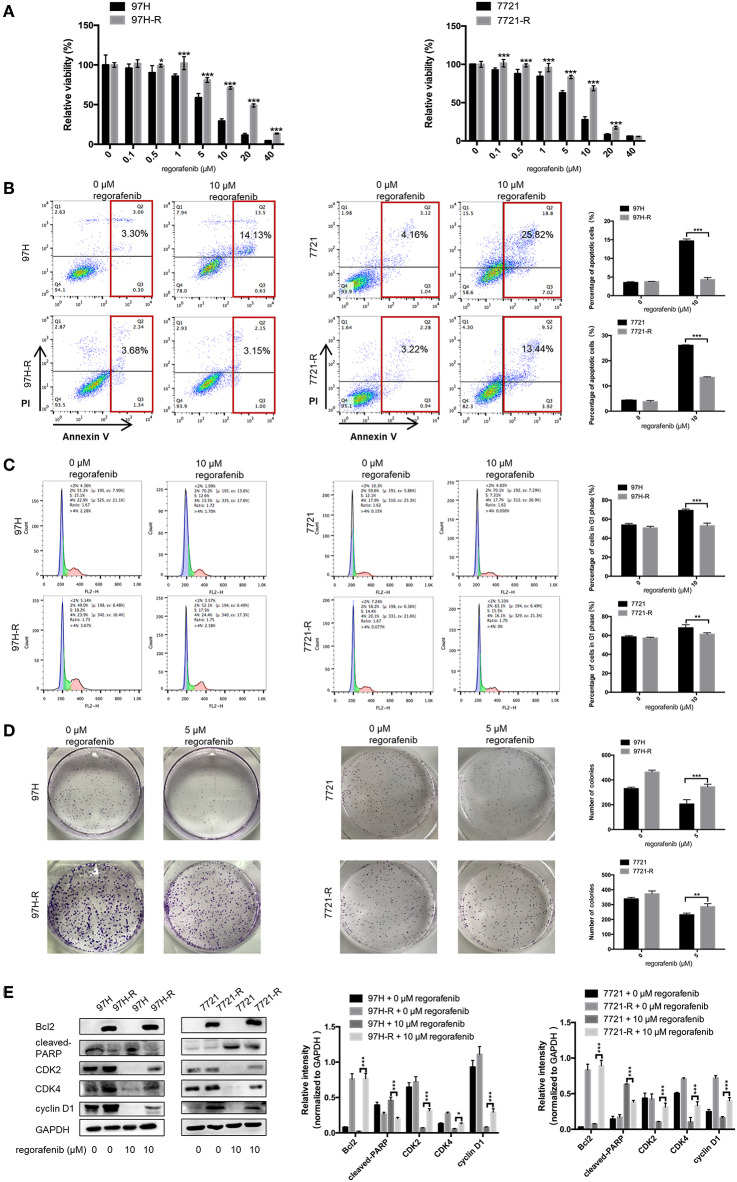
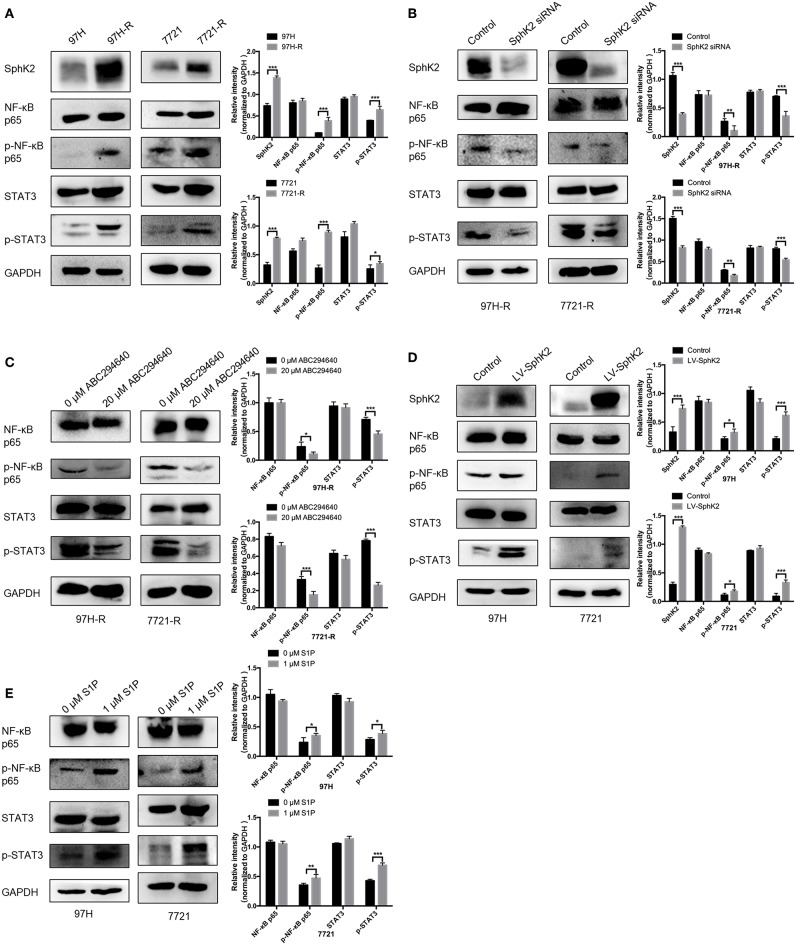
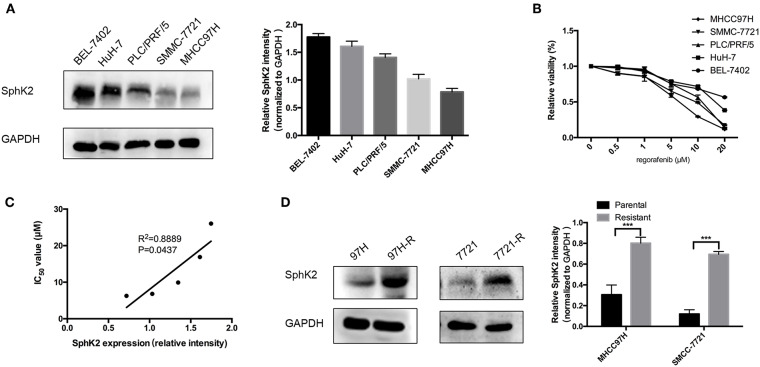
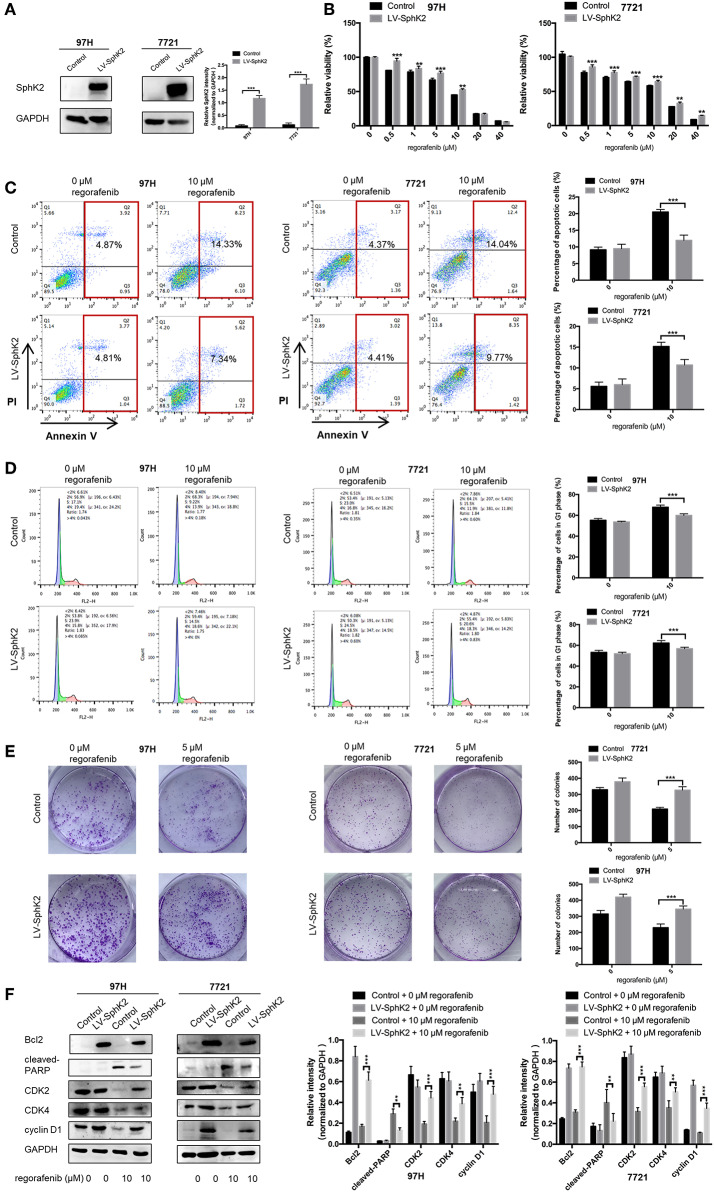
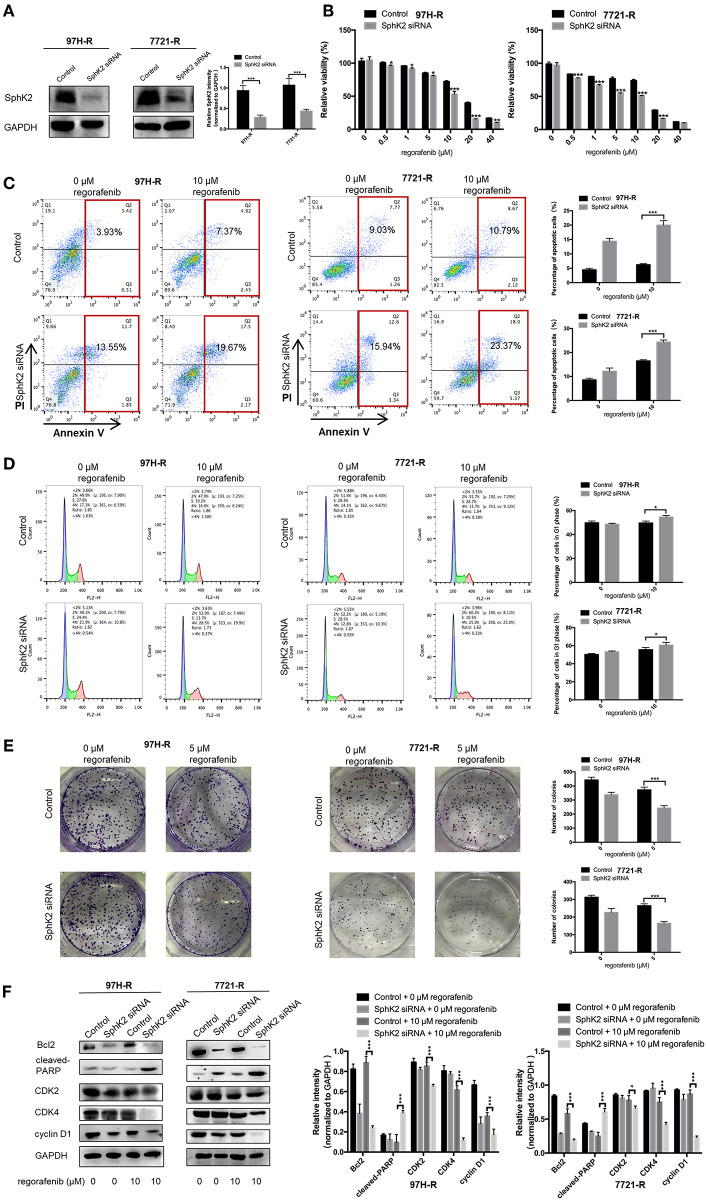
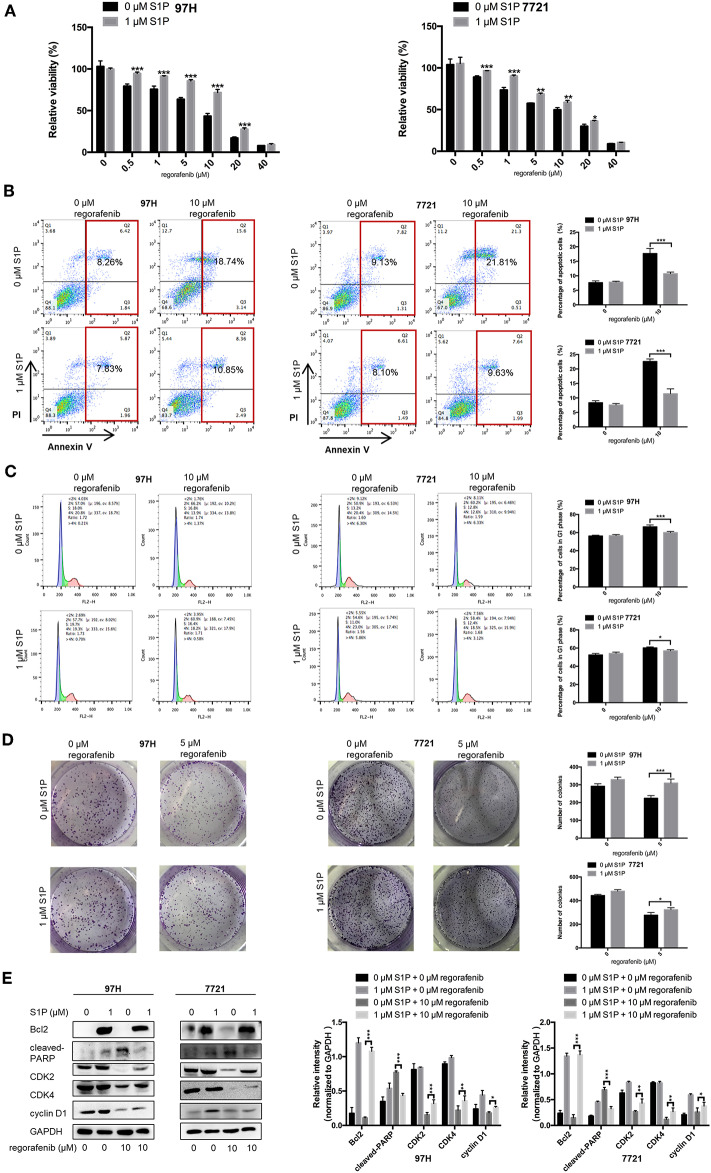
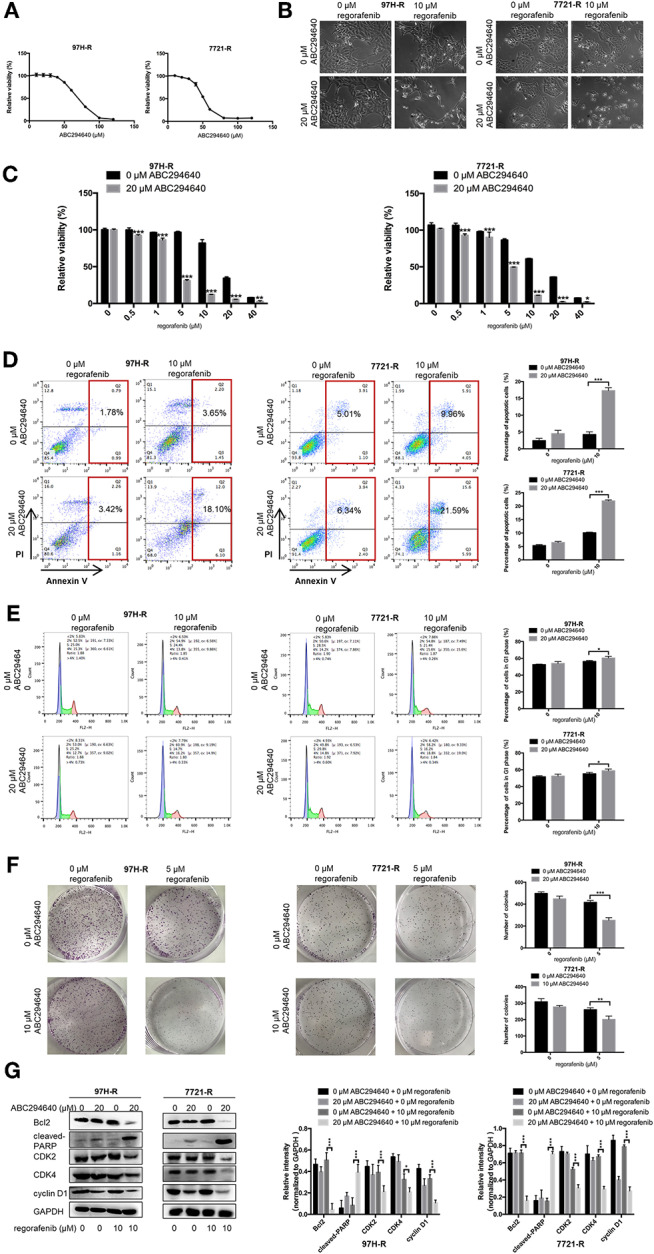
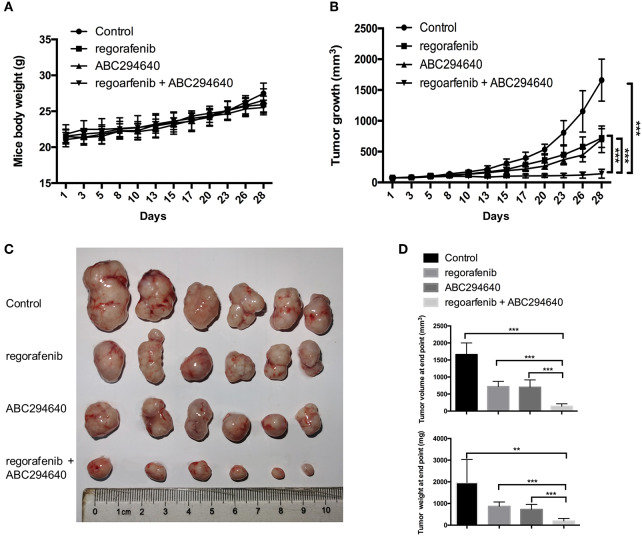
Regorafenib is a second-line therapy drug used for advanced hepatocellular carcinoma (HCC). Unfortunately, the survival benefit of the patients receiving this treatment is modest, which may be attributed to drug resistance. In the present study, sphingosine kinase 2 (SphK2) was targeted to reverse regorafenib resistance in HCC. The functions of SphK2 and sphingosine-1-phosphate (S1P), the catalytic product of SphK2 in regorafenib resistance of HCC cells, were evaluated by cell counting kit-8 assay, colony formation, cell cycle evaluation, and annexin V-fluorescein isothiocyanate/propidium iodide double-staining assay. The antitumor activity of combined treatment of regorafenib and the SphK2-specific inhibitor ABC294640 was examined in HCC cells and xenograft model . The molecular mechanisms of SphK2/S1P-mediating regorafenib resistance were investigated using cell line establishment and Western blot analysis. Well-developed regorafenib-resistant HCC cells indicated high expression levels of SphK2. The sensitivity to regorafenib of regorafenib-resistant HCC cells was restored following SphK2 knockdown or pharmacological inhibition by ABC294640. In addition, ectopic expression of SphK2 and exogenous addition of S1P decreased the sensitivity of HCC cells to regorafenib. Furthermore, the combination treatment with ABC294640 sensitized resistant tumor to regorafenib in xenograft model of HCC. The phosphorylation levels of nuclear factor κB (NF-κB), as well as those of signal transducer and activator of transcription 3 (STAT3), were positively associated with SphK2 and S1P. SphK2/S1P mediates regorafenib resistance of HCC through NF-κB and STAT3 activation. Targeting SphK2 by ABC294640 potently reduces regorafenib resistance of HCC cells both and . The combination of ABC294640 and regorafenib could be developed as a novel potential treatment strategy for advanced HCC.
瑞戈非尼是一种用于晚期肝细胞癌(HCC)的二线治疗药物。不幸的是,接受这种治疗的患者的生存获益并不显著,这可能归因于耐药性。在本研究中,靶向鞘氨醇激酶2(SphK2)以逆转HCC中的瑞戈非尼耐药性。通过细胞计数试剂盒-8检测、集落形成、细胞周期评估以及膜联蛋白V-异硫氰酸荧光素/碘化丙啶双染检测,评估了SphK2及其催化产物鞘氨醇-1-磷酸(S1P)在HCC细胞对瑞戈非尼耐药中的作用。在HCC细胞和异种移植模型中检测了瑞戈非尼与SphK2特异性抑制剂ABC294640联合治疗的抗肿瘤活性。利用细胞系建立和蛋白质免疫印迹分析研究了SphK2/S1P介导瑞戈非尼耐药的分子机制。成熟的瑞戈非尼耐药HCC细胞显示出SphK2的高表达水平。在敲低SphK2或用ABC294640进行药物抑制后,瑞戈非尼耐药HCC细胞对瑞戈非尼的敏感性得以恢复。此外,SphK2的异位表达和S1P的外源性添加降低了HCC细胞对瑞戈非尼的敏感性。此外,在HCC异种移植模型中,ABC294640联合治疗使耐药肿瘤对瑞戈非尼敏感。核因子κB(NF-κB)以及信号转导和转录激活因子3(STAT3)的磷酸化水平与SphK2和S1P呈正相关。SphK2/S1P通过激活NF-κB和STAT3介导HCC的瑞戈非尼耐药性。ABC294640靶向SphK2可有效降低HCC细胞的瑞戈非尼耐药性。ABC294640与瑞戈非尼的联合应用可开发为晚期HCC的一种新的潜在治疗策略。