Clinical Enteric Neuroscience Translational and Epidemiological Research (C.E.N.T.E.R.), Division of Gastroenterology and Hepatology, Mayo Clinic, Rochester, Minnesota.
Clinical Enteric Neuroscience Translational and Epidemiological Research (C.E.N.T.E.R.), Division of Gastroenterology and Hepatology, Mayo Clinic, Rochester, Minnesota.
Clin Gastroenterol Hepatol. 2021 Sep;19(9):1748-1758.e2. doi: 10.1016/j.cgh.2020.04.020. Epub 2020 Jul 13.
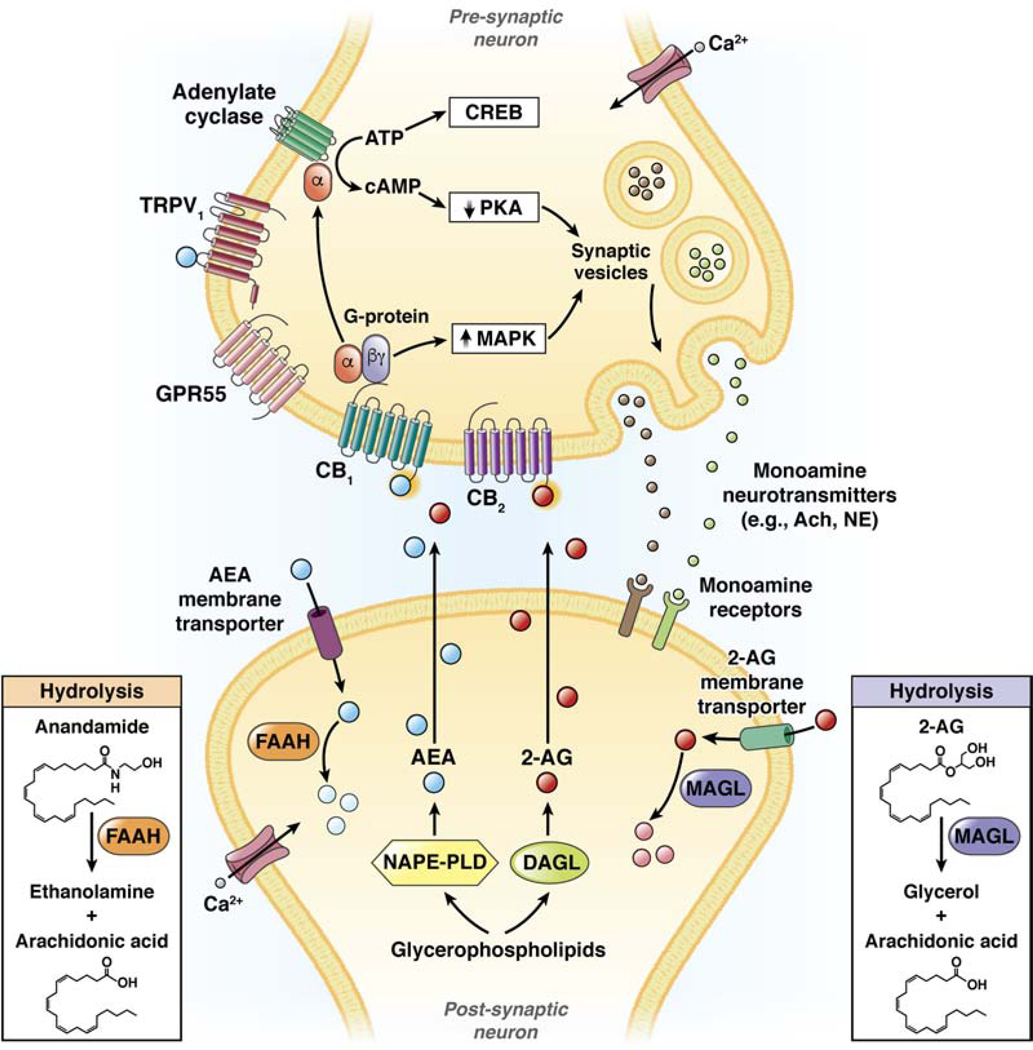
Cannabis and cannabinoids (such as tetrahydrocannabinol and cannabidiol) are frequently used to relieve gastrointestinal symptoms. Cannabinoids have effects on the immune system and inflammatory responses, as well as neuromuscular and sensory functions of digestive organs, including pancreas and liver. Cannabinoids can cause hyperemesis and cyclic vomiting syndrome, but they might also be used to reduce gastrointestinal, pancreatic, or hepatic inflammation, as well as to treat motility, pain, and functional disorders. Cannabinoids activate cannabinoid receptors, which inhibit release of transmitters from presynaptic neurons and also inhibit diacylglycerol lipase alpha, to prevent synthesis of the endocannabinoid 2-arachidonoyl glycerol. However, randomized trials are needed to clarify their effects in patients; these compounds can have adverse effects on the central nervous system (such as somnolence and psychosis) or the developing fetus, when used for nausea and vomiting during pregnancy. Cannabinoid-based therapies can also hide symptoms and disease processes, such as in patients with inflammatory bowel diseases. It is important for gastroenterologists and hepatologists to understand cannabinoid mechanisms, effects, and risks.
大麻和大麻素(如四氢大麻酚和大麻二酚)常被用于缓解胃肠道症状。大麻素对免疫系统和炎症反应以及胰腺和肝脏等消化器官的神经肌肉和感觉功能有影响。大麻素可引起恶心和周期性呕吐综合征,但也可用于减轻胃肠道、胰腺或肝脏炎症,以及治疗运动障碍、疼痛和功能障碍。大麻素激活大麻素受体,抑制来自突触前神经元的递质释放,并抑制二酰基甘油脂肪酶 alpha,以防止内源性大麻素 2-花生四烯酸甘油的合成。然而,需要随机试验来阐明它们在患者中的作用;这些化合物在用于治疗妊娠期间的恶心和呕吐时,可能对中枢神经系统(如嗜睡和精神病)或发育中的胎儿有不良影响。基于大麻素的治疗方法也可能掩盖症状和疾病过程,例如在炎症性肠病患者中。了解大麻素的机制、作用和风险对胃肠病学家和肝病学家很重要。