Laboratory of Molecular Pharmacology, Biosignal Research Center, Kobe University, Kobe, 657-8501, Japan.
Department of Otolaryngology-Head and Neck Surgery, Kyoto Prefectural University of Medicine, Kyoto, 602-8566, Japan.
Cell Death Dis. 2020 Jul 16;11(7):536. doi: 10.1038/s41419-020-02743-z.
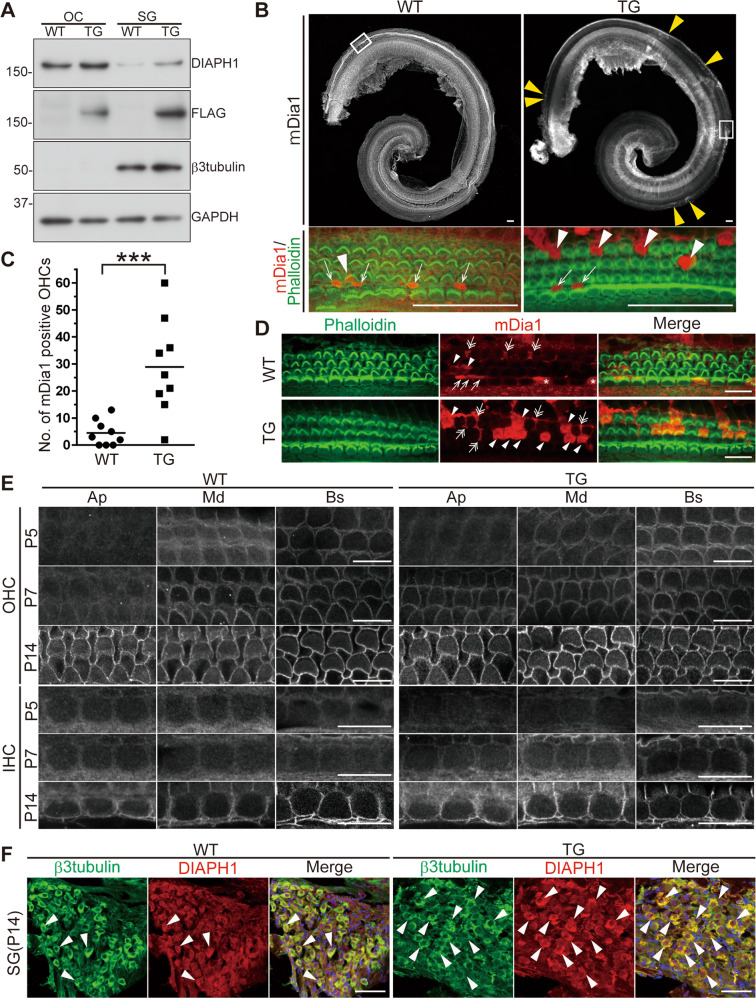
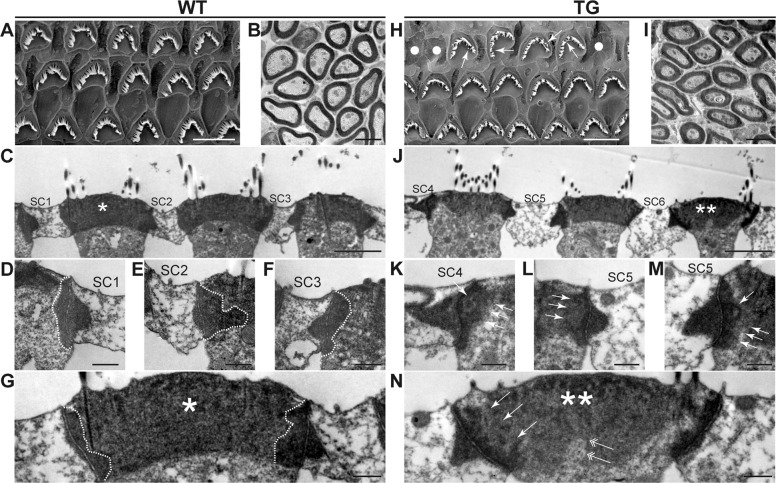
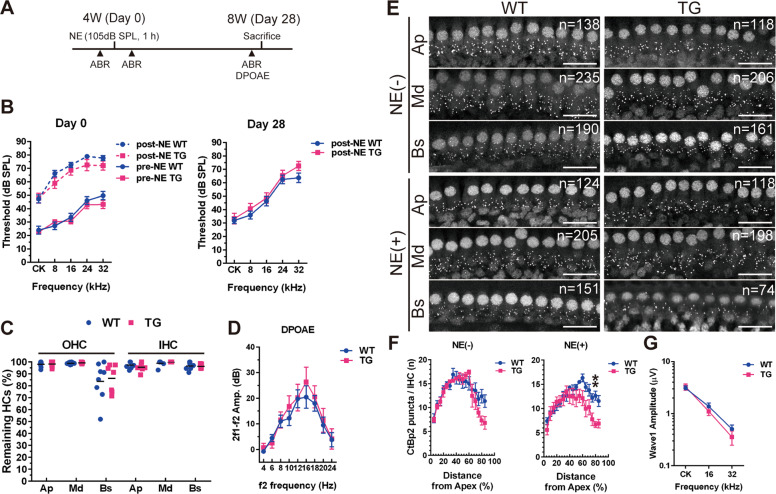
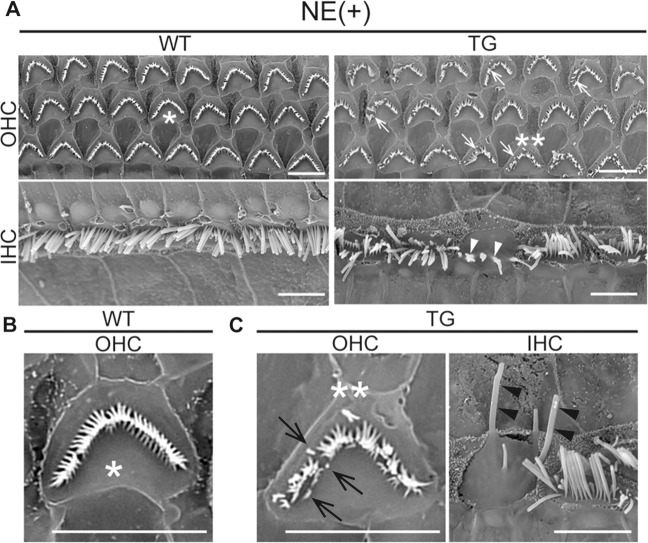
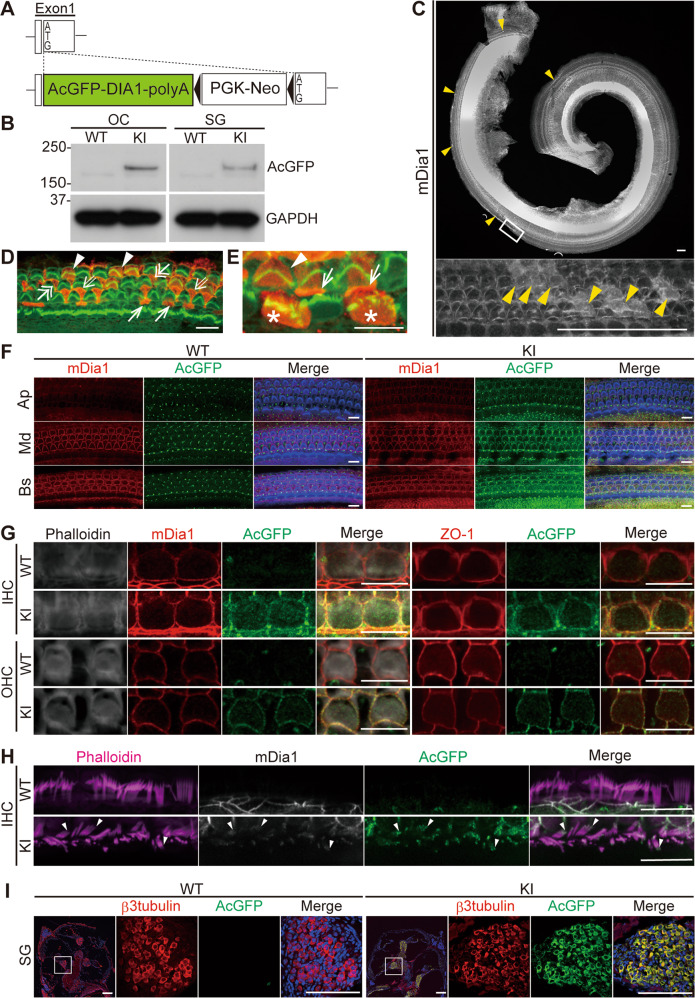
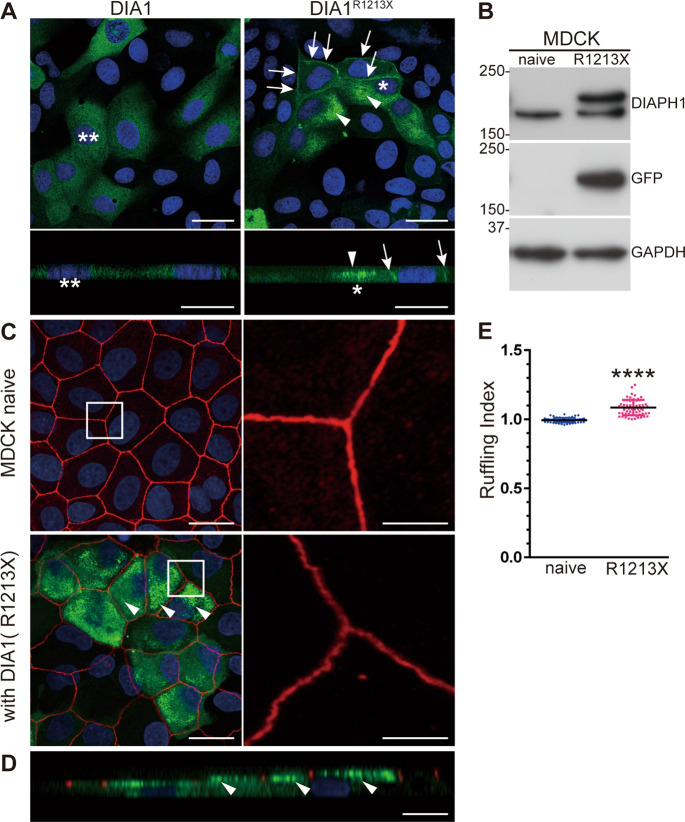
Dia1, which belongs to the diaphanous-related formin family, influences a variety of cellular processes through straight actin elongation activity. Recently, novel DIA1 mutants such as p.R1213X (p.R1204X) and p.A265S, have been reported to cause an autosomal dominant sensorineural hearing loss (DFNA1). Additionally, active DIA1 mutants induce progressive hearing loss in a gain-of-function manner. However, the subcellular localization and pathological function of DIA1(R1213X/R1204X) remains unknown. In the present study, we demonstrated the localization of endogenous Dia1 and the constitutively active DIA1 mutant in the cochlea, using transgenic mice expressing FLAG-tagged DIA1(R1204X) (DIA1-TG). Endogenous Dia1 and the DIA1 mutant were regionally expressed at the organ of Corti and the spiral ganglion from early life; alongside cochlear maturation, they became localized at the apical junctional complexes (AJCs) between hair cells (HCs) and supporting cells (SCs). To investigate HC vulnerability in the DIA1-TG mice, we exposed 4-week-old mice to moderate noise, which induced temporary threshold shifts with cochlear synaptopathy and ultrastructural changes in stereocilia 4 weeks post noise exposure. Furthermore, we established a knock-in (KI) mouse line expressing AcGFP-tagged DIA1(R1213X) (DIA1-KI) and confirmed mutant localization at AJCs and the tips of stereocilia in HCs. In MDCK cells with stable expression of AcGFP-DIA1(R1213X), AcGFP-DIA1(R1213X) revealed marked localization at microvilli on the apical surface of cells and decreased localization at cell-cell junctions. The DIA1-TG mice demonstrated hazy and ruffled circumferential actin belts at AJCs and abnormal stereocilia accompanied with HC loss at 5 months of age. In conclusion, Dia1 plays a pivotal role in the development and maintenance of AJCs and stereocilia, ensuring cochlear and HC integrity. Subclinical/latent vulnerability of HCs may be the cause of progressive hearing loss in DFNA1 patients, thus suggesting new therapeutic targets for preventing HC degeneration and progressive hearing loss associated with DFNA1.
Dia1 属于膜相关formin 家族,通过直链肌动蛋白伸长活性影响多种细胞过程。最近,新型 DIA1 突变体,如 p.R1213X(p.R1204X)和 p.A265S,已被报道可引起常染色体显性感觉神经性听力损失(DFNA1)。此外,活性 DIA1 突变体以功能获得的方式诱导进行性听力损失。然而,DIA1(R1213X/R1204X)的亚细胞定位和病理功能仍不清楚。在本研究中,我们通过表达 FLAG 标记的 DIA1(R1204X)(DIA1-TG)的转基因小鼠,证明了内源性 Dia1 和组成型活性 DIA1 突变体在耳蜗中的定位。内源性 Dia1 和 DIA1 突变体从生命早期就沿 Corti 器官和螺旋神经节区域表达;随着耳蜗成熟,它们定位于毛细胞(HCs)和支持细胞(SCs)之间的顶端连接复合体(AJCs)。为了研究 DIA1-TG 小鼠中的 HC 易损性,我们使 4 周龄的小鼠暴露于中度噪声中,该噪声在噪声暴露后 4 周引起暂时阈移伴耳蜗突触病变和静纤毛超微结构改变。此外,我们建立了一个表达 AcGFP 标记的 DIA1(R1213X)(DIA1-KI)的敲入(KI)小鼠系,并在 HCs 的 AJCs 和静纤毛尖端证实了突变体的定位。在稳定表达 AcGFP-DIA1(R1213X)的 MDCK 细胞中,AcGFP-DIA1(R1213X)在细胞顶表面的微绒毛上呈现明显的定位,而在细胞-细胞连接处的定位减少。DIA1-TG 小鼠在 5 个月大时表现出 AJCs 处模糊和起皱的环行肌动蛋白带以及异常静纤毛,并伴有 HC 丢失。总之,Dia1 在 AJCs 和静纤毛的发育和维持中起着关键作用,确保耳蜗和 HC 的完整性。DFNA1 患者的亚临床/潜伏性 HC 易损性可能是进行性听力损失的原因,因此为预防与 DFNA1 相关的 HC 变性和进行性听力损失提供了新的治疗靶点。