School of Management, University of Science and Technology of China, Hefei, China.
School of Management, Technical University of Munich, Heilbronn, Germany.
Environ Res. 2020 Oct;189:109911. doi: 10.1016/j.envres.2020.109911. Epub 2020 Jul 9.
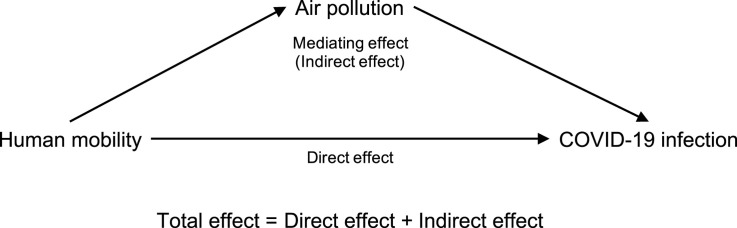
Previous studies have found that human mobility restrictions could not only prevent the spread of COVID-19, but also improve the air quality because of the reduction of industrial production, transportation and traffic. It is noteworthy that air quality is also closely related to the risk of COVID-19 infection. Therefore, we aimed to assess the mediating role of air quality on the association between human mobility and the infection caused by this novel coronavirus.
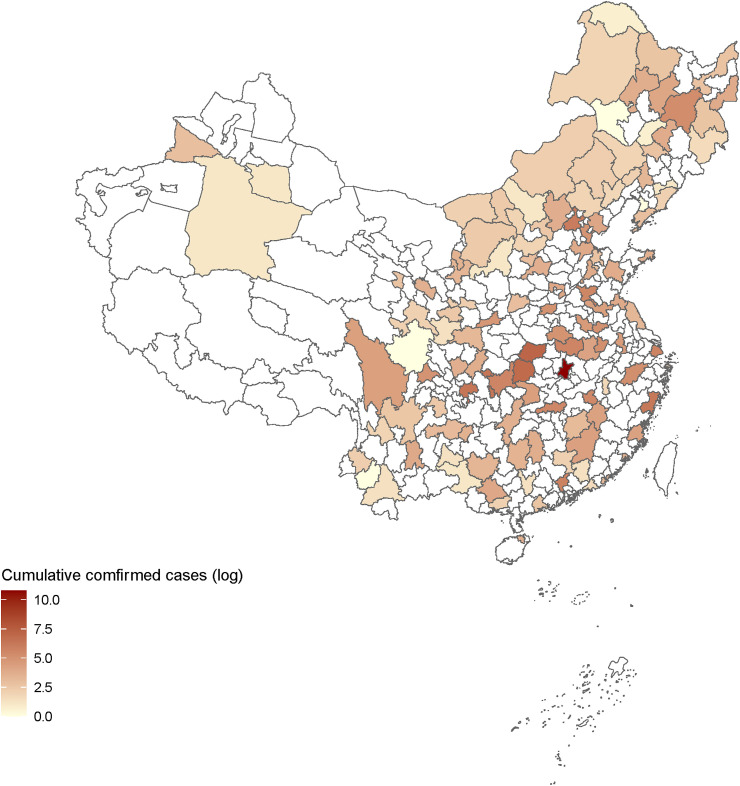
We collected daily confirmed cases, human mobility data, air quality data and meteorological variables in 120 cities from China between January 23, 2020 and February 29, 2020. We applied the generalized additive model to examine the association of human mobility index with COVID-19 confirmed cases, and to assess the mediating effects of air quality index and each pollutant.
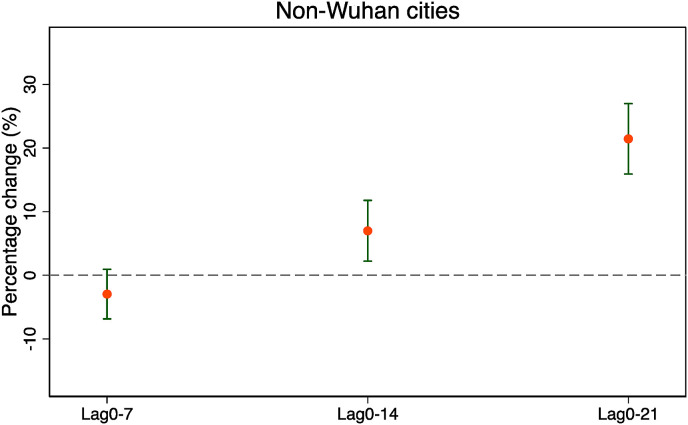
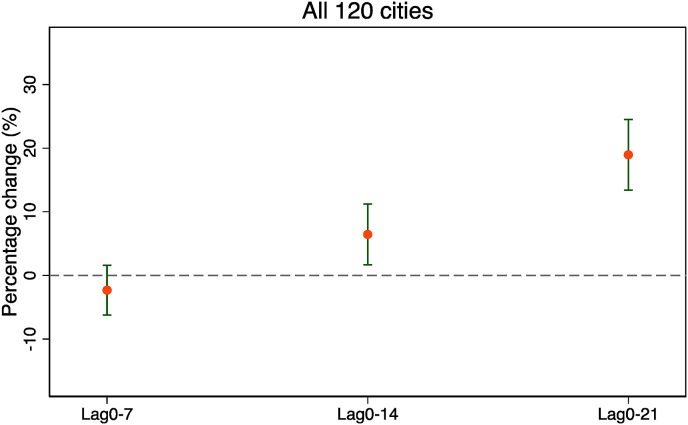
We observed a significant positive relationship between human mobility index and the daily counts of COVID-19 confirmed cases. A unit increase in human mobility index (lag0-14) was associated with a 6.45% increase in daily COVID-19 confirmed cases, and air quality index significantly mediated 19.47% of this association. We also observed a positive relationship between human mobility index and air quality index. In the pollutant level analyses, we found significant mediating effects of PM, PM, and NO.
Our study suggests that limiting human movements could reduce COVID-19 cases by improving air quality besides decreasing social contact.
先前的研究发现,人类活动受限不仅可以阻止 COVID-19 的传播,还可以通过减少工业生产、运输和交通来改善空气质量。值得注意的是,空气质量也与 COVID-19 感染的风险密切相关。因此,我们旨在评估空气质量在人类活动与新型冠状病毒感染之间的关系中的中介作用。
我们收集了 2020 年 1 月 23 日至 2 月 29 日期间中国 120 个城市的每日确诊病例、人类流动性数据、空气质量数据和气象变量。我们应用广义加性模型来检验人类流动性指数与 COVID-19 确诊病例之间的关联,并评估空气质量指数和每种污染物的中介效应。
我们观察到人类流动性指数与 COVID-19 确诊病例的日计数之间存在显著的正相关关系。人类流动性指数(lag0-14)每增加一个单位,与每日 COVID-19 确诊病例增加 6.45%相关,空气质量指数显著介导了这一关联的 19.47%。我们还观察到人类流动性指数与空气质量指数之间存在正相关关系。在污染物水平分析中,我们发现 PM、PM 和 NO 具有显著的中介效应。
我们的研究表明,限制人类活动除了减少社会接触外,还可以通过改善空气质量来减少 COVID-19 病例。