Department of Medicine, University of Connecticut School of Medicine, Farmington, CT 06030, USA.
Frank Reidy Research Center for Bioelectrics, Old Dominion University, Norfolk, VA 23529, USA.
Sensors (Basel). 2020 Jul 15;20(14):3927. doi: 10.3390/s20143927.
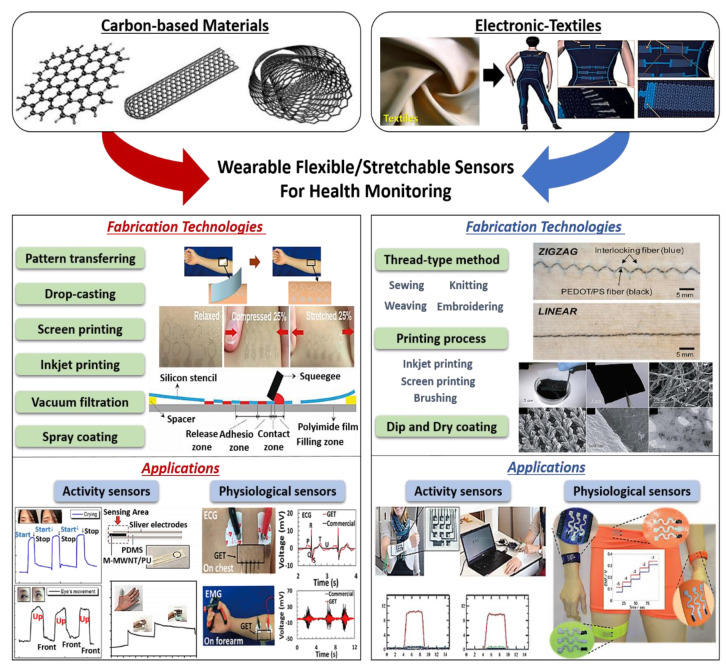
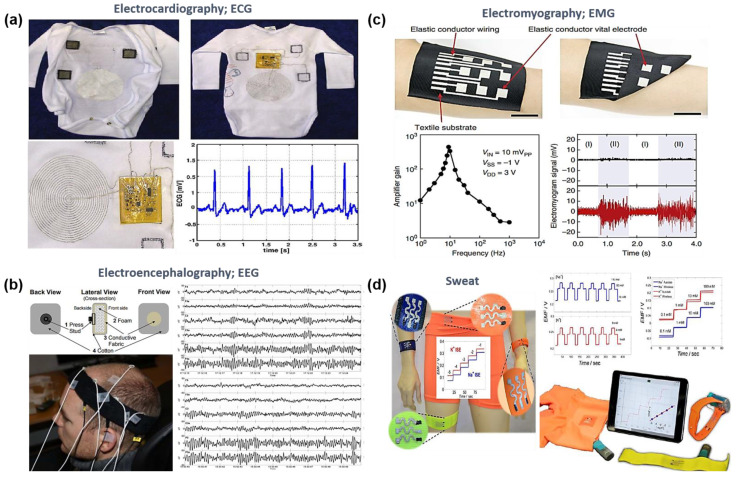
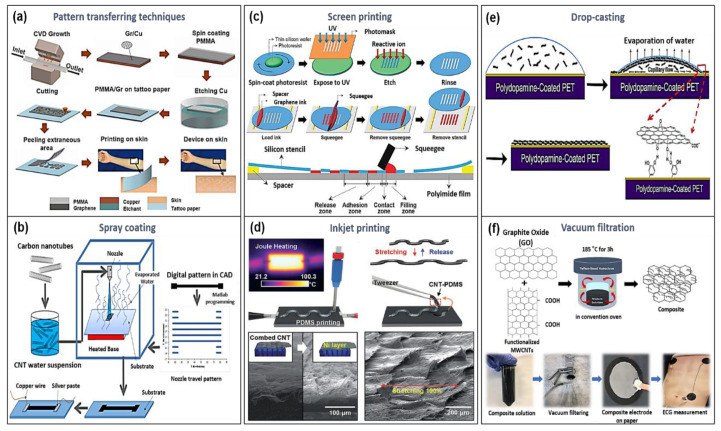
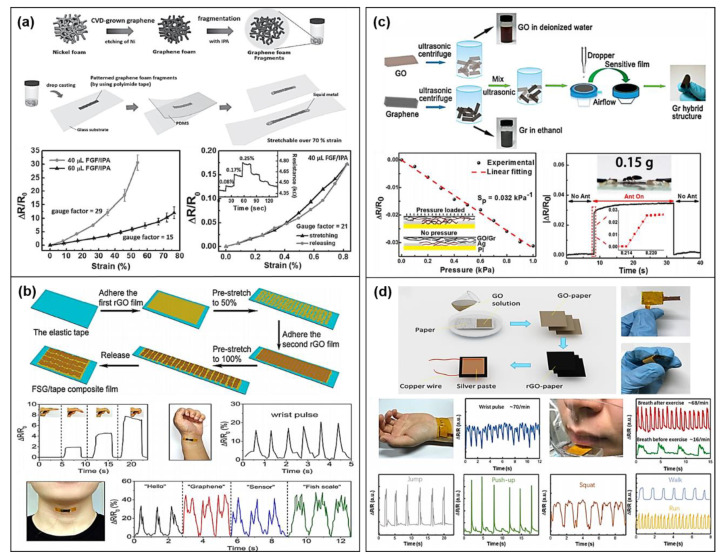
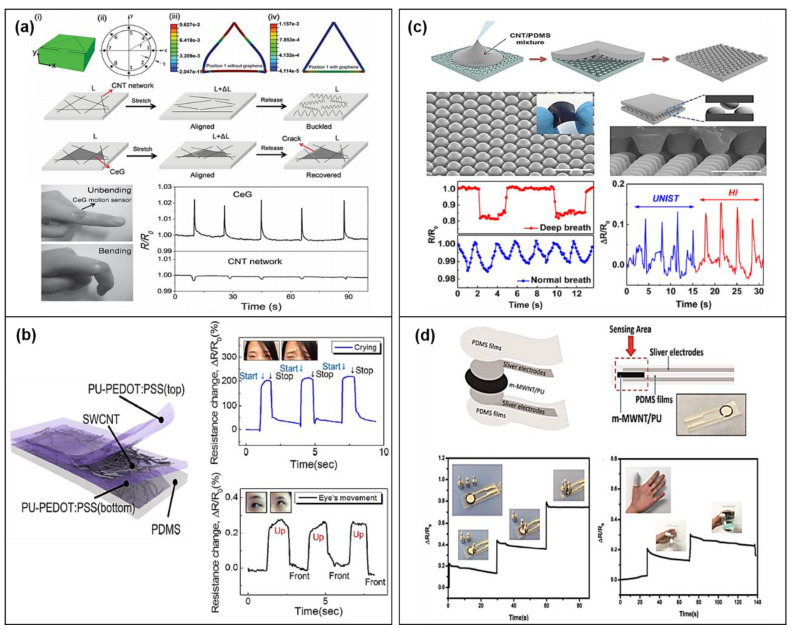
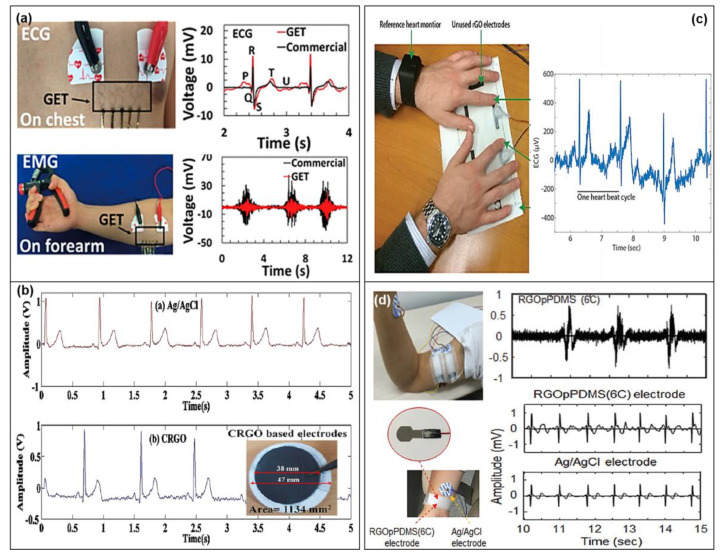
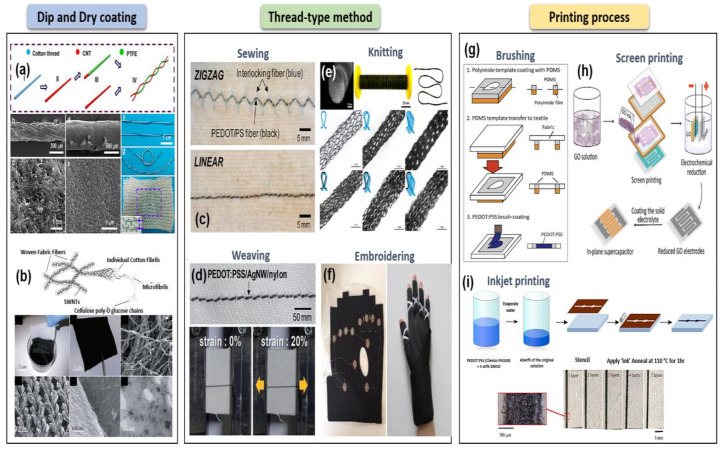
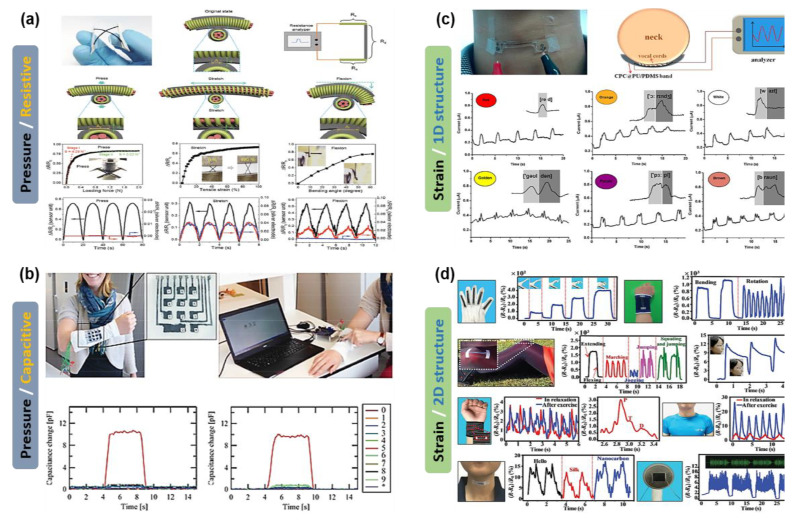
To demonstrate the wearable flexible/stretchable health-monitoring sensor, it is necessary to develop advanced functional materials and fabrication technologies. Among the various developed materials and fabrication processes for wearable sensors, carbon-based materials and textile-based configurations are considered as promising approaches due to their outstanding characteristics such as high conductivity, lightweight, high mechanical properties, wearability, and biocompatibility. Despite these advantages, in order to realize practical wearable applications, electrical and mechanical performances such as sensitivity, stability, and long-term use are still not satisfied. Accordingly, in this review, we describe recent advances in process technologies to fabricate advanced carbon-based materials and textile-based sensors, followed by their applications such as human activity and electrophysiological sensors. Furthermore, we discuss the remaining challenges for both carbon- and textile-based wearable sensors and then suggest effective strategies to realize the wearable sensors in health monitoring.
为了展示可穿戴的灵活/可拉伸的健康监测传感器,有必要开发先进的功能材料和制造技术。在各种为可穿戴传感器开发的材料和制造工艺中,由于其出色的特性,如高导电性、重量轻、高机械性能、可穿戴性和生物相容性,碳基材料和基于纺织品的结构被认为是很有前途的方法。尽管有这些优势,但为了实现实际的可穿戴应用,电和机械性能,如灵敏度、稳定性和长期使用,仍然不能令人满意。因此,在这篇综述中,我们描述了制造先进的碳基材料和基于纺织品的传感器的工艺技术的最新进展,然后介绍了它们在人体活动和电生理传感器等方面的应用。此外,我们还讨论了基于碳和基于纺织品的可穿戴传感器存在的剩余挑战,然后提出了实现健康监测中可穿戴传感器的有效策略。