Graduate Institute of Biomedical Science, College of Medicine, Chang Gung University, Kwei-San, Taoyuan 33332, Taiwan.
Department of Public Health and Parasitology, College of Medicine, Chang Gung University, Kwei-San, Taoyuan 33332, Taiwan.
Biomed Res Int. 2020 Jun 25;2020:2452409. doi: 10.1155/2020/2452409. eCollection 2020.
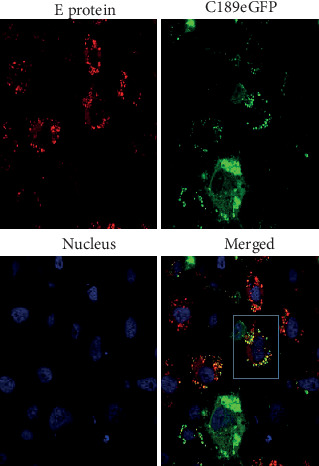
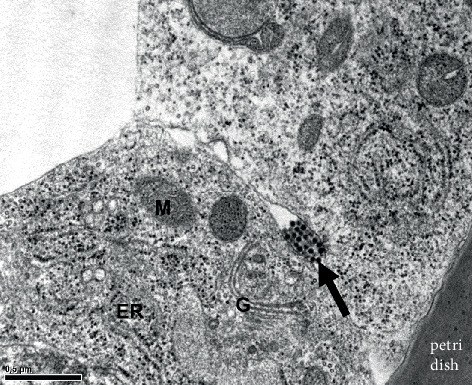
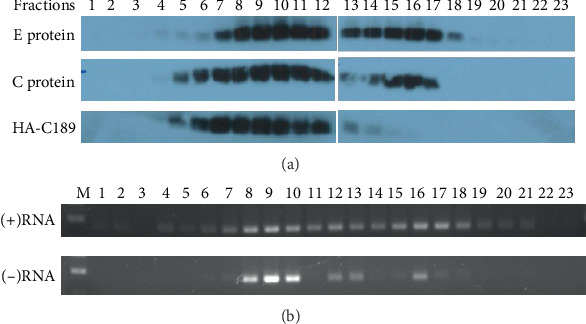
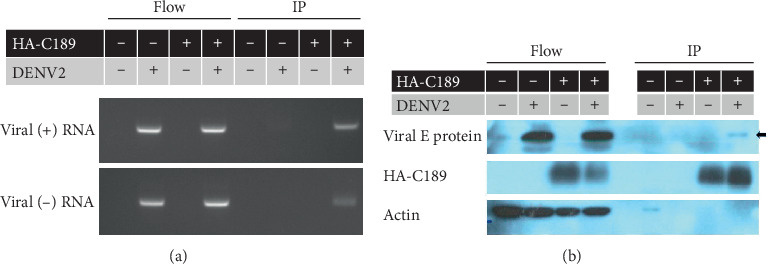
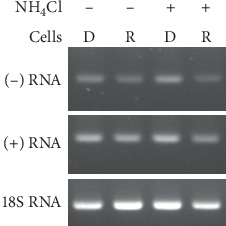
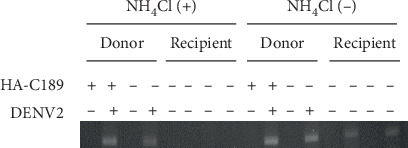
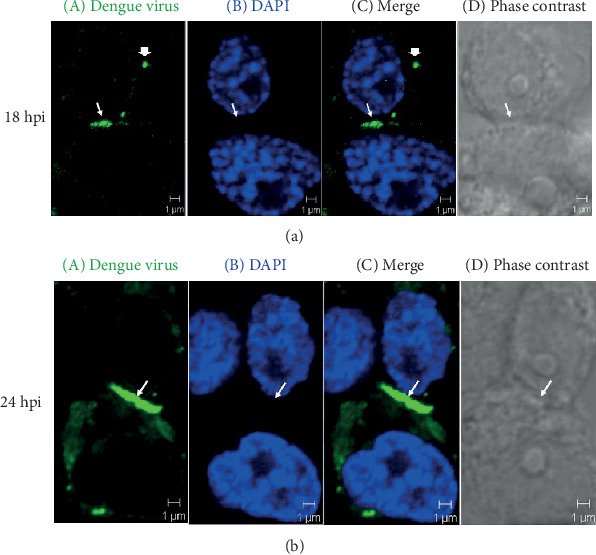
Dengue virus (DENV) is an important mosquito-borne arbovirus that is particularly prevalent in tropical and subtropical areas of the world. The virus is generally ingested with a blood meal, replicates in host tissues, and disseminates into salivary glands for transmission to the next host. Membrane-bound vacuoles carrying DENV particles have been documented in mosquito cells and play a role in the cell-to-cell transmission of DENV2. C189 is one member of the tetraspanin family and generally increases its expression as one component of the vacuoles (C189-VCs) within C6/36 cells infected with DENV2. In the present study, we have further demonstrated via sucrose gradient centrifugation as well as magnetic immune isolation (MI) that the RNA of DENV2 was eventually carried by C189-VCs. In addition, viral RNA was shown to spread from donor to recipient cells in a coculture assay even when 20 mM NHCl was added to inhibit virus replication in the culture. In an alternate assay using the transwell system, viral RNA was only detected in recipient cells in the absence of 40 mM NHCl, suggesting that cell-cell contact is required for the intercellular spread of DENV2. In turn, the formation of viral synapse (VS) derived from aggregates of viral particles was frequently observed at sites of cell contact. Taken together, the formation of C189-VCs in C6/36 cells is induced by DENV2 infection, which may serve as a vehicle for transferring virions and also viral RNA to neighboring cells by cell-to-cell transmission after cell-cell contact. This finding provides insight into the understanding of viral spread between mosquito cells. It may also elucidate the benign persistent infection in mosquito cells and efficient dissemination of DENV infection within a mosquito vector.
登革热病毒(DENV)是一种重要的蚊媒黄病毒,在世界上的热带和亚热带地区尤为流行。该病毒通常通过吸血进入宿主,在宿主组织中复制,并传播到唾液腺,以便传播给下一个宿主。已经在蚊细胞中记录到携带 DENV 颗粒的膜结合空泡,并在 DENV2 的细胞间传播中发挥作用。C189 是四跨膜蛋白家族的成员之一,通常作为感染 DENV2 的 C6/36 细胞中空泡(C189-VC)的一个组成部分增加其表达。在本研究中,我们通过蔗糖梯度离心和磁性免疫分离(MI)进一步证明,DENV2 的 RNA 最终由 C189-VC 携带。此外,即使在培养物中加入 20mM NHCl 以抑制病毒复制,在共培养测定中也显示病毒 RNA 从供体细胞传播到受体细胞。在使用 Transwell 系统的替代测定中,仅在没有 40mM NHCl 的情况下,在受体细胞中检测到病毒 RNA,这表明细胞间接触是 DENV2 细胞间传播所必需的。反过来,源自病毒颗粒聚集的病毒突触(VS)的形成经常在细胞接触部位观察到。总之,C6/36 细胞中 C189-VC 的形成是由 DENV2 感染诱导的,它可能作为一种载体,通过细胞间接触后细胞间传播将病毒颗粒和病毒 RNA 转移到邻近细胞。这一发现为理解蚊细胞之间的病毒传播提供了线索。它还可能阐明蚊细胞中的良性持续感染和 DENV 在蚊载体中的有效传播。